
Shipbreaking showdown: India's $500m scheme aims to dethrone Bangladesh

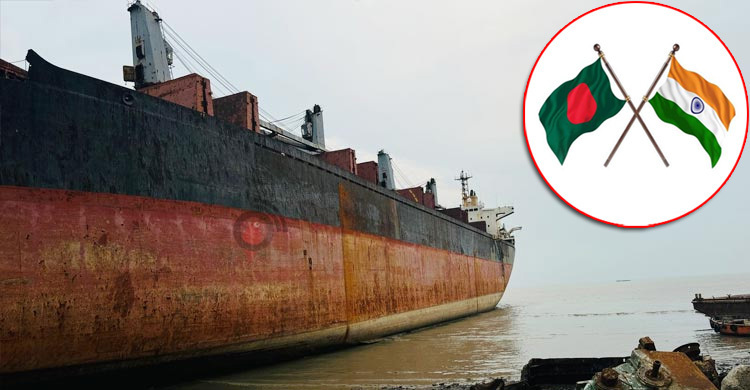
In a strategic move to dominate the global ship recycling industry, India’s Modi government is finalising a Rs 4,000 crore ($500 million) incentive package aimed squarely at capturing Bangladesh’s commanding 46 per cent share of the global shipbreaking market.
According to The Economic Times, citing government sources, the Indian cabinet is expected to approve the plan by the end of September.
The scheme, set to roll out in 2026 and run for 10 years, offers shipowners a credit note worth 40 per cent of a vessel’s scrap value if they dismantle their ships at Indian yards. These credits can be redeemed to purchase new Indian-built ships within three years, or traded/sold in bundles, creating a flexible financial instrument to lure global sellers.
Battle for supremacy: Alang vs Chattogram
Though India’s Alang Ship Recycling Yard in Gujarat is the world’s largest by physical capacity, it has steadily lost market share to Bangladesh’s Chattogram and Pakistan’s Gadani yards, largely due to lower labour costs and less stringent environmental regulations.
In 2023, Bangladesh captured 46 per cent of global shipbreaking tonnage, while India held just over 30 per cent. Now, India is fighting back, not just with subsidies, but with infrastructure.
The government is also exploring the development of new shipbreaking hubs on India’s east coast, closer to Southeast Asian shipping lanes and directly competing with Chittagong’s geographic advantage. This eastward expansion could cut transit costs and time for vessels coming from East Asia and the Middle East.
Timing is key: Scrap supply set to surge
Market dynamics are shifting in India’s favor. While the Russia-Ukraine war initially extended vessel lifespans due to higher freight rates and rerouted traffic, analysts now predict a “scrap tsunami” as aging fleets reach end-of-life and new environmental regulations (like the EU’s Ship Recycling Regulation and IMO’s EEXI/CII standards) force older, inefficient ships to retire.
“Owners are sitting on aging tonnage. When the dam breaks, we want them to break those ships in India not Bangladesh,” said a senior official in India’s Ministry of Ports, Shipping and Waterways.
Bigger play: $3 billion maritime fund to boost Indian shipbuilding
This shipbreaking push is part of a broader maritime industrial strategy. The Modi government is also poised to approve a Rs 25,000 crore ($3 billion) Maritime Development Fund this month aimed at revitalising India’s shipbuilding sector, reducing reliance on foreign-flagged vessels, and creating a circular economy: break foreign ships → recycle steel → build Indian ships → export globally.
The fund will support R&D, green ship technologies, port modernization, and skill development and positioning India not just as a dismantling hub, but as a full-spectrum maritime manufacturing power.
What this means for Bangladesh
Bangladesh’s dominance in shipbreaking, built on low wages, beaching methods, and high-volume throughput, now faces its most serious challenge yet. India’s credit note scheme effectively subsidizes up to 40 per cent of scrap value, undercutting Bangladesh’s price advantage.
Industry insiders in Chattogram are already sounding alarms.
Global implications
The move also aligns with Western pressure for “greener” ship recycling. India has invested heavily in upgrading Alang to meet EU standards unlike most Bangladeshi yards, which still operate on tidal beaches with limited environmental controls. The incentive scheme may attract EU-flagged vessels seeking compliant, subsidised recycling further squeezing Bangladesh out of premium markets.