
All project tenders to go online to curb mafia influence: Wahiduddin

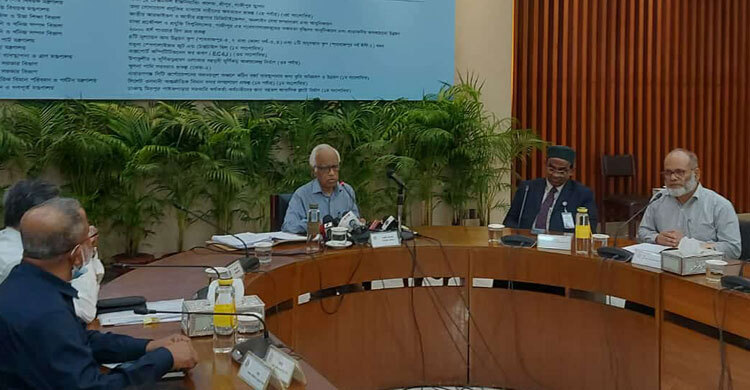
In a major move to enhance transparency and root out corruption, Planning Adviser Wahiduddin Mahmud announced that all government project tenders will henceforth be conducted online.
The new system aims to eliminate irregularities and opacity in public procurement, with the relevant law set to be gazetted next week.
Speaking at a press briefing following the Executive Committee of the National Economic Council (ECNEC) meeting at the NEC conference room in Agargaon, Wahiduddin declared that the digital tendering process will dismantle the entrenched dominance of “mafia organisations” across key sectors including railways and energy.
“From now on, tenders will be awarded solely on the basis of qualifications not influence or connections,” Wahiduddin stated. “Any organisation with a history of loan defaults or past irregularities will be automatically disqualified from participating.”
The Planning Adviser emphasised that this reform is part of what he called a “silent revolution” in governance, aimed at bringing unprecedented transparency to every stage of project implementation. “We have successfully curbed corruption in project execution,” he said. “In fact, officials are no longer eager to become project directors, a clear sign that opportunities for graft have been drastically reduced.”
Wahiduddin also announced a significant policy shift regarding land acquisition for public projects: agricultural land will no longer be requisitioned when suitable government-owned land is available.
A high-level committee comprising advisers has been formed to identify and catalog all unused government lands nationwide. The committee will also assess whether these lands have been illegally occupied and is expected to submit its findings within two months.
On the new public procurement law, Wahiduddin noted it was finalised through broad consultation and consensus. “Influential businessmen who once obstructed such reforms have fled the country,” he said. “Today, no one dares stand in the way of institutional transparency.”
Looking ahead, the government will convene a meeting next week to investigate the causes behind the sluggish implementation of the Annual Development Program (ADP).
Wahiduddin warned that as Bangladesh prepares to graduate from Least Developed Country (LDC) status, concessional loans will soon become scarce. “This is our last window to secure soft loans for high-impact projects,” he said. “We must act swiftly and wisely.”