
RMG exports to US rise by 26.62% in a decade

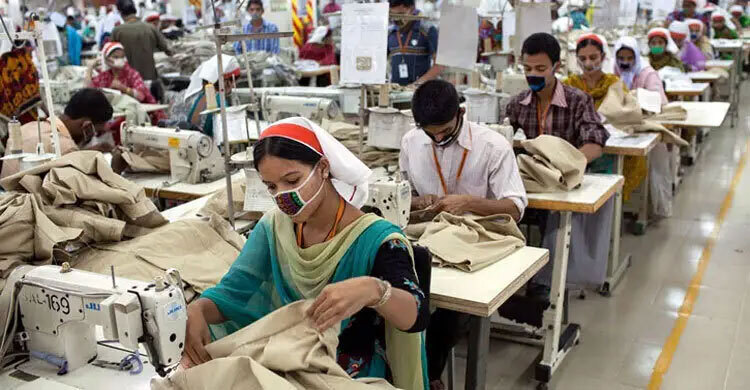
Bangladesh has significantly strengthened its position in the US apparel market over the past decade, with apparel import volumes from Bangladesh rising by 26.62% between 2015 and 2024, even as total US apparel imports fell by 5.30% during the same period, according to data from the US Government’s Office of Textiles and Apparel (OTEXA).
This growth outpaces several key competitors: while China’s exports to the US dropped by 18.36% and Indonesia’s fell by 19.82%, Vietnam and India recorded increases of 32.96% and 34.13% respectively, with Cambodia up by 10.78%.
Notably, Bangladesh has also bucked the global trend of falling unit prices. While the average unit price of apparel imports into the US declined by 1.71%, Bangladesh achieved a 7.30% increase in its per-unit export price—contrasting sharply with China’s 33.80% drop and India’s 4.56% decline. Meanwhile, Vietnam, Indonesia, and Cambodia saw price hikes of 6.64%, 7.38%, and a striking 38.31%, respectively.
Industry leaders say this signals both opportunity and urgency for Bangladesh.
“Bangladesh is now maintaining a unit price close to the global average paid by the US,” said Mohiuddin Rubel, former Director of Brand BGMEA and Managing Director of Bangladesh Apparel Exchange. “But when we compare ourselves to close competitors like Vietnam and India, it’s clear we have significant room to raise our unit prices—which could dramatically increase export earnings without shipping more garments.”
Rubel highlighted the critical role of value-added products in driving higher returns. Citing 2024 data, he noted that Vietnam and China exported nearly identical dollar values to the US, yet Vietnam shipped less than half the volume—thanks to its higher-value mix, with a per-unit price of $3.59 compared to China’s $1.78.
“This gap is almost entirely due to Vietnam’s focus on premium, value-added apparel,” Rubel explained. “For Bangladesh to move beyond volume-driven growth and secure long-term competitiveness, we must shift decisively toward design-led, high-value, and technologically advanced products.”
With the country preparing for post-LDC graduation and facing increasing global pressure on pricing and sustainability, experts agree: the next frontier for Bangladesh’s $47 billion RMG sector isn’t just more exports—but smarter, higher-value ones.
Source: BSS