
Exports, not import duties, must drive Bangladesh’s economy: PRAN CEO

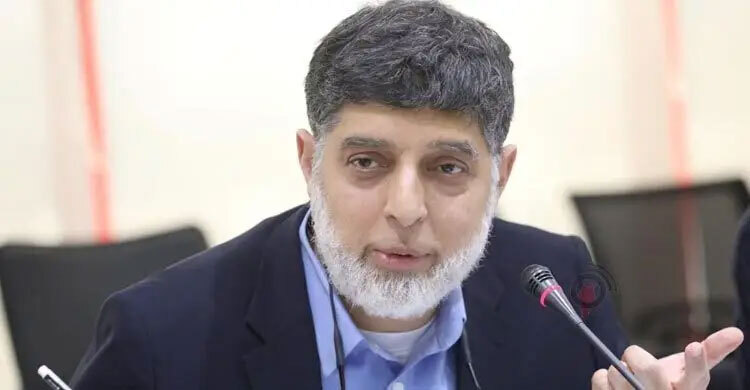
Ahsan Khan Chowdhury, Chairman and Chief Executive Officer of PRAN-RFL Group – one of Bangladesh’s largest and most diversified conglomerates – has said that an economy that leans on import duties and imported goods is doomed to perpetual dependency.
The only viable future, he sees is one in which exports, not imports, are the primary engine of growth.
Speaking at a roundtable discussion titled “Export Diversification: Challenges and Things to Do” organised by the daily Prothom Alo at its Karwan Bazar office on Wednesday, December 10, Ahsan Khan Chowdhury set an ambitious benchmark: “If Vietnam can export $300 billion a year, there is absolutely no reason Bangladesh cannot do the same.”
The event, supported by PRAN-RFL Group and moderated by Prothom Alo’s Head of Online Shawkat Hossain, was chaired by Commerce Adviser Sk Bashir Uddin.
The packed room included senior government officials and top private-sector voices such as: Nahian Rahman, Executive Member, Bangladesh Investment Development Authority (BIDA), Mohammad Hasan Arif, Vice-Chairman, Export Promotion Bureau (EPB), Rupali Chowdhury, Managing Director, Berger Paints Bangladesh, Syed S Kaiser Kabir, Managing Director, Renata Limited, Mahbubur Rahman, CEO, HSBC Bangladesh, Professor Saema Haque Bidisha, Pro-Vice Chancellor (Administration), Dhaka University, and representatives from the plastics, leather goods, footwear, and frozen-food export associations.
“An import-duty economy is a dependent forever”
Ahsan Khan Chowdhury opened with a stark choice: “Run the country on imports and the duties collected from them – that is one kind of economy. But the economy we are aspiring to is an export-diversified economy whose driving force is exports, not imports.”
He pointed out that Bangladesh’s export basket remains dangerously narrow and heavily reliant on ready-made garments. Breaking the $50 billion export mark is already a struggle; reaching Vietnam-scale figures will require radical structural change.
Port chaos and skyrocketing costs are choking competitiveness
The PRAN-RFL chairman reserved some of his strongest criticism for inefficiencies at Chattogram Port and other ports. “I checked today – demurrage and damage charges have actually increased after the port was handed over to the new authority,” he revealed. “When costs rise under the new management, the private sector is forced to absorb the loss. That is unacceptable.”
He gave a concrete example that stunned many in the room: “For a single 20-foot container of biscuits worth $12,000 heading to West Africa, freight from Bangladesh costs $2,500. The same container shipped from Mumbai or a southern Indian port costs only $1,000. That is a $1,500 disadvantage before the ship even leaves Bangladeshi waters.”
Similar freight penalties apply to Middle Eastern destinations, while ASEAN routes remain marginally more competitive. “If we can close even this freight gap,” he argued, “we can dominate low-value, high-volume segments in Africa and beyond.”
Transshipment delays killing billion-dollar dreams
Ahsan Khan Chowdhury singled out the lack of direct shipping services as a major barrier. “We are exporting plastic goods to the United States, a sector with genuine billion-dollar potential. But when cargo must go via transshipment and takes 45 days to reach New York, our dream of $300 billion in total exports will remain exactly that – a dream.”
He called for immediate negotiations to establish direct Chattogram-US East Coast and Chattogram–Europe shipping lines.
Free-trade agreements: India wins, Bangladesh loses
Highlighting tariff disparities, he noted that India enjoys zero-duty access to ASEAN markets under a comprehensive free-trade agreement, while Bangladeshi exporters face steep duties in the same markets. “ASEAN treats India as an equal, but not Bangladesh. That has to change. Tariffs will decide who wins the next decade of global trade,” he warned.
A call for laser-focused product strategy
Rather than spreading efforts thinly, Ahsan Khan Chowdhury urged the government and private sector to jointly select 10-15 high-potential non-RMG products (plastics, processed foods, light engineering, leather goods, pharmaceuticals, jute diversified items, etc.) and give them concentrated policy, infrastructure, and diplomatic support.
“We must stop doing everything everywhere. Pick the winners, remove the bottlenecks, and back them aggressively,” he said.