
English medium students register for exams under non-existent school

Thousands of students studying in English-medium institutions across Bangladesh are registering for internationally recognised exams, such as Edexcel and Cambridge Assessment International Education (CAIE), under the names of non-existent or unapproved schools, sparking serious concerns over the validity of their qualifications for higher education at home and abroad.
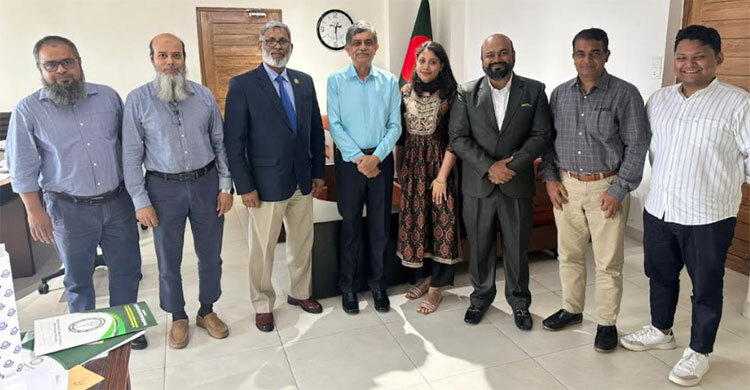
The issue came to light during a high-level meeting on Tuesday (September 16) between Education Adviser Professor Chowdhury Rafiqul Abrar and a delegation from the Bangladesh English Medium School Assistance Foundation (BEMSAF) at the Secretariat. Parents and educators warned that the current registration system — which allows individual student enrollment through the British Council — is creating long-term complications, especially when students apply for universities overseas.
Many students, lacking affiliation with officially recognized institutions, are forced to register using fabricated or unverified school names to meet exam board requirements. While this may facilitate immediate exam participation, it risks invalidating their certificates during university admissions — where institutional accreditation and transcript verification are mandatory.
“Without EIIN-linked registration and NCTB-approved curricula, these students’ credentials may be rejected by foreign universities,” warned a BEMSAF representative. “We’re creating a generation of learners whose hard work could be rendered meaningless due to systemic gaps.”
The delegation presented a comprehensive reform plan to the Education Adviser, including:
Mandatory EIIN-based registration for Edexcel and CAIE exams — linking students to government-approved institutions.
Pre-registration starting from Grade 9 to ensure continuity and proper academic tracking.
NCTB curriculum alignment to bridge the gap between national and international syllabi.
Ban on coaching centers operating during school hours — to preserve institutional discipline and focus.
Reduction of prohibitively high exam fees — currently a major financial burden for middle-class families.
They also proposed establishing English Language Clubs in national curriculum schools, madrasas, and technical institutes to enhance language proficiency nationwide — a move that could democratize access to global opportunities.
Adviser Abrar acknowledged the urgency of the situation, affirming that English-medium students are an integral part of Bangladesh’s national education ecosystem.
“Their registration, certification, and pathway to higher education must be orderly, transparent, and credible,” he said. “We will coordinate with approved institutions and curriculum authorities to implement effective measures — without delay.”
He assured the delegation that steps would be taken to formalize the sector, protect student interests, and align international qualifications with national standards.
With over 500,000 students currently enrolled in English-medium schools — a number growing rapidly — the lack of regulatory oversight poses a national education integrity risk. Without intervention, Bangladesh risks producing a cohort of graduates whose qualifications may be questioned globally — undermining their future and the country’s human capital development goals.