
Technical students lift blockade at Satrasta after 3 hours

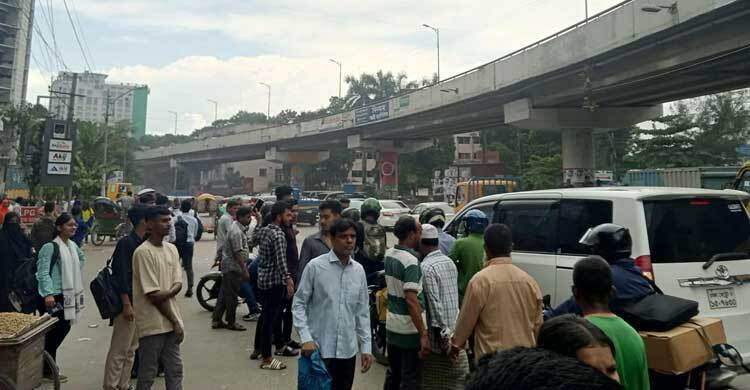
After staging a three-hour blockade that brought traffic in central Dhaka to a standstill, technical students lifted their protest at Satrasta intersection in Tejgaon around 2:00pm on Wednesday, restoring normalcy to one of the capital’s busiest corridors.
The demonstration, which began at approximately 11:15am, saw hundreds of diploma and technical institute students gather to protest what they describe as the systematic erosion of technical education and the privatisation of engineering jobs, issues they say marginalise skilled technical graduates in favor of university-degree holders.
Their protest triggered massive traffic gridlock across Tejgaon and spilled into adjacent arteries, including Kazi Nazrul Islam Avenue, Gulshan Avenue, and the Airport Road, severely disrupting daily commutes and commercial activity.
Commuters, office-goers, and emergency services alike bore the brunt as Dhaka’s already strained transport system ground to a near halt.
Four-point ultimatum to the state
Before dispersing, the students reiterated their four core demands:
Maximum legal punishment for individuals who publicly threatened to “shoot and slaughter” diploma engineers during recent rallies, a reference to inflammatory remarks made against the Technical Students’ Movement.
Immediate halt to all state-backed initiatives supporting the “unreasonable three-point demands” of BSc engineering students, which the technical students argue further entrench discrimination against diploma holders.
Full implementation of the “logical six-point demands” put forward by the Technical Students’ Movement of Bangladesh, including curriculum reform, job quota adjustments, and recognition of technical qualifications in public recruitment.
Introduction of a unified “one-channel” engineering education system, eliminating the artificial hierarchy between university and technical institute graduates and ensuring equal professional rights.
Calm restored but tensions remain
While traffic gradually resumed after 2:30pm, the underlying grievances remain unresolved. Student leaders warned that if their demands are ignored, larger, longer, and more disruptive actions will follow.
“We didn’t block the road for fun. We blocked it because no one listens to us until the city stops moving,” said a student spokesperson. “This is not the end. It’s a warning.”
Local authorities and police maintained a low-profile presence throughout the protest, opting for dialogue over confrontation, a strategy that likely contributed to the peaceful dispersal.
Why it matters
Technical education forms the backbone of Bangladesh’s industrial and infrastructure development yet its graduates often face systemic bias in public sector recruitment, salary structures, and social recognition. This protest reflects a growing, organized movement demanding dignity, equity, and institutional reform.
As Bangladesh races toward its Vision 2041 goals, experts warn: ignoring technical talent isn’t just unfair, it’s economically unsustainable.