
‘It’s not easy to live by writing the truth’, Bibhu Ranjan's last words

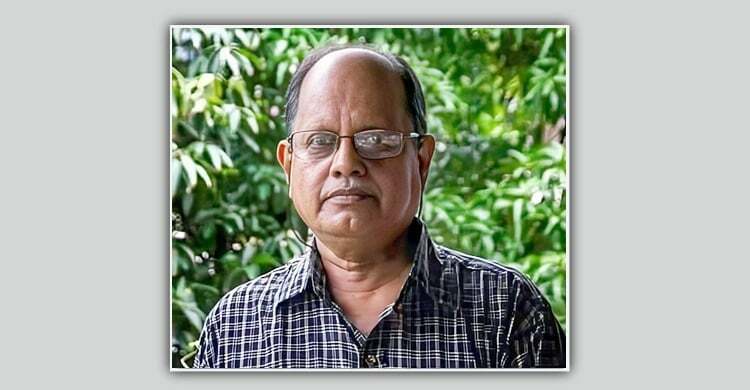
This is the final piece by renowned journalist Bibhu Ranjan Sarkar. He sent the article to bdnews24.com by email shortly after 9:00 a.m. on August 21, with a note: “You may publish this as my final writing.” Given its gravity and public significance, Jago News is publishing a translated version for our readers.
Open Letter
Bibhu Rajan Sarkar
I am Bibhu Rajan Sarkar, currently working in the editorial department of Ajker Patrika. I have been in journalism for over five decades. I have witnessed the country’s transformations, movements, uprisings, and political changes. Throughout this time, I have written for truth, for the people, and for the nation. Yet today, as I reflect on my life, I feel deeply that living by writing the truth is not easy.
My profession has taught me that speaking the truth requires courage. As joint secretary of the central committee of the Bangladesh Chhatra Union during my student days, I learned that sometimes one must conceal identity to reveal truth. During Ershad’s regime and other political movements, writing without courage was impossible. We, journalists like me, used pseudonyms not for gain, but for survival.
In the Liberation War, my stance was clear: independence meant accountability to the nation. In my locality, some obtained freedom fighter certificates despite no contribution and still enjoy benefits. I never took that path.
I entered journalism when I was a school student, serving as district correspondent for Daily Azad. Even then, full-length articles under my name were published. My involvement in left-wing politics began in those years. My political idealism and ethical honesty of journalism never led me toward personal comfort. There was only one motive: duty. I have never knowingly neglected responsibility or shirked work. I may not be brave, but no one has ever forced me to write against my will. Though, a few years ago, Nayeemul Islam Khan, through persuasion, did get me to write praise for his wife, Monti Apa!
Today’s journalism faces different challenges. Many write by concealing truth—driven by benefit, interest, status, or money. Even when I concealed my name, I never concealed truth. Perhaps that is why, after more than fifty years, I still earn no respectable salary or allowance. I won’t name figures to avoid embarrassment, but I’ve heard my department head earns nearly double my pay. If only I had such a salary, I wouldn’t have to borrow constantly to survive. Excluding other costs, my monthly medicine alone costs Tk 20,000–22,000—likely an understatement. I suffer from arthritis, liver cirrhosis, diabetes, heart disease. Debts from treating arthritis and liver disease are immense. My son is also unwell and requires regular care. Borrowing has become unavoidable.
During Sheikh Hasina’s regime, many gained benefits under various pretexts. At one point, setting aside all shame, I too sought help at her court – but received nothing. Many journalists received land plots. I applied twice, failed both times. It is said that fortunes changed simply by writing books about Bangabandhu and Sheikh Hasina. Yet for two books published by Agami Prakashani, I earned no royalties. That is fate. Once, I accompanied Sheikh Hasina on a trip to Singapore. For that, I received a small amount of pocket money. It barely covered a coat, trousers, and shoes – leaving me further in debt. That trip is the only reason I own a suit, tie, and formal shoes. My entire life, I’ve worn sandals.
Despite standing for the Liberation War and secular democratic politics, I am still labelled with the 'Awami tag'. Yet even under Awami rule, I received no real reward – no land, no decent job. Instead, I remained unemployed for long stretches, and debts grew. Health and family responsibilities weigh heavily.
I have worked at Ajker Patrika for the past four years. No promotion, no raise. Meanwhile, prices rise daily. How can a newspaper stand for justice when there’s injustice within?
What made the weekly Jaijaidin popular was certain writings with one author being Tarikh Ibrahim. That was my pen name, used to evade Ershad’s wrath. After Ershad fell, we met a few times. He treated me with respect, calling me ‘Deshi’.
I worked at Daily Sangbad, Weekly Ekata, and Daily Rupali. I edited Weekly Chaltipatra. I was executive editor of Weekly Mridubhashan. Also edited a daily called Dainik Matribhumi. At one time, my writings appeared regularly in nearly every major daily and online platform. When Jankantha was most popular, my opinion pieces and reports ran on the front page.
Yet now, when I submit articles to certain papers, I get no reply. They say my writing no longer “sits well” with readers.
Once, prominent figures read my work and praised me. Principal Dewan Mohammad Azraf, Principal Syedur Rahman—both commended me. I received appreciation from Ali Ahad, Professor Mozaffar Ahmed, writer Professor Shawkat Osman, Dr Rangalal Sen, and Professor Dr Ajay Roy. Abdul Mannan Bhuiyan, former BNP general secretary, showed me affection for my writing. Dr Muhammad Yunus personally called me at least twice to discuss my articles. Of course, such matters may not remain in his memory now. Today, they say my writing no longer attracts readers. Perhaps it’s true—maybe age has dulled my pen.
I’ve written thousands of articles, under real and pseudonymous names. But I’ve received little payment. Some newspapers paid me nothing despite years of work. Online platforms have been better, though one major outlet still owes me a significant sum. Yet today, my day begins with medicine, health checks, and worry over how to afford more.
In the past year, after the government changed, media conditions worsened. The Chief Adviser speaks of welcoming criticism. But his press wing is anything but open. Media executives live in fear waiting for a call demanding a story be taken down. Recently, Ajker Patrika’s online section was harshly criticiaed over one of my articles. Majaharul Islam Babul was also reprimanded for his writing. What was wrong with Babul’s piece? He wrote that the army sent Sheikh Hasina to Delhi in a military helicopter, and that militants, through meticulous design, have also killed people, not just police bullets. Where is the falsehood? Did Hasina secretly flee by hired helicopter? Perhaps Hasina’s police killed student masses – but who killed the police? Criticising a paper over such a minor piece is unjust.
All things considered, my position at the paper has become extremely precarious. The acting editor, a good soul, unable to bear pressure, has stopped speaking to me.
So what should I do? Which path should I take?
I write because I believed journalism meant courage. Speaking truth means risking life. Fifty years tell me that truth sometimes demands sacrifice of comfort. I never sought comfort. But I never wanted to spend my life with hand out, begging.
My journalist friend Mahbub Kamal thinks I must have a major problem. Otherwise, why, despite his secure life, has my uncertainty not ended? Isn’t that true? Why don’t my hardships end? Mahbub Bhai received land from Sheikh Hasina and two cash grants for treatment. Then, admirers worldwide generously donate to him on various occasions. If he needs a few lakhs, he gets crores. My fate is different. I have no admirers. Still, saying I receive no help would be false. I have a few kind, small-hearted supporters – otherwise, I wouldn’t be alive.
Mahbub Kamal has two sons, both successful, with good jobs at home and abroad. I have one daughter and one son. They are intelligent, but…
Why mention Mahbub Kamal when many exist? Because I played a small role in his rise. I persuaded Shafik Rehman to bring him from Patgram to Dhaka for Jaijaidin. It was through Jaijaidin that he became a renowned journalist.
I am insignificant, with a narrow heart. Perhaps that’s why others resent me. But I hold no ill will toward anyone. Lacking power to help, I never dream of harming. I know my limits. I know I have little knowledge or understanding.
In my family, besides my wife, I have two children—a daughter and a son. Both are naïve, like me, out of sync with today’s world. My daughter is older. She never failed an exam. She became a doctor, passed the BCS, got a job. While pursuing an MD in gastroenterology, she failed at the final stage. After the government changed, my brilliant daughter fell under the department head’s wrath and failed her thesis. Yet she has no political involvement. She passed the clinical exam, but must now retake the thesis. Who knows, they might post her to a remote area in the meantime.
My son graduated in MME from BUET. He secured a scholarship to study in the USA, but due to health issues, could not go on time. At four, he suffered from Guillain-Barré syndrome, fought between life and death for months, survived. I bore the cost of his treatment. After BUET, he passed several job exams, yet still has no confirmed appointment. What is his crime—his name, or me as his father? I do not understand.
Why am I writing this? I’m not sure I fully know. But for days, I’ve heard an ominous call. My mind is restless.
Mahbub Kamal offered financial help, but turned away after my response.
Lastly, I thank Matiur Rahman, editor of Prothom Alo. I worked with Mati Bhai at Ekata. He asked Shafik Rehman to bring me to Jaijaidin. He showed me affection, trust. He invited me to join his paper (then Bhorer Kagoj). He visited my home. But I didn’t want to leave Jaijaodin. That was perhaps the greatest mistake of my life. Mati Bhai, if you can, please forgive me.
I have no story of success. As a journalist, I never seized any solid opportunity. Somewhere, I’ve always been lacking. This deficit remains unbridged.
Let sorrow be my final companion. May all beings find happiness.
August 21, 5:00am
Siddheshwari, Dhaka
★ You may publish this as my final writing.