
Dan Brown’s new novel is fun, if you’re willing to leave your brain at the door

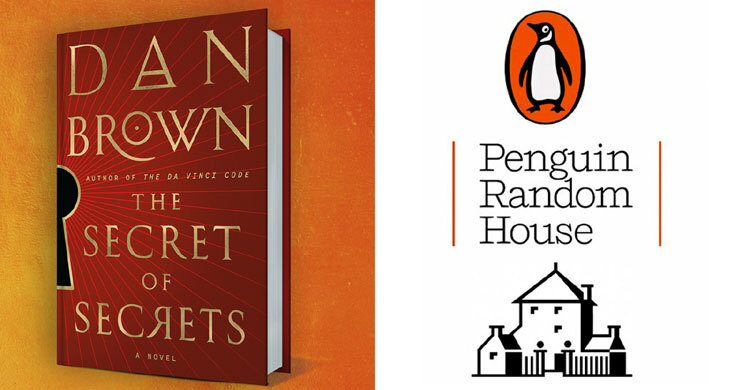
There is a moment early in Dan Brown’s latest thriller, The Secret of Secrets, that feels as though it were lifted straight from a parody of his own work.
Robert Langdon, Harvard professor of “symbology”, a word that does not exist outside Brown’s fictional universe, is walking through the misty streets of Prague when he sees a cloaked figure wearing a radiant crown and radiating a “stench of death.” Instantly, Langdon deduces this is no ordinary man, but the physical manifestation of a nightmare his girlfriend recently described. As a world-renowned expert in symbols, he interprets this as a prophecy.
Without hesitation, he races back to their hotel, shouts for everyone to evacuate, pulls the fire alarm and then leaps from a fourth-floor window into the icy Vltava River, all because he feels an explosion is imminent.
Spoiler: the hotel does not explode.
Nothing happens.
As Langdon drags himself, soaked and shivering, onto the riverbank, a crowd of furious, half-dressed guests stare in disbelief. It is slapstick of the highest order. It is Mr Bean meets The Da Vinci Code. Yet Dan Brown is not laughing. No one is. In Brown’s world, this is not comedy. It is high-stakes, world-altering suspense, delivered with the gravitas of a state funeral.
The Secret of Secrets, the sixth Robert Langdon novel and the first in eight years, does not so much stretch the boundaries of the thriller genre as it does bulldoze them with a golden obelisk. It is so absurd, so breathlessly illogical, that reading it feels less like engaging with literature and more like being trapped on a theme park ride designed by a conspiracy theorist with a PowerPoint obsession.
The plot, if one can call it that, begins when Kathleen Solomon, a “professor of noetics”, another invented term for a field that in reality skirts the edge of pseudoscience, completes a manuscript so revolutionary it threatens to “rewrite the fabric of reality.” Naturally, this draws the attention of shadowy government agencies, masked assassins and a man who believes he is a golem on a divine mission. Her editor is kidnapped. A colleague is murdered. She vanishes. Langdon, ever the dashing academic-slash-action-hero, is on the case.
And so begins the Dan Brown experience: a whirlwind of historical trivia, pseudo-science, over-italicised sentences and architectural tourism masquerading as suspense. Prague becomes less a city and more a checklist. Charles Bridge? Check. St Vitus Cathedral? Check. A passage that reads like a copied TripAdvisor entry? Double check.
You know the formula. There is always a fanatical killer with a supernatural aura, this time, a golem who may or may not be real. There is always a secret society, or in this case, a secret science. There is always a race against time to stop forbidden knowledge from falling into the wrong hands. And there is always Langdon, middle-aged, improbably fit, eternally stylish in his turtlenecks, solving puzzles that would stump Einstein, all while looking like he has just stepped out of a L’Oréal advert.
The irony, of course, is that it is not meant to be ironic. Brown plays every ludicrous twist with the solemnity of a papal encyclical. When Langdon “deciphers” a centuries-old symbol in three seconds, it is not impressive, it is insulting. When characters gasp at his brilliance, it feels less like admiration and more like brainwashing.
And yet, for all its flaws, there is a perverse kind of enjoyment to be had. The kind you get from watching Fast & Furious films where cars jump between skyscrapers and no one questions the laws of physics. Or from listening to a friend tell a conspiracy theory so wild you cannot help but laugh, until you realise they are serious.
Brown’s novels have always been fantasy, not just in plot but in their portrayal of intellectual life. His academics are rock stars. His professors are James Bond. Kathleen Solomon is not merely respected, she is famous. She is upgraded to a presidential suite on arrival. Her lecture at Prague Castle is packed with fans. Her research is so powerful that men in black suits abduct her editor to keep it from the public.
In reality, most academics are lucky if their partner reads their latest paper. But in Brown’s world, knowledge is not just power, it is superpower. And Langdon, with his encyclopaedic memory and effortless charm, is its ultimate embodiment.
The trouble is, this fantasy used to feel escapist. Now, it feels uncomfortably close to reality.
Because we do not just read Dan Brown anymore — we live in a world full of him. He is in the influencer who claims to have “cracked the code” of longevity with celery juice. He is in the online guru who sees hidden patterns in stock markets and ancient texts. He is in the man at the pub who leans in and says, “What if I told you…?” before launching into a 45-minute monologue about suppressed technology and secret societies.
Brown’s novels were once a guilty pleasure — a mindless escape from reality. But now, in an age where misinformation spreads faster than truth, where every amateur sleuth thinks they have uncovered “the real story,” the line between fiction and farce has blurred. The secret is not secrets anymore. The secret is that none of it matters — except to the man who believes he is the only one who sees the truth.
And that is why The Secret of Secrets feels less enjoyable than its predecessors. It is not that Brown has changed. It is that the world has caught up with him. The joke is no longer on Langdon. It is on all of us.
So yes, The Secret of Secrets is ridiculous. The writing is laughable. The science is fake. The characters are cartoons. But if you can switch off your brain, ignore the red flags and embrace the absurdity, there is still a thrill to be had.
Just do not expect it to mean anything. And whatever you do, do not jump out of a window because you feel something is about to explode.
Because in the real world, no one is coming to save you with a turtleneck and a crossword puzzle.