
A market on water: Where trade, tradition and tourism meet in Baithakata
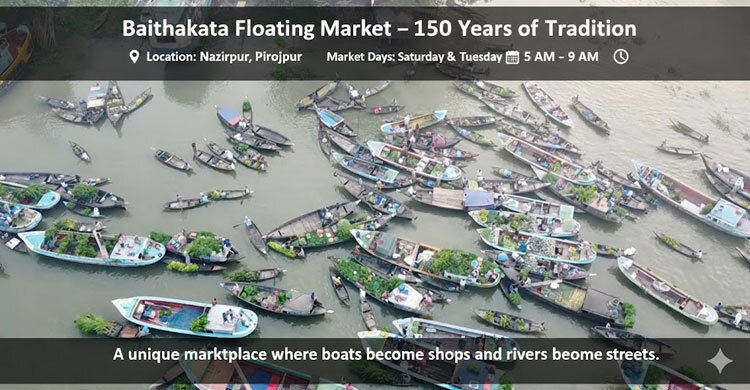
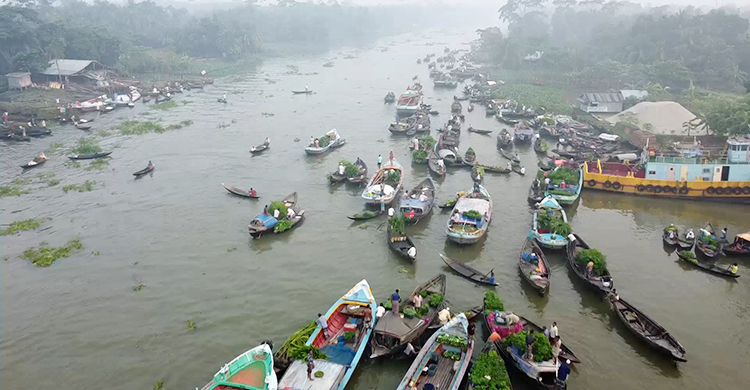
When dawn breaks over the Belua River in Nazirpur of Pirojpur, a quiet ripple turns into an extraordinary spectacle. Long before the sun climbs over the tree line, boats – small and large – begin to glide in. One by one, they anchor together until the river transforms into something magical: a floating marketplace that has survived more than a century.
Here, everything happens on water. Vegetables, saplings, spices, coconuts, snacks – even breakfast –are sold from boats rocking gently with the current. For generations, the people living along the Belua River haven’t just shopped here—they’ve depended on this floating bazaar for livelihood, community and connection.
A market older than memory
Locals say the Baithakata Floating Market is more than 150 years old – older than most written records. What began as a simple trading hub for farmers now serves as a wholesale centre for agricultural goods and an emerging tourist attraction.
The market comes alive twice a week – Saturday and Tuesday – but the busiest hour lasts just one magical stretch: 8 am to 9 am.
Miss it, and you miss the real show.
Life on boats: Business, breakfast and tradition
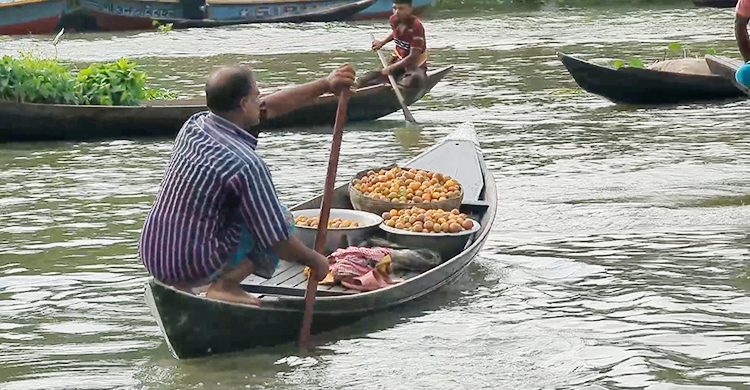
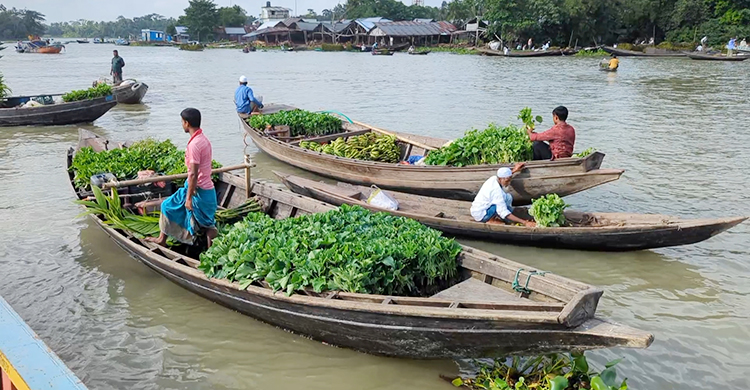
Standing at the riverbank, the scene feels almost cinematic. Boats loaded with cucumbers, pumpkins, ginger, leafy greens, bananas and bamboo seedlings float side by side. The smell of wet jute sacks mixes with river breeze.
Not far away, another boat serves steaming tea. One carries betel leaves and biscuits; another fries fresh snacks. On some mornings, foreign tourists can be seen balancing phones and excitement as they record the atmosphere – often comparing it to Thailand’s famous Damnoen Saduak market.
“If there were proper guest houses, more tourists would come,” says a local trader. “Many leave because they can’t stay.”
Voices from the river
Vegetable seller Rustam Ali proudly says: “Baithakata is the biggest traditional market in Pirojpur. My father traded here, and so did his father. Everything here floats – vegetables, seedlings, everything.”
Trader Shahjahan Sheikh, who has been coming here since childhood, adds: “The market may be 100 or even 150 years old. Roads are few – boats are everything.”
Coconut trader Mehedi Hasan nods toward stacked green coconuts: “Retailers from nearby villages come here by boat. We buy their coconuts and send them to Dhaka, Chattogram – even further.”
Another long-time trader, Kaiser Ahmed, reflects: “I’ve worked here for 30 years. Boats are essential, but if roads improved, the business would grow even more.”
A growing economic lifeline
According to the District Agriculture Department, produce from this floating market now reaches Dhaka, Chattogram, Barishal and Khulna. Wholesalers travel hundreds of kilometres for fresh supply.
Deputy Director Soumitra Sarkar says: “This floating market is vital for the region’s economy. It connects remote farmers to national supply chains. It also attracts tourists, including foreigners.”
More than a market, a living heritage
Baithakata is no longer just a trading spot. It is a rhythm, a culture, a way of life shaped by waterways rather than roads. The river feeds the people – and in return, the people keep the river culture alive.
With proper tourism planning, better infrastructure and community support, Baithakata could become a global attraction – one that tells the timeless story of Bangladesh’s waterland civilisation.
Until then, every sunrise keeps the tradition floating – boat by boat.