
London Underground brought to a standstill as RMT strike halts services

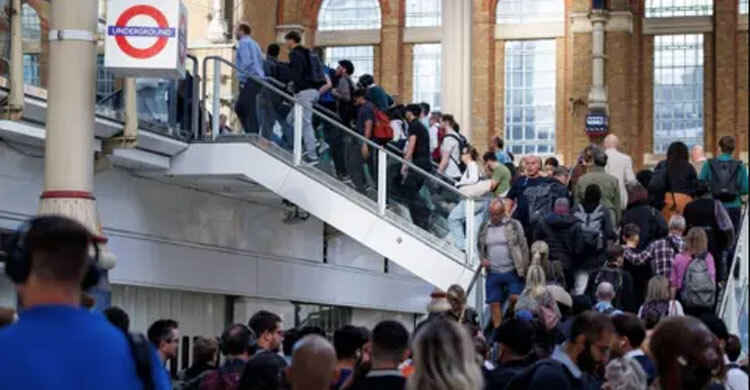
Commuters across the capital faced major disruption on Monday as the first of four planned strike days by the RMT union brought the London Underground to a standstill with Transport for London’s (TfL) website and app crashing under the surge in demand.
The industrial action, involving around 10,000 RMT members, including tube drivers and station staff, has suspended nearly the entire underground network, forcing millions to seek alternative routes to work. The strikes, which began with minimal impact on Friday, escalated into a full shutdown on Monday, with only very limited services running on the outer, above-ground sections of the Central and Metropolitan lines later in the morning.
With the Tube out of action, buses, the Elizabeth line, London Overground, and most National Rail services are bearing the brunt of the increased passenger load. Queues formed at major transport hubs across the city, and several key interchanges — including Farringdon — were closed due to the industrial action.
TfL’s digital infrastructure struggled to keep up. The TfL website and TfL Go app repeatedly failed to load journey plans, returning error messages or no results during peak hours, leaving many commuters without reliable real-time travel information.
The worst congestion is expected on Tuesday, traditionally a busier commuting day as more Londoners return to offices after working remotely on Mondays and Fridays.
Further disruption is looming: the Docklands Light Railway (DLR) will not operate on Tuesday and Thursday due to a separate dispute involving the same union.
Ride-hailing services have also been affected. Uber warned users of significantly higher fares due to surging demand. Some journeys saw prices spike to multiples of their normal cost, with a five-mile trip reportedly costing around £50.
The strike centres on the RMT’s demand for a reduced working week — seeking to lower the current 36-hour week without loss of pay — citing concerns over staff fatigue and long-term health impacts from shift work. TfL has offered a 3.4% pay rise and urged the union to put the proposal to members in a fresh ballot, but says it cannot accommodate reduced hours due to operational and financial constraints.
An RMT spokesperson defended the action: “We are not striking to inconvenience the public or small businesses. This industrial action is a direct response to TfL management’s refusal to even consider a modest reduction in working hours to improve safety and wellbeing.”
In response, Nick Dent, London Underground’s Director of Customer Operations, called the demands “simply unaffordable” and urged the union to end the strikes, warning of lasting damage to the transport network and public trust.
Support for the union’s stance came from the 4 Day Week Foundation. Campaign Director Joe Ryle said: “This is a bold and necessary stand. These workers deserve widespread support. The five-day working week is a century-old model that no longer reflects how we live and work today.”
Full Underground services are not expected to resume until 8am on Friday, assuming the final days of industrial action proceed as planned. In the meantime, TfL is advising passengers to allow extra travel time, check for updates, and consider working from home where possible.
Source: The Guardian