
Israel conducts airstrike on Hamas leadership in Doha

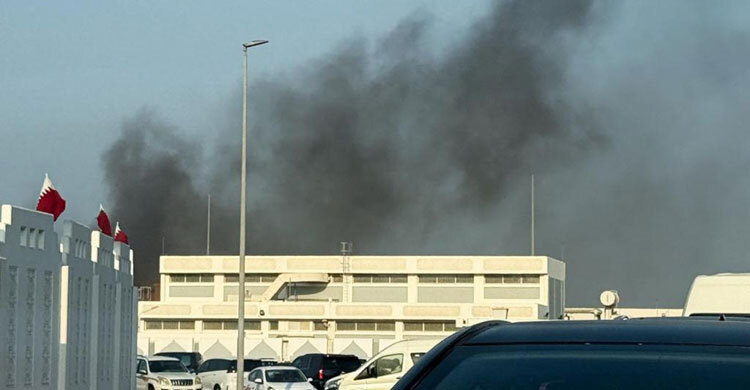
Israel has carried out a targeted military strike against senior Hamas leaders in Doha, Qatar, marking a dramatic and unprecedented escalation beyond the borders of Gaza and sparking a major diplomatic crisis in the Gulf.
The operation, confirmed by Israeli officials and the Israel Defense Forces (IDF), involved a "precise strike" conducted jointly with the Shin Bet security agency against members of Hamas’ political bureau. Though the IDF did not initially disclose the location, an Israeli source later confirmed to CNN that the attack took place in Qatar’s capital — the first known Israeli military action on Qatari soil.
Explosions rocked a residential area in Doha on Tuesday evening, sending thick plumes of smoke into the sky. Footage and photographs from the scene, captured by Reuters photographer Ibraheem Abu Mustafa, showed debris-strewn buildings and emergency crews rushing to the site.
The target, according to a senior Hamas official who spoke to the BBC, was the Hamas negotiating delegation, which was holding a meeting in the city. The group has long used Doha as a diplomatic base, with key figures — including chief negotiator Khalil Al-Hayya — maintaining a presence there to engage in ceasefire talks. Al-Hayya was reportedly in Doha just a day before the strike, meeting with Qatari Prime Minister Sheikh Mohammed bin Abdulrahman Al-Thani.
In a statement, the IDF said the operation targeted individuals “directly responsible” for the October 7 attacks that triggered the war in Gaza.
“For years, these members of the Hamas leadership have led the terrorist organization’s operations, orchestrated the brutal October 7 massacre, and managed the ongoing war against the State of Israel,” the military said, adding that “precise munitions and intelligence” were used to minimize civilian harm.
However, Qatar has vehemently condemned the strike, calling it a “flagrant violation” of international law and a direct assault on its sovereignty.
Dr. Majed Al Ansari, spokesperson for Qatar’s Ministry of Foreign Affairs, stated: “The attack hit a residential premises where members of Hamas’ political bureau reside. It constitutes a serious threat to the safety of individuals in Qatar and undermines regional security.”
He added: “The State of Qatar strongly condemns this reckless act and will not tolerate any infringement on its sovereignty or security. This kind of tampering with the stability of neutral diplomatic grounds is unacceptable.”
The strike has sent shockwaves through diplomatic circles. Qatar has served as a critical mediator in Middle East peace efforts, hosting negotiations between Israel, Hamas, the United States, and other international actors. The targeting of a delegation engaged in talks raises serious concerns about the future of diplomacy in the region.
“This is not just a military operation — it’s a strike against the very possibility of dialogue,” said a senior Arab diplomat based in the Gulf, speaking anonymously. “If mediators are no longer safe, who will step in next time?”
The incident marks a significant shift in Israel’s campaign, extending its reach into one of the most politically sensitive and neutral hubs in the Arab world. It also raises urgent questions about the limits of counterterrorism operations and the risks of destabilizing key allies.
The United States, which maintains a major military base in Qatar, has yet to issue a formal response. The United Nations and the Arab League are expected to convene emergency meetings in the coming hours.
As investigations continue, uncertainty remains over the number of casualties and the identities of those targeted. Hamas has not yet released an official statement on the condition of its leaders.
One thing is clear: with this strike, Israel has redrawn the geographic boundaries of its conflict — and in doing so, may have ignited a new and far more complex phase of the crisis.