
Equal rides: Ministers of next govt and UNOs to get same off-roaders

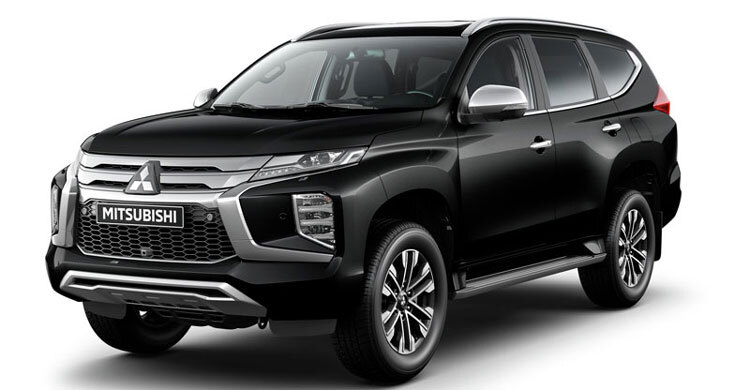
The government has approved the purchase of 255 high-specification off-road vehicles for ministers and Upazila Nirbahi Officers (UNOs), alongside 25 new microbuses for senior civil servants, in a move that has sparked debate over cost and necessity.
Under the plan, 60 SUVs will be allocated to future ministers, state ministers, and deputy ministers, while 195 identical off-roaders will be assigned to UNOs, key officials responsible for overseeing law and order and election duties at the sub-district level. All vehicles are to be of the same model: the Mitsubishi Pajero Sport QX (2427 CC).
The procurement, approved via direct purchase from Pragati Industries Limited without a public tender, will cost Tk 431.84 crore for the SUVs. Each vehicle is priced at approximately Tk 1.69 crore.
An additional TK 13 crore has been allocated for 25 microbuses, priced at TK 52 lakh each, to be used by divisional commissioners, senior assistant commissioners, and assistant commissioners for inspections, mobile courts, market monitoring, and relief distribution.
The total expenditure for the 280 vehicles comes to Tk 444.84 crore. The Finance Division has granted conditional approval for the purchase, following a proposal from the Ministry of Public Administration.
Rationale behind the purchase
The ministry cited the deteriorating condition of the existing government vehicle fleet as justification. The current cars assigned to senior officials were purchased in 2015-16, and many have exceeded nine years of service, requiring frequent and costly repairs. Officials argue that newer, more reliable off-roaders are essential for ministers and UNOs to carry out site visits, development monitoring, and election-related duties, especially ahead of the February 2026 parliamentary elections.
UNOs, who serve as assistant returning officers during elections, will use the new SUVs for field operations in remote and often poorly connected areas. The Ministry noted that robust, all-terrain vehicles are critical for maintaining law and order during the electoral process.
Similarly, the 25 microbuses will replace outdated models used in deputy commissioner offices, with only 72 currently in service across the country.
Conditions attached to approval
The Finance Division has imposed several conditions for the release of funds:
The new vehicles must be formally included in the Table of Organisation and Equipment (TO&E).
The Bangladesh Road Transport Authority (BRTA) must inspect and certify the older vehicles as unserviceable before replacement.
A Vehicle Condemnation Committee must meet and submit its findings to the Finance Division.
Decommissioned vehicles must be auctioned, with proceeds deposited into the national treasury.
All purchases must comply with the Public Procurement Act 2006 and Public Procurement Rules 2008.
Funding must come from the Ministry of Public Administration’s 2025–26 budget, with inter-ministerial adjustments if needed.
Budgetary concerns and criticism
Despite the approval, the decision has drawn criticism. An unnamed senior official at the Ministry of Finance expressed concern: “This approval came through while the financial advisor was abroad. At a time when the government is pushing cost-cutting measures, rumours of spending billions on 255 luxury SUVs are hard to ignore. Why are ministers and UNOs getting the same expensive vehicles? What justifies such high-end cars for upazila-level officers?”
Dr Zahid Hossain, former chief economist at the World Bank’s Dhaka office, questioned the timing and economic rationale: “The economy is under strain, and revenue collection has been weak. If the old vehicles aren’t completely unusable, why such a large-scale, costly purchase now? While UNOs do operate in remote areas, could more practical, less expensive models have been considered? This decision lacks coherence.”
Background of the decision
The procurement plan emerged from an inter-ministerial meeting on August 6, 2025, which discussed the disposal of 30 duty-free imported vehicles that failed to meet reserve prices at auction. It was decided to fund the new purchases through temporary allocations from the Department of Government Vehicles, with a formal request for additional budgetary support to follow.
Final word
While the government maintains the purchase is essential for administrative efficiency and election preparedness, critics argue that fiscal prudence should take precedence, especially when public funds are tight.
As the nation gears up for a new political chapter, the sight of ministers and UNOs cruising in identical Mitsubishi Pajero Sports may symbolise equality in mobility, but for many, it raises uncomfortable questions about priorities in a time of economic challenge.