
‘Int’l community ready to back long-term Rohingya solution’

Published: 5 October 2025, 11:22 AM | Updated: 5 October 2025, 11:25 AM
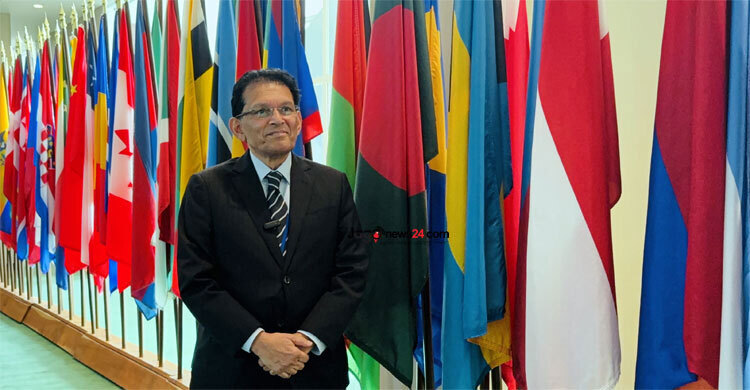
A high-level international conference on the situation of Rohingya Muslims and other minorities in Myanmar was held on September 30 at the United Nations Headquarters in New York. Representatives from 70 countries participated in the conference, which focused on achieving a lasting solution to the Rohingya crisis. The key points emphasised were the repatriation of Rohingyas and continued international assistance until their return. During the conference, the United States and the United Kingdom jointly announced aid commitments worth $96 million.
“For the first time in such a forum, we saw that the international community is ready to invest political will to achieve a long-term solution to this problem,” said Dr. Khalilur Rahman, National Security Adviser to the interim government and High Representative on Rohingya issues, in an interview with Jago News. The interview was conducted by Jago News’ New York correspondent, Ismail Hossain Rasel.
Jago News: What was achieved through this high-level conference on the Rohingya issue?
Khalilur Rahman: Last year, our chief adviser requested the UN to convene this conference. The UN General Assembly approved it swiftly, paving the way for today’s event. Two points emerged very clearly during the session. First, Rohingyas must be allowed to return to their homeland—repatriation is the top priority. Second, until their return, sufficient international assistance must be provided to support their stay in Bangladesh. These two points form the essential conclusions of the conference.
Jago News: Repatriation of Rohingyas is not possible without international support. How optimistic are you about receiving this assistance?
Khalilur Rahman: We hope that in the coming days, we will receive all types of assistance from the international community to resolve this issue. The most important factor is geopolitical will, which we expect the international community to provide. Until now, the main focus of the international community has been securing adequate aid. But for the first time, we have seen that they are ready to invest political will to achieve a long-term solution. This is very good news, especially for the Rohingyas—it is a major development.
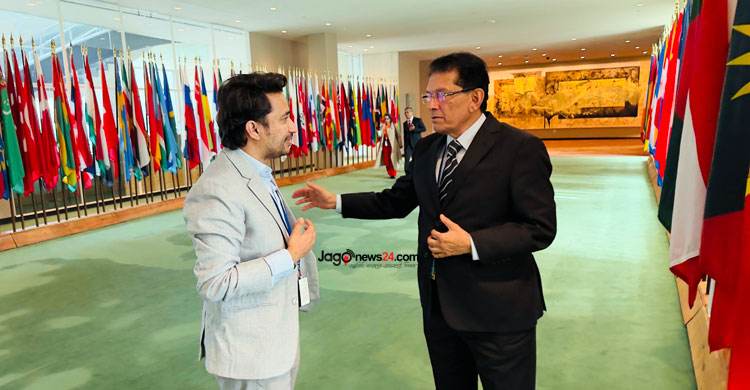
Jago News: Resolving the Rohingya issue requires unity. How do you assess the international community’s commitment?
Khalilur Rahman: In the conference, each participant was given only three minutes to speak. Yet everyone—whether from the United States, the European Union, ASEAN, or the OIC—repeated the same two key points in unison. Such a uniform stance is unprecedented. This gives us strong reason to believe that we will receive active support and assistance from the international community.
Jago News: Will the willingness of Rohingyas to return to their homeland be a factor? Are you monitoring their safety in Myanmar?
Khalilur Rahman: The situation in Rakhine is comparatively improving and stabilizing. It is now time to take genuine political steps. About 85–90% of Rakhine is under the control of the Arakan Army, with whom we maintain regular communication. Last week, the Arakan Army sent me photos showing internally displaced Rohingyas returning from camps to their villages and engaging in discussions with local authorities. The UNHCR High Commissioner visited the Rohingya camps and observed that many Rohingyas are willing to return to Myanmar.
Jago News: Will there be any positive outcome soon regarding the repatriation of the Rohingya?
Khalilur Rahman: There has been significant progress, though I cannot disclose all details at this moment. However, good news is expected shortly, and we hope this will happen during the tenure of this government.