
Commerce ministry to assess transhipment impact Thursday

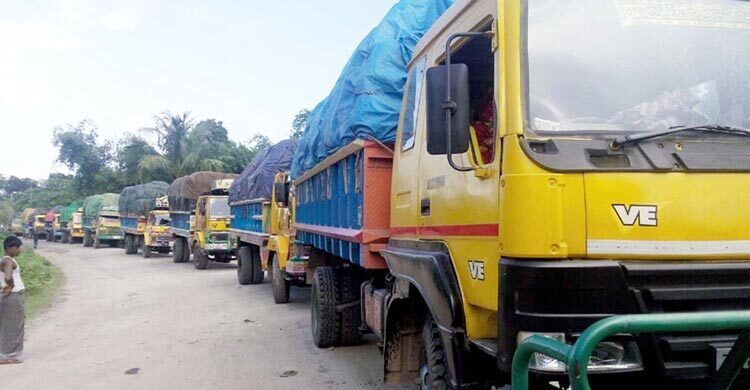
The Ministry of Commerce has called an urgent meeting Thursday to discuss the impact of India’s cancelling the transshipment facility that allowed Bangladesh to export goods to third countries via its land routes and what needs to be done.
A senior official from the ministry confirmed the development to Jago News but requested anonymity.
"We are aware of the cancellation of the transshipment facility by India. We will meet tomorrow to discuss what steps Bangladesh should take in response. A decision will be made during the meeting," the official stated.
The cancellation of the transshipment facility means that Bangladesh will no longer be able to use Indian infrastructure, including land routes and ports, to send goods to third countries. This is particularly problematic for exports to Bhutan, Nepal, and Myanmar, where alternative routes are either non-existent or prohibitively expensive.
Although Indian external affairs ministry spokesperson Ranadhir Jaiswal at a briefing on Wednesday afternoon claimed that the cancellation of transhipment facility will not affect Bangladesh’s exports to Nepal and Bhutan.
Bangladesh’s exporters have expressed grave concerns over the decision, warning of significant economic repercussions. The transshipment facility had enabled cost-effective and timely exports to these countries by leveraging India’s strategic geography. Now, without it, businesses fear they may lose access to key markets altogether.
For instance, ready-made garments (RMG)—a cornerstone of Bangladesh’s economy—relied heavily on Indian transit routes to reach destinations like Nepal and Bhutan. Similarly, food product exporters also depended on this route to maintain their presence in these markets.
The cancellation has already sparked alarm among food exporters. Debashish Singh, Head of Business at Danish Food, told Jago News that sending products to Bhutan, Nepal, and Myanmar will become nearly impossible.
"In a way, it can be said that exporting food products to these countries has stopped. There is simply no other viable option to send goods to Bhutan and Nepal," he explained.
Danish Food alone exports food products worth $200,000 annually to Bhutan and Nepal. Other major companies, including Pran and Square, also rely heavily on these markets. With air transport being impractical for most goods due to high costs, Bangladesh risks losing its foothold in these lucrative markets entirely.
According to a report in the Indian Express, India’s decision stems from suspicions about Bangladesh’s "intention to support China’s expansion of economic influence" in India’s north-eastern region. While Bangladesh has yet to officially comment on these allegations, the geopolitical implications of the move are undeniable.