
The priciest catch: A single 1.8kg hilsa auctioned at Tk 5,625

Published: 14 August 2025, 06:42 PM
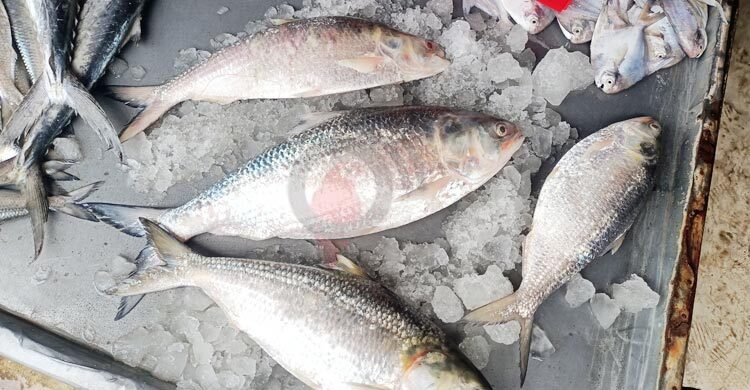
In the early morning of Thursday, August 14, as the tide receded off the coast of Kuakata in Patuakhali, fisherman Sunu Gazi hauled in a net that held more than just his daily livelihood. it carried a symbol of hope, rarity, and rising value in Bangladesh’s fishing economy.
Inside the tangled mesh was a single, magnificent ilish, a hilsa weighing 1.8 kgs. Glistening under the sun, the fish was not just large; it was exceptional. In a season where big hilsa have become increasingly scarce, this specimen stood out. By midday, it had been auctioned off for a staggering Tk 5,625 – nearly triple the market rate for average-sized fish.
The buyer? Nasir Uddin, a local businessman and seafood trader, who did not hesitate to pay a premium. “Large hilsa like this are rare this season,” he said, cradling the fish at Kuakata’s bustling fish market. “I bought it not just for profit, but because I knew people would come from miles to taste it. If I can sell it for even a small markup, it’ll be worth it.”
A fish worth its weight in gold
At Tk 3,125 per kg, the price paid for Sunu Gazi’s hilsa reflects a broader trend: the growing scarcity, and soaring value, of large, mature hilsa in Bangladesh.
Once abundant, the iconic fish is now under pressure from overfishing, climate change, and the catching of juvenile jatka before they can spawn. In response, the government has enforced seasonal bans and promoted conservation, but the results have been mixed.
Yet, in recent weeks, coastal fishermen from Kalapara to Kuakata report a promising uptick in the size and number of hilsa being caught. “Big hilsa are returning,” said Apu Saha, Senior Fisheries Officer for Kalapara Upazila. “Not just deep-sea fishermen, but coastal nets are also bringing in larger catches. I believe this could be the start of a recovery.”
Market on the rise
Despite signs of improvement in hilsa availability, prices continue to climb across local markets in the upazila, reflecting sustained high demand and ongoing supply constraints.
A recent market survey revealed that hilsa weighing over 1 kg is being sold at Tk 2,500 to 3,250 per kg, while fish in the 800-900 gram range fetch between Tk 1,875 and 2,000 per kg.
Hilsa measuring 600-700 grams are priced at Tk 1,750-1,900 per kg, and those between 500-600 grams go for Tk 1,000-1,200 per kg.
Interestingly, smaller fish in the 300-500 gram category are also being sold at around Tk 1,200 per kg, likely due to limited supply, while juvenile hilsa, known as jatka, are available at Tk 650 per kg, raising concerns about sustainability despite seasonal bans on their catch.
These prices, up sharply from previous seasons, highlight the imbalance between supply and demand. For middle-class families, hilsa is no longer an everyday meal but a luxury reserved for weekends or special occasions.
The fisher’s dilemma
For fishermen like Sunu Gazi, the high price of a single fish brings joy but also underscores a deeper struggle.
“I may not catch much every day,” Gazi said, “but when I do get a big one, it feels like a blessing. This fish gave me more than a week’s income in one sale. Still, I worry – will there be more next year? Will my son be able to fish like this?”
His sentiment echoes across coastal communities, where fishing families are caught between celebration and uncertainty. A good catch today doesn’t guarantee sustainability tomorrow.