
Chattogram Port implements 41% average hike in tariffs for 56 services

Published: 15 October 2025, 04:28 PM
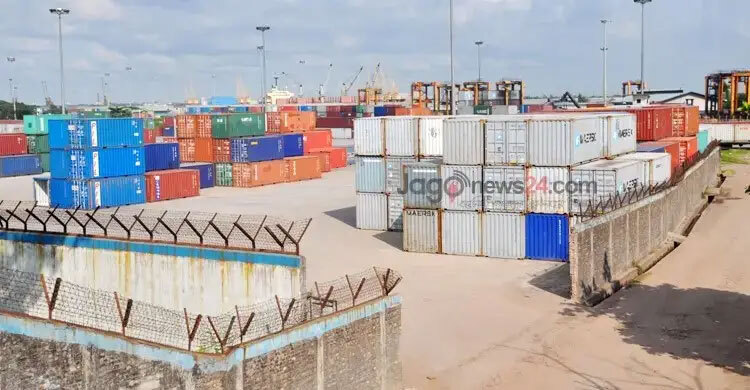
In a move that has sent shockwaves through Bangladesh’s trade and logistics sectors, the Chattogram Port Authority (CPA) has enforced a sweeping revision of its tariff structure, increasing charges for 56 key port services by an average of 41%.
The new rates came into effect at midnight on Tuesday, 15 October 2025—following a one-month postponement from the initially planned 15 September rollout, reportedly on the instructions of Shipping Adviser Brigadier General (Retd) M Sakhawat Hossain.
While the port authority defends the revision as necessary for operational sustainability and modernisation, industry stakeholders have reacted with alarm, warning that the steep hikes—implemented without prior consultation—will inflate the cost of doing business, weaken export competitiveness, and ultimately burden consumers with higher prices across a wide range of goods, from staple foods to industrial inputs.
Sharp increases across critical services
The tariff revision affects nearly every facet of port operations. Among the most dramatic increases are those for essential maritime support services:
· Pilotage charges per vessel have more than doubled, rising from $357 to $800—a 124% increase.
· Tugboat assistance, vital for berthing and unberthing large vessels, has seen fees surge by up to 300% in some cases.
· Container handling (lifting and lowering) per TEU (20-foot equivalent unit) has jumped from $43.40 to $68, a 56% rise.
· Gantry crane usage per TEU now costs $20.80, up from $15—an increase of nearly 39%.
For conventional (non-containerised) cargo, the changes are equally significant. Wharfage and extra handling charges are now tiered by cargo type and weight:
·Bagged cargo: $0.964 per tonne
· Bulk cargo: $1.532 per tonne
· Break-bulk cargo under 3 tonnes: $1.393 per tonne
· Cargo between 3–20 tonnes: $2.610 per tonne
· Cargo over 20 tonnes: $3.626 per tonne
Additionally, a 30% surcharge now applies to backed cargo for key commodities like wheat and rice, while shutout cargo incurs a fee of $0.982 per tonne.
Storage costs escalate sharply after free periods
The revised storage (warp rent) policy retains initial grace periods—four days free for import cargo, six for exports, and ten for transshipment—but imposes steeply escalating daily charges thereafter:
· Bagged cargo:
· Days 5–11: $0.182/tonne/day
· Days 12–20: $0.546/tonne/day
· Day 21 onward: $0.728/tonne/day
· Bulk cargo:
· Days 5–11: $0.310/tonne/day
· Days 12–20: $0.930/tonne/day
· Day 21 onward: $1.240/tonne/day
· Other cargo:
· Days 5–11: $0.619/tonne/day
· Days 12–20: $1.857/tonne/day
· Day 21 onward: $2.476/tonne/day
These escalating penalties are expected to pressure importers and exporters to expedite cargo clearance, potentially disrupting supply chains already strained by global logistics volatility.
Industry outcry over lack of consultation
Traders and shipping agents have condemned the unilateral nature of the decision. Amrul Haque, Managing Director of Sicom Group, described the move as “regrettable” and “disconnected from ground realities.” He noted that Chittagong Port remains a profitable entity and questioned the rationale for burdening trade with such steep hikes during a period of economic fragility.
Syed Mohammad Arif, President of the Bangladesh Shipping Agents Association, confirmed that international carriers—including CMA-CGM—have already begun adjusting their freight rates in response. “Mainline operators are passing on these costs directly to shippers,” he said. “We’re looking at a near 50% increase in total container and vessel-related expenses.”
Aminul Islam Swapan of Nabil Group, a major wheat importer, warned that even bulk commodities will see higher landed costs. “When port tariffs rise across the board, the extra expense flows downstream—first to wholesalers, then to retailers, and finally to consumers,” he explained.
The impact extends to perishable goods as well. Muhammad Touhidul Alam, Organising Secretary of the Bangladesh Fresh Fruits Importers Association, pointed out that reefer container tariffs—used for importing fruits, fish, meat, garlic, and ginger—have also increased. “With international fruit prices already high, this new tariff layer will push retail prices even further out of reach for ordinary consumers,” he said.
Port authority downplays consumer impact
In contrast, Port Secretary Md Omar Faruk sought to reassure the public, arguing that the actual per-unit cost increase for bulk commodities remains minimal. Citing wheat as an example, he noted that the port handling cost per kilogram would rise from 32 paisa to just 44 paisa—an increase of 12 paisa. “We do not believe this marginal addition will significantly affect end consumers,” he stated.
However, industry experts counter that the port tariff is only one component of a much larger logistics chain. When combined with higher shipping line surcharges, customs delays, inland transport costs, and financing expenses, the cumulative effect could substantially inflate final prices.
Calls for suspension and dialogue
Trade associations are now demanding an immediate suspension of the new tariff structure and the formation of a joint committee comprising port authorities, shipping agents, importers, and exporters to review the rates. “We had proposed a modest 10–15% increase if absolutely necessary,” said Khairul Kabir Sujan, Director of the Bangladesh Shipping Agents Association. “Instead, we’ve been handed an average 41% hike—with some services quadrupling in cost. This is not reform; it’s revenue extraction at the expense of national trade.”
With Chattogram Port handling over 90% of Bangladesh’s international trade, stakeholders warn that unchecked cost escalation could divert cargo to competing regional hubs like Colombo or Chennai, eroding the country’s strategic maritime advantage.
As pressure mounts, the government faces a critical balancing act: ensuring port sustainability while safeguarding the competitiveness of Bangladesh’s export-import ecosystem in an increasingly volatile global economy.