
Political unrest hits businesses hard as sales plummet, supply chains disrupted

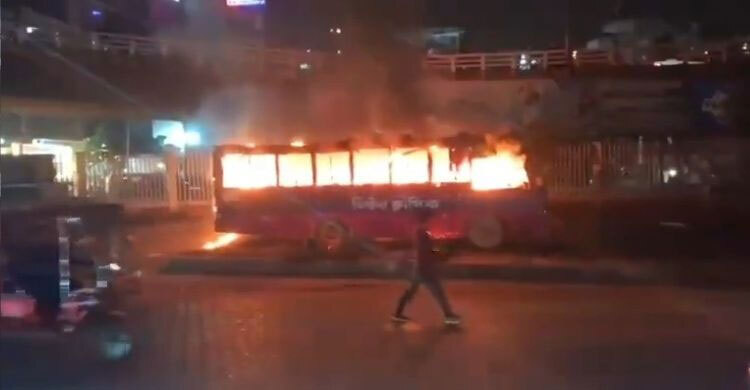
The wave of political turmoil sweeping across Bangladesh following the verdict against ousted former Prime Minister and Awami League President Sheikh Hasina has begun taking a heavy toll on the country’s business and trade.
Violent incidents – including arson attacks on buses, petrol bomb blasts and sporadic crude bomb explosions – along with “lockdown” and “shutdown” programmes announced by the banned party, have shaken consumer confidence and disrupted market activity nationwide.
Business leaders warn that the combination of political uncertainty, deteriorating law and order, and prolonged inflation has created one of the most challenging business environments in recent years. Consumer purchasing power, already eroded by high prices, has shrunk further as fear restrains people from going out to shop. Retail and wholesale sales have fallen sharply, with traders describing the situation as “deeply unfavourable” for commerce.
Empty markets, fearful shoppers
In Dhaka, footfall dropped significantly on November 12 and again on November 17 – the day of the verdict – and the day after, as residents avoided going outdoors unless absolutely necessary. The violence in the capital intensified public anxiety, leaving major shopping hubs quiet and half-empty.
Old Dhaka’s bustling commercial centres – English Road, Bangshal, Shyambazar and Moulvibazar – saw steep drops in customer turnout. Popular retail zones such as Bashundhara City Shopping Mall, Mouchak, Khilgaon, and the Chinatown Market in Paltan reported large-scale stagnation in sales. Restaurants, cafes, and entertainment venues also witnessed a drastic decline in visitors.
“People are not coming to the market due to the panic,” said Firoz Alam, owner of New Jaroya Fashion in Mouchak Market. “We used to sell Tk 10,000-12,000 a day; now we’re not even reaching half of that.”
Even street vendors faced the crunch. Ejazul, a winter clothing seller near New Market, said peak season demand had evaporated: “Buyers are not coming out because of the fear created by cocktail blasts and bus burning. Sales are the lowest I’ve seen.”
Wholesale markets report the steepest falls
The disruption is more visible in wholesale hubs, where business depends heavily on buyers travelling from outside Dhaka. Many are choosing to stay home to avoid travel risks.
“People tell me not to go to the market because ‘there may be a riot’,” said Bashir Uddin, President of the Moulvibazar Traders’ Association. “Wholesale buyers from outside Dhaka are not coming. Sales are down by half.”
Shyambazar, one of the country’s biggest daily necessities markets, reported similar declines. Meanwhile, at Karwan Bazar, reduced supply caused by transport disruptions has pushed up vegetable prices.
“The instability and the so-called lockdown have affected supply,” said Omar Faruk, President of the Karwan Bazar Traders’ Association. “That is why the prices of many vegetables are rising.”
Corporate sector also feeling the strain
Large importers and corporate groups echo these concerns, warning that supply-chain slowdowns could intensify if political instability persists.
“There is stagnation everywhere – from those we buy from to those we sell to,” said Abul Bashar Chowdhury, Chairman of BSM Group. “However, this is a transition period. We hope the country will overcome this situation soon.”
Economic uncertainty deepens
With consumer confidence shaken, travel disrupted, and wholesale networks stalled, economists warn that prolonged political unrest could steadily erode the economy by lowering domestic consumption, disrupting import and export supply chains, increasing the prices of essential goods, delaying crucial investment decisions, and reducing overall industrial productivity.
For now, business leaders say the priority is restoring a sense of normalcy. But with elections approaching and political tensions rising, Bangladesh’s economic recovery faces growing uncertainty.
“Fear is everywhere,” said Bashir Uddin. “And until that goes away, business cannot return to normal.”