
‘36 Hours of Betrayal’: Gripping new docu on Peelkhana Massacre released

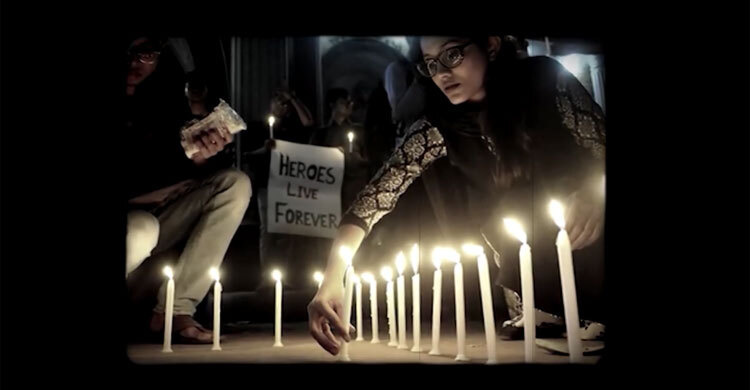
A new documentary titled ‘36 Hours of Betrayal’, produced by the Ministry of Cultural Affairs, was officially released on Monday, shedding harrowing light on the Peelkhana massacre, the bloody mutiny that shook the nation in February 2009 and, as the government now asserts, marked the beginning of 16 years of authoritarian rule.
The film’s release was confirmed by Suchismita Tithi, Assistant Press Secretary to the Chief Adviser, who said that the documentary is part of a larger film series being produced on the fascist misrule and the July Uprising that ended it.
“The BDR Massacre – from where fascism emerged, from where 16 years of subjugation began,” read a statement from the Chief Adviser’s Office.
“As part of this historical reckoning, 36 Hours of Betrayal has been released to ensure the truth is never buried again.”
A nation’s trauma, frame by frame
The documentary, also shared on Chief Adviser Yunus’s official Facebook page, chronicles the brutal 36-hour siege at the Bangladesh Rifles (BDR) headquarters in Peelkhana, where 74 people, including 57 army officers, were brutally murdered by mutinous soldiers during the annual Durbar festival.
Through chilling survivor accounts, forensic evidence, and never-before-seen visuals, the film reconstructs the horror, chaos, and betrayal that unfolded behind the high walls of the Peelkhana.
One of the most startling revelations comes from Captain Shahnaz, a member of the original 2009 Search and Rescue Team, who recounts a disturbing discovery: “We found a submachine gun (SMG) sling that looked unusual, it had a binocular mount attached. That’s not standard BDR or army issue. And inside the sling, the word ‘Tiger’ was written. This wasn’t our equipment. It was ordnance, but not from our military. These are questions that have waited 15 years for answers.”
More than a documentary, a call for justice
While the film serves as a memorial to the victims, it also functions as a political and historical indictment, positioning the 2009 massacre not as an isolated mutiny, but as the catalyst for a long era of repression under the previous regime.
With the nation now in a transitional phase, 36 Hours of Betrayal is being seen as both art and evidence, a tool to educate the youth, honour the fallen, and demand accountability from those who may have enabled or exploited the tragedy.
On social media, the documentary has sparked intense discussion. Survivors’ families have praised its authenticity, while activists are calling for reopened investigations into unresolved leads including the mysterious origin of the “Tiger”-marked equipment.
As the credits roll on 36 Hours of Betrayal, one message echoes clear: The truth may have been buried, but it was never gone.