
The plastic-eating bacteria brewing painkillers

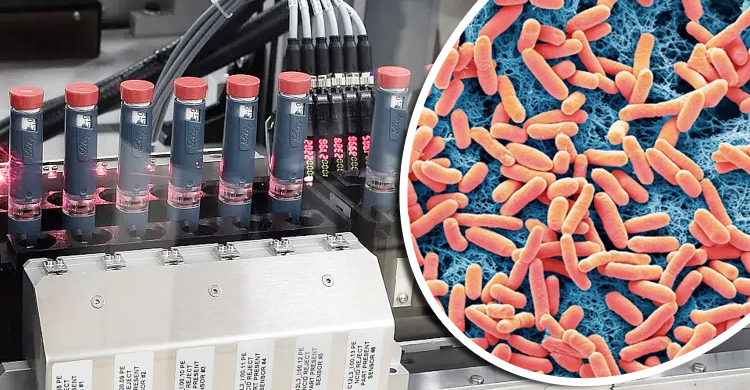
Plastic waste is one of the most stubborn problems of our age. But what if those discarded bottles and packaging could be transformed into something unexpectedly useful—such as medicine?
Earlier this year, scientists at the University of Edinburgh announced that they had genetically engineered a common bacterium, Escherichia coli, to digest molecules derived from plastic and convert them into paracetamol, the world’s most widely used painkiller. It is an experiment that highlights not only the promise of biotechnology in tackling environmental waste, but also the surprising versatility of a microbe that has shaped the course of modern science.
From villain to workhorse
To the public, E coli is often known as the culprit behind food poisoning. Yet certain strains of the bacterium are harmless—and in the laboratory, invaluable. “If you want to prove something is possible with biology, E coli is a natural first stage,” explains Stephen Wallace, professor of chemical biotechnology at Edinburgh, whose group has previously engineered the bacterium to turn sewer fatbergs into perfume and plastic waste into vanilla flavouring.
In biotechnology, E coli is considered a “workhorse”. It grows rapidly, tolerates manipulation, and provides researchers with an unrivalled genetic toolkit. These qualities make it ideal not only for proof-of-concept studies, but also for large-scale industrial processes. Today, enormous fermenters filled with engineered E coli function like living factories, producing vital medicines such as insulin as well as chemicals used in fuels and solvents.
A century of scientific firsts
The story of E coli in science stretches back to 1885, when German paediatrician Theodor Escherich first isolated the bacterium from infant intestines. Its reputation as a model organism solidified in the mid-20th century.
In the 1940s, researchers discovered that E coli could exchange genes in a form of “bacterial sex”—a revelation that reshaped the understanding of heredity. The bacterium later helped scientists decipher the genetic code, and in the 1970s became the first organism to be genetically engineered. By 1978, it achieved a milestone with the production of synthetic human insulin, a life-saving advance for people with diabetes. Nearly two decades later, it was among the first organisms to have its entire genome sequenced, giving researchers a detailed map for manipulation.
For microbiologist Adam Feist of the University of California, San Diego, who designs microbes for industrial applications, the appeal is clear. “The more I work with different micro-organisms, the more I appreciate just how robust E coli is,” he says.
The limits of a familiar microbe
Still, reliance on a single species has its drawbacks. Paul Jensen, a microbiologist at the University of Michigan, cautions that focusing so intensely on E coli may prevent researchers from exploring other microbes with natural abilities we have yet to harness. In landfill sites, for example, there may be bacteria already capable of breaking down complex waste products or producing entirely new materials.
Some scientists are beginning to investigate alternatives. One promising candidate is Vibrio natriegens, first isolated in a Georgia salt marsh in the 1960s. With a growth rate twice that of E coli and an exceptional ability to absorb foreign DNA, it has drawn comparisons to upgrading from “a horse to a car,” says Buz Barstow, a biological engineer at Cornell University. His team hopes to use it for ambitious projects such as generating biofuels from carbon dioxide and extracting rare earth metals.
Yet Vibrio remains a work in progress, lacking the genetic tools and industrial track record that make E coli so reliable. “E coli is a tough thing to replace,” Feist notes.
Waste into medicine
The Edinburgh project is a reminder of just how far biotechnology has advanced since Escherich’s first cultures. A bacterium once studied to illuminate the fundamentals of biology is now being engineered to tackle two of society’s biggest challenges: pollution and healthcare.
If microbes can be coaxed to turn plastic waste into painkillers, fatbergs into fragrances, and perhaps in the future, carbon emissions into fuels, then the humble E coli may continue to surprise us—as both a survivor of our guts and a cornerstone of sustainable science.
Source: BBC