
Mamata initiates repatriating harassment victims, including push-ins in Bangladesh

Published: 19 August 2025, 06:12 PM
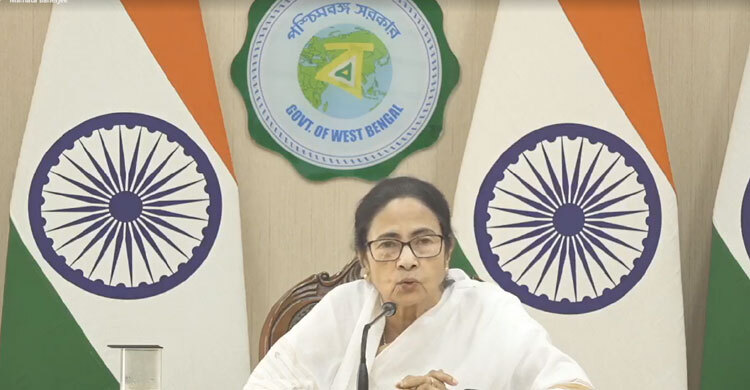
In a significant move aimed at supporting Bengali-speaking Indian migrant workers facing alleged harassment across India, West Bengal Chief Minister Mamata Banerjee has launched a new rehabilitation scheme named ‘Shramshree’.
The initiative will provide financial aid, housing, healthcare, and employment support to those returning to the state after enduring discrimination or abuse in other parts of the country – including cases where individuals were allegedly pushed into Bangladesh or detained without cause.
Addressing journalists at Nabanna, the state secretariat in Kolkata, Mamata accused several BJP-ruled states of conducting what she described as a “systematic campaign” against Bengali-speaking migrants. She claimed that in regions governed by the BJP, speaking Bengali has increasingly led to stigmatisation, arbitrary arrests, and even forced displacement.
“In states with a so-called ‘double engine’ government, there is a deliberate targeting of Bengali language and identity,” she said. “People are being picked up from the streets, harassed at police stations, jailed in places like Andhra Pradesh, Haryana, Delhi, and Rajasthan – or worse, pushed across the border into Bangladesh.”
Over 10,000 affected, hundreds rescued
The Chief Minister stated that an estimated 2.2 million Bengali migrant workers and their families have faced some form of harassment. To date, the West Bengal government claims to have facilitated the return of 2,730 families, amounting to over 10,000 individuals, many of whom were released from detention only after legal intervention.
“Each case required court intervention,” Mamata noted. “Some were unlawfully pushed into Bangladesh; others remained incarcerated for extended periods without proper charges. This cannot be allowed to continue.”
The ‘Shramshree’ scheme: A lifeline for returnees
The newly launched Shramshree scheme is designed to ensure that returning workers are not only welcomed back but also empowered to rebuild their lives with dignity. Key components of the programme include:
One-time financial assistance: A lump sum of ₹5,000 will be provided to each returning worker upon re-entry to West Bengal.
Monthly stipend: Until they are employed, beneficiaries will receive ₹5,000 per month as interim financial support.
Livelihood support: Workers will be assessed for skills, and job placements will be made accordingly. Those without formal skills will receive training under state-run vocational programmes.
Food security: Recipients will be issued a Khadya Saathi card, enabling access to subsidised food grains and essential supplies.
Healthcare access: A Swasthya Saathi health card will be provided to ensure free medical check-ups and treatment under the state’s health insurance scheme.
Housing and shelter: For those without homes, temporary accommodation will be arranged in community centres or government shelters.
Education for children: The state will ensure that children of returning families are enrolled in government schools without delay, with special attention to continuity in learning.
A call for dignity and protection
Mamata Banerjee framed the initiative as both a humanitarian and political imperative. “These are our people – hardworking, honest citizens who went elsewhere in search of livelihood,” she said. “They should not be treated as criminals for speaking their mother tongue.”
She reiterated that the West Bengal government would continue to advocate for the rights of Bengalis across India and called for stronger inter-state protocols to protect migrant workers from xenophobia and institutional abuse.
The Shramshree scheme has been welcomed by civil society groups, though some experts have urged transparency in implementation and eligibility criteria to ensure equitable access. As migration remains a critical issue in India’s socio-economic landscape, West Bengal’s move marks one of the first state-led efforts focused specifically on repatriation and reintegration of linguistically targeted workers.
With this initiative, Mamata Banerjee has not only spotlighted the vulnerabilities of internal migrants but also positioned West Bengal as a sanctuary for those who feel displaced – even within their own country.