
US visa ban blocks Mahmoud Abbas, 79 Palestinian leaders from UN meeting

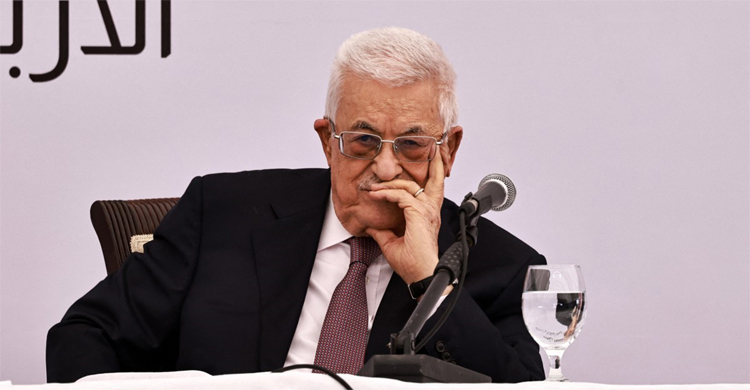
Palestinian President Mahmoud Abbas has been barred from attending next month’s UN General Assembly session in New York after the United States revoked his visa and those of around 80 other Palestinian officials, the US State Department has confirmed.
Abbas, who had been expected to lead the Palestinian delegation to the annual gathering of world leaders, was among those affected by the decision, which US Secretary of State Marco Rubio said was taken due to the Palestinian leadership’s efforts to secure “the unilateral recognition of a hypothetical Palestinian state” and its failure to condemn terrorism.
The move, welcomed by Israel, breaks with long-standing practice, as the US is generally expected to allow entry to foreign officials attending meetings at the United Nations headquarters in New York.
The decision comes amid growing international momentum for recognising Palestinian statehood, led by France, ahead of a planned meeting on the two-state solution co-hosted by France and Saudi Arabia at the start of the General Assembly.
Riyad Mansour, Palestine’s ambassador to the UN, had previously confirmed that President Abbas would attend the high-level segment of the Assembly. However, a State Department official later stated that visas had been denied or revoked for Abbas and numerous members of the Palestine Liberation Organisation (PLO) and the Palestinian Authority (PA).
Rubio said that Palestinian representatives already accredited to the UN mission in New York could still participate in the sessions, in line with the UN Headquarters Agreement — the treaty governing the UN’s operations in the United States.
However, legal experts have questioned whether the visa denials comply with the agreement, which stipulates that the US must not impede the travel of foreign officials to the UN “irrespective of the relations” between their governments and the US.
Abbas’s office expressed shock at the decision, calling it “a clear violation of international law and the UN Headquarters Agreement,” particularly given that the State of Palestine holds observer status at the United Nations. It urged the US to reverse the move.
Israeli Foreign Minister Gideon Sa’ar welcomed the US action, describing it as a necessary step to uphold accountability.
Hamas has governed the Gaza Strip since 2007, while the rival Fatah movement, led by Abbas, administers parts of the West Bank. Yet even there, the PA’s authority has weakened amid internal divisions and ongoing expansion of Israeli settlements — considered illegal under international law.
Abbas also chairs the PLO, the internationally recognised representative body of the Palestinian people. In 1974, the UN granted the PLO observer status and recognised it as the “sole legitimate representative of the Palestinian people,” though not as a sovereign state. This was upgraded in 2012 when the General Assembly voted to recognise Palestine as a non-member observer state.
Prime Minister Benjamin Netanyahu has repeatedly rejected the two-state solution — the long-standing international framework aimed at establishing an independent Palestinian state alongside Israel, with East Jerusalem as its capital. He has argued that recognising a Palestinian state would reward Hamas for the 7 October 2023 attacks on southern Israel, which killed around 1,200 people and saw 251 taken hostage.
In response, Israel launched a military campaign in Gaza. According to the Hamas-run health ministry, more than 63,000 people have been killed in the territory since then.
In a statement on Friday, Rubio said: “Before the PLO and PA can be considered partners for peace, they must consistently repudiate terrorism — including the October 7 massacre — and end incitement to terrorism in education, as required by US law and as promised by the PLO.”
He also criticised Palestinian efforts to pursue legal action against Israel at international courts instead of engaging in direct negotiations.
UN spokesperson Stéphane Dujarric said the organisation would engage with the US State Department and expressed hope that the issue would be resolved swiftly.
“It is important that all member states and permanent observers be able to participate,” Dujarric said. “This is especially relevant given the upcoming meeting on the two-state solution hosted by France and Saudi Arabia at the beginning of the General Assembly.”
In addition to France, the UK, Canada, and Australia have indicated they may formally recognise a Palestinian state during the upcoming UN session.
To date, 147 of the UN’s 193 member states recognise Palestine as a state. However, without agreed borders and with Israeli settlements expanding across the West Bank and increasing calls for annexation in Gaza, such diplomatic recognition is unlikely to bring immediate changes on the ground.
Source: BBC