
Explainer: Why Nepal’s crisis matters to South Asia, Bangladesh

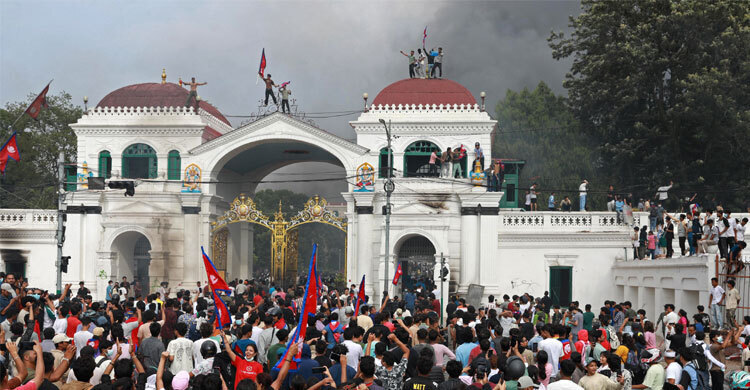
On Sunday, Nepal’s then Prime Minister KP Sharma Oli mocked the youth protesters who were preparing for a mass rally in Kathmandu against corruption and nepotism. By calling themselves “Gen Z,” he said, they thought they could demand whatever they wanted. Less than two days later, Oli was out of office. Police firing on demonstrators on Monday left at least 19 people dead and hundreds more injured, igniting nationwide fury. By Tuesday, the unrest had spiralled into arson and attacks on government institutions. Protesters torched the parliament building, set fire to the homes of prominent politicians, and destroyed party offices. Even the headquarters of Kantipur Publications, Nepal’s largest media house, was targeted. Members of Oli’s cabinet resigned one after another as pressure mounted on the prime minister himself, who announced his resignation that evening. The combined death toll from the two days of violence has now reached 31.
The sudden downfall of Oli has turned Nepal into the latest South Asian nation shaken by youth-led protests. In 2022 Sri Lanka witnessed a dramatic uprising that toppled its government. In 2024 Bangladesh too saw a mass movement driven largely by young people who forced political change. Now Nepal has joined that pattern. Analysts say the consequences of this turmoil extend well beyond the country of 30 million people, given its history of political volatility and its delicate position between India, China and Pakistan. For Bangladesh, Nepal’s upheaval offers both a cautionary tale and an illustration of how generational anger can reshape the political landscape of the region.
The immediate spark for the crisis came on 8 September, when tens of thousands of young people poured onto the streets of Kathmandu and other cities to protest corruption, nepotism and unaccountable governance. A government decision to ban social media platforms inflamed their anger further, since many of the protests had been coordinated online. When some demonstrators broke through barricades and entered the parliament complex, security forces opened fire with live rounds and used tear gas and water cannons. The killings shocked the nation and fuelled fresh waves of rage. The following day, protests escalated dramatically. Crowds attacked the residences of senior politicians, stormed party offices and torched public buildings. The violence underscored how quickly the movement had transformed from peaceful demonstrations into a nationwide rebellion against the political order.
Nepal has long been a land of political upheaval shaped by youth movements, street protests and struggles between monarchs, parties and insurgents. The first modern revolution came in 1951, when opposition to the Rana dynasty forced the family to share power and accept a coalition arrangement involving King Tribhuvan and the Nepali Congress. In 1959 the country held its first democratic election, with Bishweshwar Prasad Koirala becoming prime minister. Yet within a year King Mahendra dismissed Koirala and imposed the Panchayat system, a party-less order that concentrated power in the monarchy and lasted for nearly three decades. During this time, student movements became one of the few outlets for dissent, with waves of campus protests in the 1970s and 1980s keeping political discontent alive.
In 1990 sustained demonstrations involving students, political parties and civil society brought down the Panchayat system and reopened the path to parliamentary democracy. That fragile democracy was soon tested again when the Communist Party of Nepal (Maoist) launched an armed insurgency in 1996 with the aim of toppling the monarchy. The rebellion lasted a decade and claimed more than 10,000 lives. In 2006 a broad alliance of political parties, civil society and students staged mass protests that forced King Gyanendra to give up absolute power. Two years later Nepal formally abolished the monarchy and declared itself a democratic republic. Since then instability has continued. Eight men from three major parties, the Communist Party of Nepal (Unified Marxist-Leninist), the Communist Party of Nepal (Maoist Centre) and the Nepali Congress, have taken turns leading governments in fourteen different combinations. Oli, who resigned this week, was serving his fourth term.
Observers say the present “Gen Z movement” is not an overnight phenomenon. Underlying grievances have been simmering for years, particularly among the youth who feel shut out of opportunities by a ruling elite accused of corruption, dynastic politics and arrogance. Rajneesh Bhandari, a journalist in Kathmandu, described the protests as an eruption of frustration against leaders who ignored the demands of young citizens. Ashirwad Tripathy, a digital rights activist, argued that the abuse of authority and the corruption of senior politicians had created long-standing resentment. For many demonstrators, the government’s ban on social media symbolised the generational gap between rulers and the young population.
The implications of this crisis extend beyond Nepal’s borders. Geographically, the country is wedged between two regional giants, India to the south, east and west, and China to the north. Oli was often viewed as leaning toward Beijing, which invested heavily in infrastructure projects and sought greater influence in Kathmandu. His fall has raised speculation that India may seek to reassert its traditional clout. Analysts also note that the Nepali army will play a decisive role in determining who succeeds Oli. Some have floated names such as former chief justice Sushila Karki or Kathmandu’s young mayor Balendra Shah as possible interim leaders. Whoever emerges will have to navigate the delicate balance between India and China, both of whom want stability but neither of whom wishes to see the other dominate Nepal.
Pakistan is watching too, although its ties with Nepal have historically been limited. At times Nepali rulers have used relations with Islamabad to remind India that Kathmandu has other options. Yet in practical terms Pakistan does not carry the same weight in Nepali domestic politics as India or China. Analysts say that while elites in Islamabad may see echoes of their own struggles in Nepal’s crisis, the next government in Kathmandu is unlikely to prioritise relations with Pakistan.
For Bangladesh, the events in Nepal resonate strongly. Like Nepal, Bangladesh recently saw its own youth-driven uprising that reshaped politics in Dhaka. The Nepali protests reinforce the message that younger generations across South Asia are no longer willing to accept entrenched corruption, nepotism and unaccountable governance. The crisis also matters strategically, since shifts in Nepal’s alignment with India or China will affect the balance of power in the region. For Bangladesh, which sits within the same geopolitical triangle, the consequences of instability in Kathmandu cannot be ignored.
In essence, Nepal’s Gen Z uprising is both a local rebellion and part of a wider South Asian pattern. From Colombo to Dhaka to Kathmandu, young citizens are asserting themselves against political orders they see as outdated and self-serving. Their power is reshaping governments and forcing questions about accountability that older elites can no longer avoid. What happens in Nepal in the coming weeks will determine not only the future of its democracy but also the direction of political currents across the subcontinent.