
Nobel in literature goes to Hungarian László Krasznahorkai

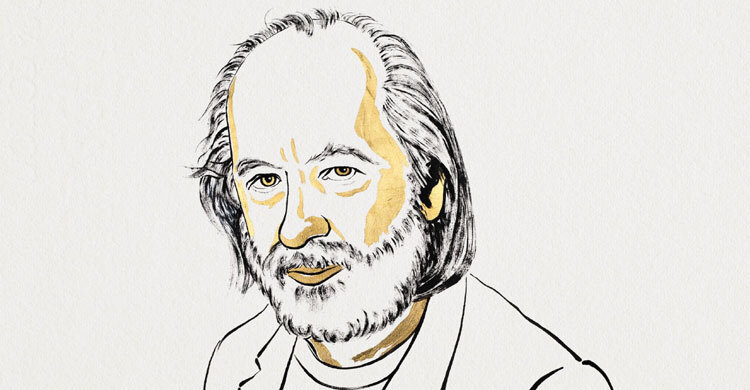
László Krasznahorkai of Hungary is joining an illustrious list of laureates that includes Ernest Hemingway, Rabindranath Tagore, Toni Morrison and Kazuo Ishiguro as the Nobel Prize in literature was announced on Thursday.
The literature prize has been awarded by the Nobel committee of the Swedish Academy 117 times to a total of 121 winners.
Last year's prize was won by South Korean author Han Kang for her body of work that the committee said "confronts historical traumas and exposes the fragility of human life."
The literature prize is the fourth to be announced this week, following the 2025 Nobels in medicine, physics and chemistry.
Nobel Prize award ceremonies are held on December 10, the anniversary of Alfred Nobel's death in 1896. Nobel was a wealthy Swedish industrialist and the inventor of dynamite who founded the prizes.
Each prize carries an award of 11 million Swedish kronor (nearly $1.2 million), and the winners also receive an 18-carat gold medal and a diploma.
László Krasznahorkai has long been regarded as one of Europe’s most original and challenging literary voices — a writer whose apocalyptic imagination and hypnotic prose have reshaped the landscape of modern fiction. Born in 1954 in Gyula, a small town near Hungary’s southeastern border with Romania, Krasznahorkai emerged from the political and cultural turbulence of the late communist era to become a global literary phenomenon.
His debut novel Sátántangó (1985) was an immediate sensation in Hungary and later achieved cult status worldwide. Set in a decaying collective farm, the novel portrays a small, destitute community waiting in silence and despair for deliverance — only to be deceived by the manipulative figure Irimiás, a self-styled prophet who exploits their faith. Written in long, spiraling sentences that seem to mirror the endless stagnation of life in a failed utopia, Sátántangó announced Krasznahorkai’s arrival as a literary force of uncommon depth. The novel’s 1994 film adaptation, directed by his longtime collaborator Béla Tarr, became a landmark of slow cinema and introduced international audiences to Krasznahorkai’s dark, mesmerizing vision.
The American critic Susan Sontag famously called him “the contemporary master of the apocalypse,” a title that took root with his second novel, The Melancholy of Resistance (1989). In it, a surreal traveling circus — complete with the carcass of a giant whale — descends upon a small Hungarian town, triggering waves of hysteria, violence, and authoritarian control. Through grotesque imagery and biblical overtones, the book examines how fear and chaos can open the door to tyranny. It was later adapted into Tarr’s acclaimed film Werckmeister Harmonies (2000).
Krasznahorkai’s subsequent novels expanded his philosophical reach. War & War (1999) follows an obscure Hungarian archivist who travels to New York to preserve a mysterious ancient manuscript, symbolising the eternal human struggle to give meaning to chaos. The author’s prose, increasingly marked by long, uninterrupted sentences, became his signature — a stream of thought that mirrors obsession, confusion, and transcendence.
His monumental novel Baron Wenckheim’s Homecoming (2016) brings him full circle, returning to a decaying provincial Hungary. The story of a disgraced baron returning from exile — part tragicomedy, part spiritual allegory — won Krasznahorkai the 2019 National Book Award for Translated Literature. Critics have described it as a culmination of his lifelong exploration of human frailty, delusion, and the futility of redemption.
Most recently, his novel Herscht 07769: Florian Herscht Bach Novel (2021) situates the author’s apocalyptic sensibility within a contemporary German setting. Blending social realism with moral parable, it depicts a small Thuringian town unraveling amid an atmosphere of anarchy, arson, and moral decay — all shadowed by the towering legacy of Johann Sebastian Bach. The book, written in a single, breathless sentence, has been hailed as one of the most powerful depictions of modern European disillusionment.
Yet, Krasznahorkai’s vision extends beyond Western despair. His fascination with East Asian philosophy and aesthetics has inspired a more contemplative side to his oeuvre. Works such as A Mountain to the North, a Lake to the South, Paths to the West, a River to the East (2003) and Seiobo There Below (2008) reflect the author’s encounters with Japan and China, exploring beauty, craftsmanship, and the quest for spiritual transcendence. In Seiobo There Below, a collection of seventeen interconnected stories arranged in a Fibonacci sequence, Krasznahorkai meditates on the act of creation — from Renaissance painting to Noh theatre — suggesting that art, though fragile, remains humanity’s last link to the divine.
His shorter fiction, including Spadework for a Palace (2018), set in Manhattan, reveals a playful and self-aware side of his genius — a manic homage to Herman Melville and the creative madness that haunts literary ambition.
Across his career, Krasznahorkai’s work has been translated into more than twenty languages, including English, French, German, and Swedish. He has received many of the world’s most prestigious literary honours, including the Man Booker International Prize (2015) for his entire body of work, and the Austrian State Prize for European Literature (2019).
Krasznahorkai’s long collaboration with Béla Tarr — spanning six major films including Damnation, The Man from London, and The Turin Horse — has also established him as one of the most influential literary voices in European cinema. Their partnership is often described as a rare fusion of literature and film, where narrative, image, and philosophy intertwine seamlessly.
Critics see in Krasznahorkai a direct descendant of Kafka, Dostoyevsky, and Thomas Bernhard — writers who explored the absurd, the grotesque, and the divine. His prose defies conventional storytelling, pushing language to its limits in an attempt to capture what he once described as “the unbearable fullness of existence.”
For readers and critics alike, László Krasznahorkai remains not just a novelist but a chronicler of human collapse and transcendence, a writer who continues to illuminate the shadowed spaces of modern life — where faith, despair, and the longing for beauty still struggle to coexist.