
India’s Hasina dilemma: A strategic alliance meets its most severe stress test

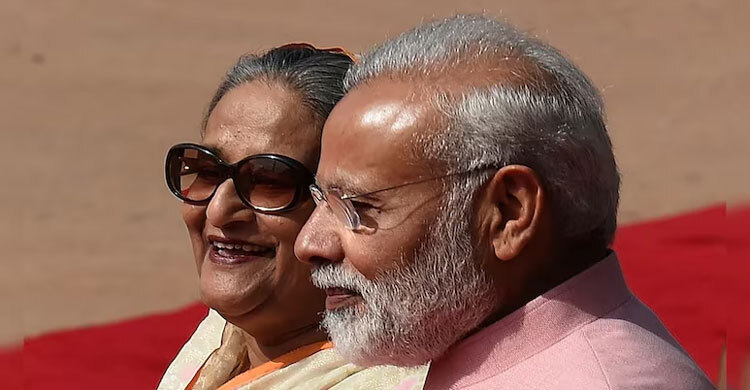
India’s decades-long partnership with Sheikh Hasina, once considered one of New Delhi’s most dependable regional alliances, has entered its most precarious phase.
What was once a pillar of India’s neighbourhood strategy is now a diplomatic burden – and a test of how far Delhi will go to protect a leader now sentenced to death in her own country.
For India, few bilateral relationships in South Asia have been as strategically rewarding – or politically costly – as its support for Hasina during her 15 years in power. She offered what New Delhi values most in its immediate periphery: political stability, regional connectivity, counterterrorism cooperation and, critically, alignment with India rather than China.
That equation has shifted dramatically.
Hasina now resides in India under temporary asylum after fleeing mass anti-government protests in August 2024. Earlier this week, a special tribunal in Dhaka sentenced her and former Home Minister Asaduzzaman Khan to death for crimes against humanity linked to the deadly crackdown on student-led protests that triggered her downfall.
Bangladesh’s interim government, led by Nobel laureate Muhammad Yunus, immediately renewed a formal request for extradition.
Yet officials in New Delhi have quietly conveyed that the verdict changes nothing.
Senior diplomatic sources describe extradition as “off the table,” citing both treaty loopholes and concerns the charges are politically motivated.
Dhaka interprets India’s position very differently. Law Adviser Asif Nazrul warned on Monday: “If India continues to shelter this mass murderer, it must understand that this is an act of hostility against Bangladesh and its people.”
The demand invokes the 2013 bilateral extradition treaty – but India is likely to rely on Article 6, which allows refusal if charges are deemed political. Analysts widely expect New Delhi to delay indefinitely rather than reject outright.
Strategic stakes and diplomatic consequences
The fallout comes at a sensitive time. Bangladesh is India’s largest trading partner in South Asia, while India is now Bangladesh’s single largest export market in Asia. Trade totalled nearly $13 billion last year – most of it tilted heavily in India’s favour.
Over the last decade, India has extended nearly $10 billion in concessional loans, supplied electricity and fuel to Bangladesh’s grid, and built rail and road corridors connecting Bangladesh to India’s northeast.
This deep interdependence makes disengagement costly for both sides.
“Bangladesh cannot function without India’s cooperation – on energy, transit or cross-border water management,” says Sanjay Bhardwaj of Delhi’s Jawaharlal Nehru University. “But India also cannot afford instability on its longest border.”
Yet the political mood in Dhaka has shifted sharply. Since Hasina’s removal, the Yunus-led government has moved to reset foreign policy, slowing Indian infrastructure projects, revisiting energy agreements and increasing public diplomatic engagement with Beijing, Islamabad and Ankara.
A recent survey by Dhaka-based Centre for Alternatives suggests the sentiment shift is profound: more than 75% of Bangladeshis now view China favourably, compared with just 11% for India.
Many Bangladeshis blame Delhi for enabling what they viewed as Hasina’s increasingly authoritarian rule in her final years. The only real constant now appears to be mistrust.
A regional challenge with no good answers
Delhi’s dilemma is not simply legal – it is reputational.
Michael Kugelman, a South Asia specialist, outlines four options for India:
1. Extradite Hasina – politically impossible.
2. Maintain the status quo – viable for now, but risky once a new elected government takes office next year.
3. Contain Hasina’s political activities – unlikely to succeed.
4. Secure asylum for her in a third country – unlikely to find takers.
“No option is good,” Kugelman argues, “but some are worse than others.”
The broader lesson, some experts say, is that New Delhi may have become overly reliant on a single political actor.
“India put too many eggs in one basket,” says Avinash Paliwal of SOAS, London. “Now it is managing the consequences.”
Still, others argue realpolitik remains the only viable compass.
“Foreign policy is not driven by morality or public emotion,” says Pinak Ranjan Chakravarty, India’s former high commissioner to Dhaka. “States work with whoever helps them achieve strategic goals.”
Fragile future, uncertain reset
Bangladesh is expected to hold national elections early next year, and much now hinges on whether the vote is perceived as legitimate and whether the next government allows the “Hasina factor” to dictate relations.
Analysts predict turbulence over the next 12-18 months – but not a complete rupture.
Trade and connectivity are expected to continue, even if political ties remain strained. Border security, migration pressures and counterterrorism cooperation will force continued engagement, whether warm or cold.
For now, the question is no longer whether Sheikh Hasina will return – but how long her presence in India will complicate one of South Asia’s most strategically important relationships.
As one Indian diplomat put it bluntly: “She stays. The real negotiation now is not about Hasina – it is about the new Bangladesh.”
Source: BBC