
Trump warns of ‘very bad future’ if allies refuse to help secure Hormuz

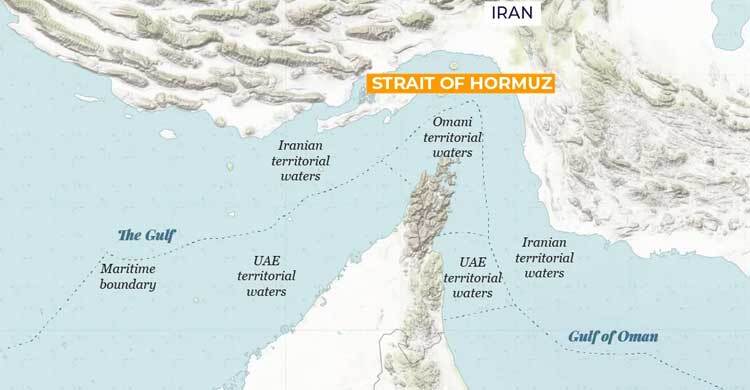
US President Donald Trump has warned that the North Atlantic Treaty Organisation (NATO) could face a “very bad future” if its members refuse to support efforts to secure the Strait of Hormuz as the Iran war enters its third week.
Despite Trump’s call, the United Kingdom, Australia and Japan said Monday they have no plans to send naval or maritime vessels to help secure the Strait of Hormuz.
“I’m demanding that these countries come in and protect their own territory because it is their territory,” Trump told reporters aboard Air Force One, arguing that countries heavily dependent on Gulf energy should share responsibility for securing the route.
"We have not made any decisions whatsoever about dispatching escort ships. We are continuing to examine what Japan can do independently and what can be done within the legal framework," Japan's Prime Minister Sanae Takaichi told parliament.
Australia's minister Catherine King told national broadcaster ABC that, "We won't be sending a ship to the Strait of Hormuz. We know how incredibly important that is, but that's not something we've been asked, or we're contributing to."
In a tense weekend phone call, Prime Minister Keir Starmer reportedly told President Trump that the UK is not prepared to commit Royal Navy destroyers to the blockaded waterway. While the US has been “bombing the hell out of the shoreline,” London remains wary of being drawn into a broader regional war.
In an interview with the Financial Times, Trump said Washington has been in contact with about seven countries to form a coalition to protect shipping through the narrow waterway, which carries around 20% of the world’s oil supply.
The US president insisted that countries heavily dependent on Gulf energy should take responsibility for safeguarding the route.
“I’m demanding that these countries come in and protect their own territory because it is their territory,” Trump told reporters aboard Air Force One while travelling from Florida to Washington.
However, some key allies quickly signalled reluctance.
Prime Minister Sanae Takaichi said Japan has no plan to dispatch naval vessels to the Middle East, citing legal constraints under the country’s pacifist constitution, despite relying on the region for about 95% of its oil imports.
“We have not made any decisions whatsoever about dispatching escort ships,” she told parliament, adding that Tokyo is still examining what it can do within its legal framework.
Australia also said it had no plans to send naval ships to the Gulf. Cabinet minister Catherine King said Canberra had not been asked to contribute vessels and was not planning to do so.
Trump has also called on countries including China, France, Japan, South Korea and the United Kingdom to take part in the mission.
He suggested China, which imports a large share of its oil through the Strait of Hormuz, should help reopen the route before his planned meeting with Chinese President Xi Jinping in Beijing later this month, warning he could delay the visit if Beijing fails to offer support.
The comments come as the conflict involving the United States, Israel and Iran continues to destabilise the Middle East and disrupt global energy markets.
Asian markets reacted cautiously, with Brent crude rising more than 1% to above $104 a barrel amid concerns about the safety of oil shipments from the Gulf.
The conflict has also escalated on the ground. Heavy bombing has been reported in Tehran, while Saudi Arabia said it intercepted more than 60 drones overnight targeting Gulf countries.
Authorities in Dubai temporarily suspended flights at Dubai International Airport after a missile strike nearby, though operations have since partially resumed.
Meanwhile, the Israel Defense Forces said it has launched “limited and targeted” ground operations in southern Lebanon against positions held by the Iran-backed group Hezbollah.
Despite US claims that Iran’s military capabilities have been severely weakened, drone attacks continued to threaten Gulf states. Saudi authorities said dozens of drones were intercepted in their eastern region within an hour, while a missile strike in Abu Dhabi reportedly killed a Palestinian civilian.
Global aviation has also been affected, with major hubs such as Dubai, Doha and Abu Dhabi facing disruptions that have forced airlines to cancel thousands of flights and left tens of thousands of passengers stranded.
The war has effectively closed the Strait of Hormuz to most global tanker traffic since the US and Israel launched attacks on Iran on February 28, intensifying concerns over energy supplies and rising oil prices worldwide.
Source: Al Jazeera, BBC, DW