
Biman faces wave of technical faults triggering safety concerns

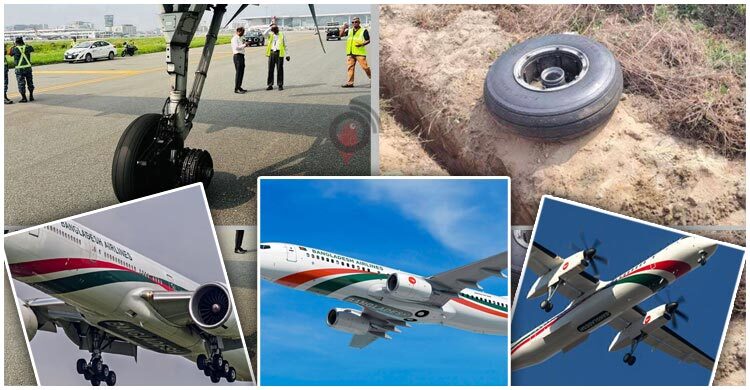
Biman Bangladesh Airlines, the national flag carrier, is grappling with a string of technical malfunctions that have disrupted flight schedules, stranded passengers, and raised serious concerns about aircraft safety and operational management.
Over the past month alone, at least 18 of the airline’s aircraft have experienced mechanical faults, many occurring mid-flight or just before take-off, leading to cancellations, diversions, and delayed departures, primarily on international routes.
The recurring technical issues have not resulted in major accidents – save for a narrowly avoided disaster on 16 May, when a wheel detached from a Biman Boeing 737 during take-off from Cox’s Bazar, yet the plane landed safely in Dhaka with 75 passengers on board, but the frequency of incidents is eroding public confidence.
Passengers are increasingly opting for alternative airlines, leading to revenue losses for the state-owned carrier at a time when it can least afford it.
Among the recent incidents, a Dhaka-bound flight from Rome BG356, a Boeing 787 Dreamliner, was grounded on August 10 due to a critical flap defect on the wing, requiring replacement parts to be flown in from London. The 262 passengers were accommodated in a hotel at the airline’s expense, with no clear timeline for when the aircraft would be repaired or the flight resumed.
“I’m stuck here,” said Rabiul Islam, a Cumilla resident returning from a limited family visit. “This is mismanagement. A national airline shouldn’t operate like this.”
Other disruptions include a Dhaka-Kuwait and Dhaka-Dubai route cancellation on August 12 due to a shortage of serviceable Boeing 787 Dreamliners; a flight from Dhaka to Chattogram forced to return mid-air on August 11 due to excessive cabin heat; and a Dhaka-Abu Dhabi flight that turned back an hour after departure on August 7 when all three toilets malfunctioned simultaneously. On August 7, a Bangkok-bound Boeing 737 returned from over Myanmar due to severe engine vibration.
Earlier in July, problems mounted: a Dhaka-Dammam Dreamliner turned back on July 28 due to a cabin pressure alert; a Dubai-Chittagong flight on July 24 returned after the landing gear door failed to close; and on July 16, a Dreamliner was grounded in Dubai for 30 hours due to a wheel fault, requiring spare parts to be flown in from Bangladesh.
Even routine operations have been marred by hygiene lapses. On July 29, Rome’s Fiumicino Airport suspended baggage handling for Biman flight BG-355 after discovering cockroaches, insects, and foul odours on the baggage carousel. A four-hour disinfection delayed the return flight, leaving passengers stranded on the tarmac.
Aviation expert and former Biman board member Kazi Wahidul Alam noted that while there is no evidence of sabotage, the root cause lies in ageing aircraft and maintenance challenges. “Some planes in the fleet are old. With age comes mechanical wear. Parts fail, and sometimes entire systems need replacement. The engineering department must be both proactive and efficient,” he said.
Insiders within Biman admit to a shortage of skilled engineers and mounting pressure on existing staff. In response, the airline has formed multiple investigation committees and made pre-flight technical inspections mandatory. However, communication remains a challenge.
When contacted, Biman spokesperson ABM Rawshan Kabir deferred comment to the engineering department and later provided no further details, though the airline later stated that its engineering team is on “highest alert.”
Currently, Biman operates a fleet of 21 aircraft – 16 Boeing models (including six 787 Dreamliners, four 777-300ERs, and six 737s) and five Dash-8 Q400s for regional routes.
Despite the ongoing technical woes, the government is moving forward with plans to acquire 25 new Boeing aircraft from the United States, aiming to modernise the fleet and restore reliability.
Biman’s Managing Director and CEO, Md Shafiqur Rahman, is expected to hold a press briefing upon his return from Malaysia to address the spate of technical failures.
Until then, passengers remain in limbo – caught between loyalty to their national carrier and growing frustration over delays, cancellations, and a perceived decline in service standards.
For Biman, the skies are no longer just a domain of travel, but a testing ground for survival, credibility, and reform.