
Norwegian research vessel embarks on survey of Bangladesh’s marine realm

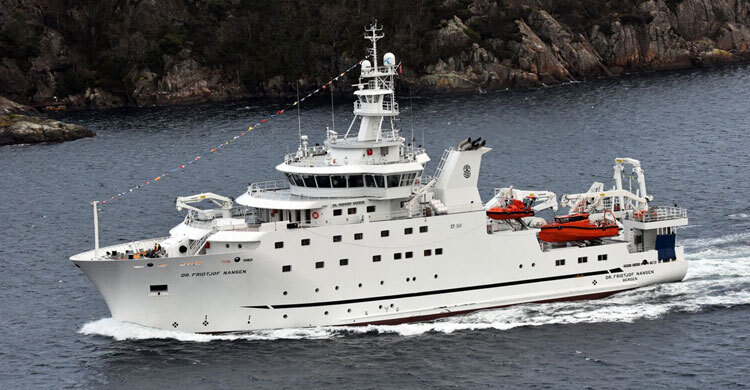
Norway’s cutting-edge marine research vessel, RV D Fridtjof Nansen, has set sail for Bangladesh’s maritime waters to conduct a comprehensive, month-long survey of the country’s rich and largely unexplored marine ecosystems.
From August 21 to September 21, the state-of-the-art ship, operating in partnership with the United Nations’ Food and Agriculture Organization (FAO) and the Norwegian Institute of Marine Research (IMR), will gather vital data that could redefine Bangladesh’s approach to fisheries management, climate resilience, and ocean conservation.
The mission marks a significant moment in the nation’s marine science history, one that promises not only to illuminate the mysteries of the deep but also to lay the foundation for sustainable development of its blue economy.
The RV Dr Fridtjof Nansen is no stranger to Bangladeshi waters. First deployed here in 1979, and again in 1980, the vessel helped pioneer early assessments of the Bay of Bengal’s fish stocks. In 2018, it returned for a major ecosystem study – now, its third visit underscores Bangladesh’s growing commitment to science-based marine governance.
“This survey is more than a research project – it’s a milestone,” said Farida Akhtar, Adviser to the Ministry of Fisheries and Livestock, at a press conference held at the ministry on Tuesday, August 19. “It will provide the scientific backbone for national policies on sustainable fisheries, climate adaptation, and marine conservation.”
The Bay of Bengal is one of the most biologically diverse marine regions in the world, yet vast stretches of its deep-sea ecosystems remain poorly understood. This latest expedition aims to change that.
A team of 26 international and national scientists, including 13 researchers from Bangladesh, will conduct multidisciplinary studies across the water column, from surface to seabed.
Using advanced sonar, trawling equipment, and water sampling technologies, they will assess fish populations, plankton distribution, and environmental conditions such as temperature, salinity, nutrient levels, turbidity, and ocean currents.
Particular attention will be paid to mesopelagic fish – small, deep-dwelling species that inhabit the ocean’s twilight zone (200–1,000 metres below the surface). Though rarely seen, these creatures form the foundation of the marine food web and play a crucial role in carbon sequestration.
“Mesopelagic fish and plankton are the engine of the ocean,” said Adviser Farida. “Understanding their biomass, diversity, and distribution helps us gauge the overall health of marine ecosystems and predict the productivity of commercial fish stocks.”
The data will also help identify potential new fisheries in deeper waters, offering Bangladesh opportunities to expand its seafood industry sustainably beyond overfished coastal zones.
One of the most tangible outcomes of the survey will be the creation of detailed habitat maps, charting seafloor topography, sediment types, and biological hotspots at various depths. These maps will serve as critical tools for marine spatial planning, enabling policymakers to designate protected areas, manage fishing zones, and safeguard vulnerable species.
“The information we gather will directly inform national policies,” said the adviser. “From conserving fish stocks to adapting to climate change, this knowledge will empower evidence-based decision-making.”
Crucially, the project is also an investment in human capital. Bangladeshi scientists are embedded in every phase of the research, gaining hands-on experience with world-class methodologies and equipment. This capacity-building component strengthens the country’s long-term ability to monitor and manage its 118,813 square kilometres of maritime territory.
As rising sea temperatures, ocean acidification, and shifting currents threaten marine life, the survey will also analyse the impacts of climate change on Bangladesh’s oceanic environment. By establishing baseline data on ecosystem health, scientists hope to track changes over time and develop adaptive strategies for fisheries and coastal communities.
With its long coastline and strategic location, Bangladesh is increasingly looking to the ocean as a driver of economic growth. The government has identified the ‘blue economy’, sustainable use of ocean resources for food, energy, and employment, as a national priority.
This survey, therefore, is not just about science – it’s about sovereignty, sustainability, and self-reliance. By unlocking the potential of its deep-sea resources, Bangladesh aims to reduce pressure on coastal fisheries, enhance food security, and assert its role in regional marine governance.
As the RV Dr Fridtjof Nansen glides across the waves of the Bay of Bengal, it carries more than instruments and researchers. It carries the hopes of a nation seeking to harness the power of the ocean – wisely, responsibly, and for generations to come.