
Protect native fish species to secure Bangladesh’s aquatic future: Farida

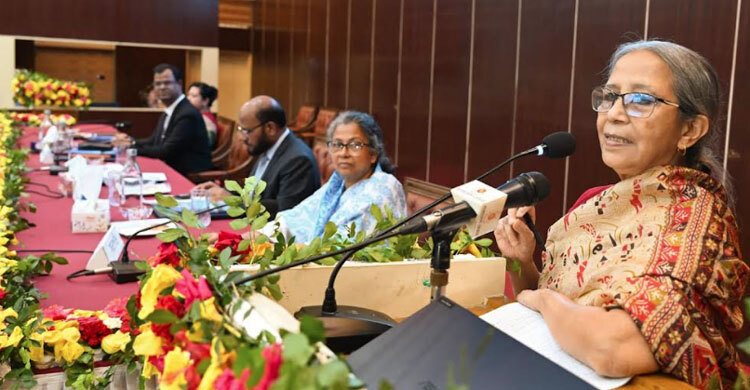
Indigenous fish species must be systematically protected and revived across Bangladesh through the identification and conservation of natural water bodies, Fisheries and Livestock Adviser Farida Akhtar has urged, calling for urgent policy action to safeguard the nation’s aquatic biodiversity and ensure long-term food and economic security.
Speaking as the chief guest at a national seminar on ‘Importance of Sanctuaries in Sustainable Fisheries Management and Future Steps’, organised by the Bangladesh Fisheries Research Institute (BFRI) at the Bangladesh Agricultural Research Council (BARC) in Farmgate, Dhaka, Farida emphasised that native fish are not only vital for nutrition but also central to the country’s agro-economic resilience.
“We must identify every water body across the country and protect the indigenous fish species within them,” she said. “Each region has its own unique fish biodiversity—these are natural assets we cannot afford to lose,” she said.
Farida highlighted that the rapid decline of open water bodies, driven by encroachment, urbanisation, and climate change, poses a severe threat to fish populations.
She attributed the crisis in part to past policy neglect, but noted that the current advisory government is now prioritising fisheries restoration. “Establishing and protecting fish sanctuaries is no longer optional—it is essential for sustainable fisheries production,” she said.
“We must rebuild our natural water systems and protect them both legally and ecologically.” She stressed that sanctuaries act as breeding hubs, enabling fish populations to regenerate and spill over into surrounding waters, directly benefiting small-scale fishermen and enhancing aquaculture productivity.
In a significant update, the Adviser revealed that 41 native fish species have been successfully revived through targeted research and conservation efforts led by BFRI, out of 64 species that were once on the brink of extinction.
“This proves that with science, commitment, and community involvement, we can reverse biodiversity loss,” she said, commending BFRI’s role in breeding and restocking programmes. Among the recovered species are Rohu (Labeo rohita), Mrigal (Cirrhinus cirrhosus), and endangered natives such as the Golden Punti (Puntius sophore) and Baim (Channa marulius ) – all of which are crucial to traditional diets and rural livelihoods.
Farida condemned the widespread use of poison and electric fishing, describing it as “an act of cruelty driven by greed and short-term profit.”
“How cruel can people be? Using poison and electricity wipes out entire fish populations—including juveniles and breeding stock. This is not fishing; it’s ecological destruction,” she said.
She also raised alarm over plastic pollution, which is increasingly choking rivers, wetlands, and floodplains.
Noting that Bangladesh did not sign the recent Global Plastics Treaty due to concerns about its implications for human health and the environment, she added: “Plastic pollution is silently killing our water bodies. Microplastics enter the food chain, harming fish and, ultimately, us. We must act decisively to reduce plastic waste in our ecosystems.”
The adviser underscored that protecting native fish is not merely a national duty but a global responsibility. “Bangladesh is one of the most fish-dependent nations in the world. We cannot survive without fish. But our biodiversity also contributes to global fisheries resilience. Protecting our native species supports international food security and ecological balance,” she said. She called for the integration of fish sanctuary development into national climate adaptation and agricultural policies, urging collaboration between researchers, policymakers, and fishing communities.
Chaired by BFRI Director General Dr Anuradha Bhadra, the seminar featured a keynote presentation by BFRI Senior Scientific Officer Dr Md Mashiur Rahman, who outlined scientific strategies for sanctuary management and species recovery. Special guests included Md Tofazzel Hossain, Secretary (Routine Responsibilities), Ministry of Fisheries and Livestock; Farah Shammi, Chairman of the Fisheries Development Corporation; and Dr Md Abdur Rouf, Director General of the Department of Fisheries.
The event brought together BFRI scientists, fisheries officials, aquaculture entrepreneurs, and local fishermen, fostering dialogue on sustainable practices and community-based conservation.
The seminar concluded with a set of urgent recommendations for the sustainable management of Bangladesh’s fisheries.
These include mapping and registering all natural water bodies for formal sanctuary designation, expanding BFRI-led breeding and restocking programmes for endangered native species, and strictly enforcing bans on destructive fishing methods such as poison and electrofishing.
The report also advocated for promoting community-managed sanctuaries with incentives to encourage local stewardship and sustainable harvesting.
Finally, it urged the integration of fisheries conservation into national climate adaptation and agricultural development strategies, recognising the vital role of healthy water bodies in food security, livelihoods, and environmental resilience.
As Bangladesh faces mounting pressures on its aquatic ecosystems, the protection of native fish species is emerging as a cornerstone of agro-business sustainability, food sovereignty, and rural development. With strong leadership from institutions like BFRI and renewed political will, the country has a genuine opportunity to reverse decades of decline.
As Farida Akhtar concluded: “Our fish are not just a resource – they are our heritage. If we protect them today, we secure food, jobs, and life itself for generations to come.”