
‘How risky is a child?’ BGB DG asks BSF chief as he defends border shootings

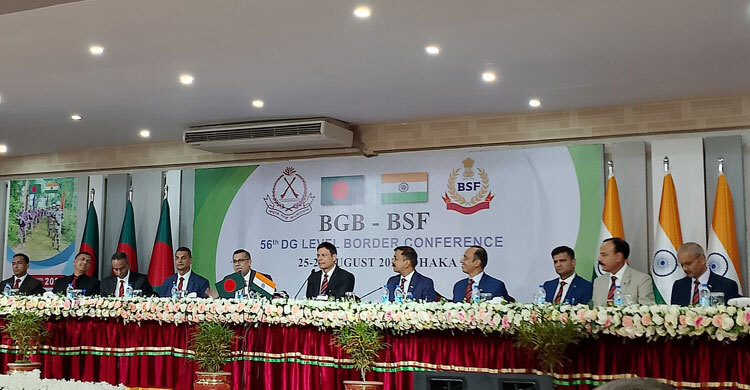
Indian Border Security Force (BSF) Director General Daljit Singh Chaudhary claimed on Thursday that BSF personnel have been making concerted efforts over the past 15 years to avoid using lethal force along the India-Bangladesh border.
Speaking at a joint press conference following the conclusion of the 56th Director General-level border conference at the Border Guard Bangladesh (BGB) headquarters in Pilkhana, Dhaka, DG Chaudhary stressed that firearms are used only as a “last resort’. He explained that BSF troops first issue warnings, then attempt to deter infiltration through non-lethal means, and open fire only when there is an imminent threat to life.
“In the first six months of this year alone, 35 BSF personnel were seriously injured in attacks involving sharp weapons by ‘infiltrators’,” he said, highlighting the risks faced by border guards.
His remarks, however, drew criticism from BGB Director General Major General Mohammad Ashrafuzzaman Siddiqui, who voiced deep concern over recent fatal shootings. The BGB chief cited the killing of a young Bangladeshi child by the BSF in broad daylight, questioning how a child could pose a threat to an armed border force.
“How risky could a child be?” Major General Siddiqui asked, calling for greater accountability and restraint in the use of force.
The four-day talks, held from 25 to 28 August, concluded with the signing of the Joint Record of Discussions (JRD), which outlined a series of confidence-building measures aimed at reducing border tensions.
Border killings were a central issue. The Bangladesh delegation iterated longstanding concerns over what it described as indiscriminate shootings and urged stricter adherence to protocols governing the use of force.
In response, DG Chaudhary reaffirmed the BSF’s commitment to enhancing precautionary measures, including intensified night patrols in vulnerable areas and continued efforts to minimise fatalities.
Both sides agreed to launch joint awareness campaigns, promote socio-economic development initiatives in border communities, respect border sanctity, and cooperate in preventing cross-border crime, with the shared objective of achieving zero border killings.
On the issue of illegal border crossings, Bangladesh raised concerns about the push-back of individuals, including Indian nationals and Forcibly Displaced Myanmar Nationals (FDMNs), into Bangladeshi territory. The BGB called for strict compliance with established repatriation procedures.
In reply, DG Chaudhary stated that Bangladeshi nationals found illegally in India are being handed over to the BGB through formal channels. “To date, 550 individuals have been repatriated. Verification processes for another 2,400 cases are ongoing, with cooperation from the Bangladesh High Commission,” he said.
When pressed on allegations of forced push-in, the BSF chief avoided a direct answer, stating only that action is taken strictly against those identified as illegal infiltrators under Indian law.
The JRD also underscored the importance of the Coordinated Border Management Plan (CBMP) in combating the smuggling of narcotics, arms, explosives, gold, fake Indian currency, and other contraband. Both forces pledged to enhance real-time intelligence sharing and remain vigilant against cross-border criminal activity.
Key agreements reached during the talks included:
• Refraining from any construction or development within 150 yards of the zero line without prior mutual consent.
• Accelerating joint border infrastructure projects.
• Facilitating riverbank protection works approved by the Joint Rivers Commission.
• Preventing unauthorised activities in shared rivers.
On connectivity, DG Chaudhary assured that the proposal to lay an optical fibre network in Dahagram via the Tin Bigha Corridor would be forwarded to the relevant Indian ministries for consideration.
Both directors general iterated their zero tolerance stance towards armed insurgency and terrorism, emphasised the need for permanent border pillars at Muhurir Char, and called for full demarcation of border rivers. They also agreed to share information to prevent airspace violations.
In an effort to curb misinformation, both sides committed to advising their respective media to avoid publishing reports that could exacerbate border tensions.
At the conclusion of the conference, DGs Chaudhary and Siddiqui expressed satisfaction with the outcomes and reaffirmed their commitment to strengthening bilateral cooperation for lasting peace and stability along the 4,096-kilometre India-Bangladesh border.