
July Memorial Museum set to open in November highlighting 16 years of misrule

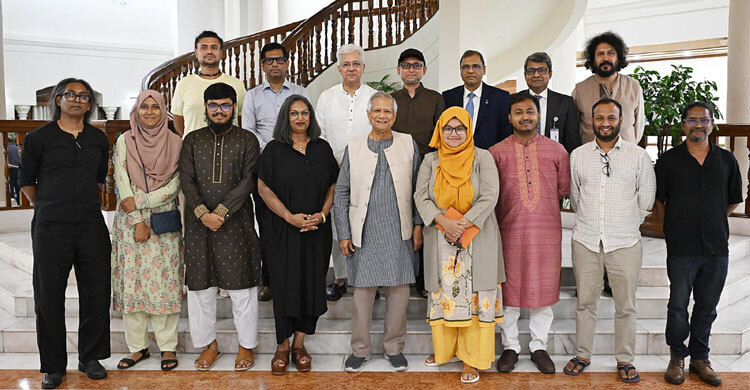
The government has announced that the July Memorial Museum, dedicated to chronicling what it describes as 16 years of misrule under Sheikh Hasina, will be inaugurated in the first week of November.
According to officials, the museum will feature exhibits on key events and allegations from that period, including the Peelkhana massacre, enforced disappearances and killings, the Shapla Square crackdown, and election irregularities.
These accounts will be presented in curated sequences combining historical records, photographs, audio, and visual material.
The construction authority briefed Chief Adviser Professor Muhammad Yunus on Saturday during a meeting at the State Guest House Jamuna. Deputy Press Secretary to the Chief Adviser Abul Kalam Azad Majumder later confirmed the development.
Cultural Affairs Adviser Mostofa Sarwar Farooki told the meeting that construction would be completed by 31 October, with inauguration expected the following week. “We are curating images and materials of Hasina’s misrule to ensure this history remains alive,” he said.
Chief Adviser Professor Muhammad Yunus expressed gratitude to those involved in the project.
He said the museum should help visitors understand the spirit of resistance against authoritarianism, evoking the atmosphere at Ganabhaban on 5 August. “Bringing this sense of collective resistance into public memory is a major task of the museum,” he remarked.
Chief Curator Tanzim Wahab added that the initiative is being developed in coordination with the ICT Prosecution Team and the Commission for Investigation into Disappearances. “This will be a unique museum,” Wahab said. “Visitors will see how the country was governed during that period through a carefully arranged sequence of exhibits.”
Farooki also revealed that the museum has secured audio recordings allegedly linked to enforced disappearances and killings, which will be preserved and exhibited. It will also showcase accounts of families receiving what organisers describe as “false assurances” from the then-premier.
The museum will include a screening centre for documentaries on the “July events” and the broader 16-year period.
Saturday’s meeting was attended by Housing and Public Works Adviser Adilur Rahman Khan, Chief Prosecutor of the International Crimes Tribunal Mohammad Tajul Islam, Member of the Commission of Inquiry on Disappearances Dr Nabila Idris, Secretary of the Ministry of Housing and Public Works Md Nazrul Islam, Secretary of the Ministry of Cultural Affairs Md Mofidur Rahman, Chairperson of the Governing Body of the Bangladesh National Museum Marina Tabassum.
Among the researchers of the July Memorial Museum were Daniel Afzalur Rahman, poet Hasan Robayet, Maliha Namlah, museum artists Tejash Halder Josh, Mosfiqur Rahman Johan, museum architect Salauddin Ahmed, and coordinator Hasan Enam were also present.