
Investors in savings certificates get break as govt halves source tax

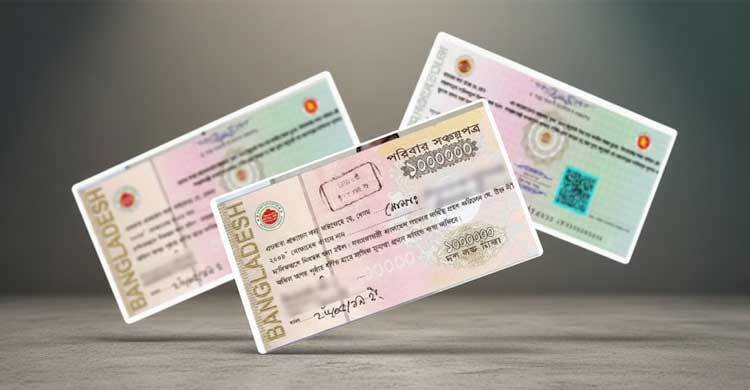
The government has reduced the tax deducted at source (TDS) on profits from savings certificates, commonly known as Sanchaypatra, to 5 per cent from the previous 10 per cent for investments of up to Tk 5 lakh, in a move aimed at easing pressure on small savers and retirees.
The National Board of Revenue (NBR) issued a formal clarification after receiving complaints from investors who said banks and savings offices had been deducting tax at a higher rate even on smaller investments. Officials said the revised interpretation aligns with existing provisions under the Income Tax Act 2023 and is meant to ensure that lower-income investors are not overtaxed.
Under the new clarification, the reduced 5 per cent TDS will apply only when an individual’s total investment across all categories of savings certificates remains within Tk 5 lakh. Once the combined investment exceeds that threshold, profits will continue to face a 10 per cent tax deduction, as stipulated in Section 105 of the tax law.
Relief for small savers
Officials at the Department of National Savings described the decision as a “significant relief” for people who rely on returns from government-backed instruments to meet daily expenses. Savings certificates have long been popular among middle-class households, pensioners and non-resident Bangladeshis because of their relatively high returns and perceived safety.
The department also confirmed that tax rules for Pensioner Savings Certificates remain unchanged. Investments of up to Tk 5 lakh under this scheme will continue to enjoy a zero per cent tax rate, a provision designed to support retired individuals with limited income.
Many small investors had voiced frustration in recent months, saying inconsistent deductions at banks created confusion and reduced their expected returns. Market analysts believe the clarification could help restore confidence in the schemes, which play a key role in household savings.
Schemes and investment options
At present, the Department of National Savings offers four major instruments: the Family Savings Certificate (Paribar Sanchaypatra), Pensioner Savings Certificate, Five-Year Bangladesh Savings Certificate and the Three-Month Profit-Based Savings Certificate.
While institutional investors are allowed to participate in most of these products, the Family Savings Certificate remains restricted to individual investors, reflecting its social welfare focus.
Economists note that savings certificates continue to be a crucial financing tool for the government, allowing it to raise funds domestically while offering guaranteed returns to citizens. However, authorities have also attempted to balance fiscal pressure by adjusting tax rules and monitoring high-value investments more closely.
Broader impact
Financial experts say the lower source tax for smaller investments may encourage more people to maintain modest portfolios rather than shifting funds into informal or riskier avenues. For retirees and fixed-income households, even a small reduction in tax can translate into higher monthly payouts.
Officials indicated that the NBR may continue to monitor implementation to ensure banks and savings offices follow the updated guidance correctly. Investors have been advised to verify that deductions match their total investment levels to avoid overpayment.
The latest move reflects the government’s attempt to strike a balance between revenue collection and social protection, particularly at a time when many families depend on stable, low-risk income streams amid rising living costs.
Source: UNB