
Grandeur and joy mark final day of Durga Puja celebration

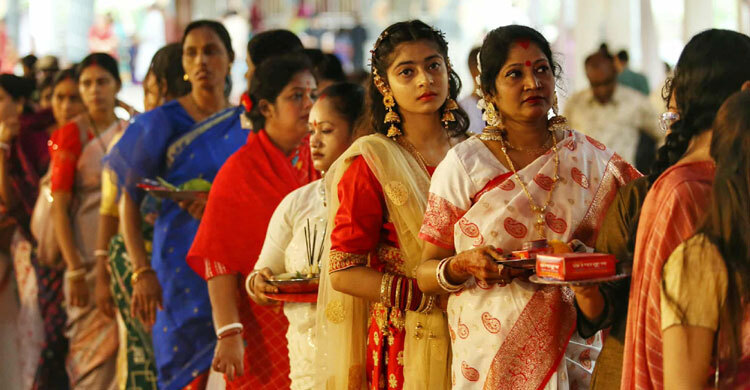
The vibrant and joyous festivity of Bijaya Dashami, marking the triumphant conclusion of the five-day Sharadiya Durga Puja, continues throughout Thursday, October 2, across Bangladesh with resplendent decorations, deep devotion, and a spirit of communal harmony.
From the bustling streets of Dhaka to the quiet lanes of rural towns, devotees will come together in the evening to bid a heartfelt farewell to Goddess Durga, who is believed to return to her celestial abode after blessing her earthly children.
The day began with solemn Dashami Puja rituals at temples and elaborately adorned pandals, followed by the iconic Sindur Khela, a cherished tradition in which married women, dressed in pristine white saris with crimson borders, applied vermilion to each other’s foreheads and faces, exchanging sweets and prayers for enduring love and prosperity.
“This ritual is not just about colour, it’s a symbol of sisterhood, hope and the divine feminine,” said Priya Sen, a participant at Dhakeshwari National Temple. “Even men are joining in now—it’s become a celebration of togetherness.”
As the sun heads for setting, thousands are joining vibrant, music-filled processions carrying exquisitely crafted idols of the goddess and her children—Lakshmi, Saraswati, Kartik and Ganesh—towards rivers, ponds and lakes for the sacred Bisarjan (immersion).
In Dhaka, the Buriganga River once again became the focal point of emotion and devotion, as devotees chanted the poignant refrain: “Aschhe bochhor abar hobe!” (“Next year, it will happen again!”).
Temples and community pandals – from Ramna Kali Mandir and Kalabagan to Banani, Shakhari Bazar and Ramakrishna Mission – were thronged from dawn, with floral offerings, devotional songs and the fragrance of incense filling the air.
Nationally, an estimated 33,355 puja pandals hosted the festival, reflecting the deep cultural roots of Durga Puja in Bangladesh’s social fabric.
Traditional sweets such as chamcham, kalojam, sandesh and narkeler naru (coconut-jaggery balls) were shared generously among neighbours, friends and even strangers—reinforcing the festival’s message of unity, forgiveness and goodwill.
The five-day celebration, which began on September 28 with the sacred Bodhon (invocation) of the goddess on Sashthi, concludes today not only as a religious observance but as a national expression of peace and pluralism.
Authorities maintained robust security across major cities—including Chattogram, Rajshahi, Khulna, Sylhet, Barishal and district hubs such as Narayanganj, Dinajpur and Jashore—ensuring a safe and serene end to the festivities.
Durga Puja, the largest religious festival of Bangladesh’s Hindu minority, embodies the eternal triumph of good over evil. As the idols dissolved into the waters, devotees carried home not just memories, but renewed faith in harmony, hope and the promise of the goddess’s return next autumn.