
End graft, traders will deliver, business leaders tell NBR

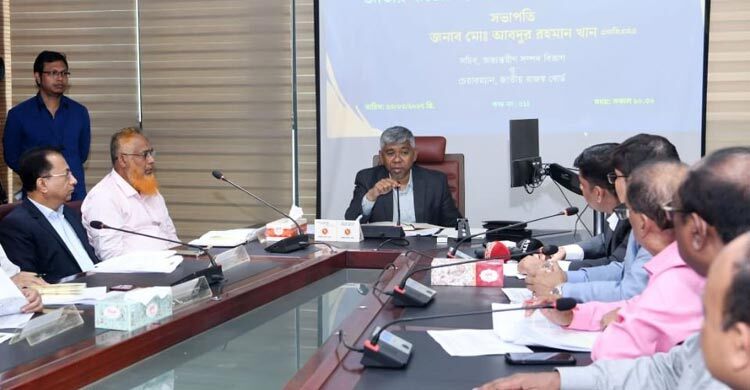
At a heated pre-budget discussion hosted by the National Board of Revenue (NBR) in Agargaon on Thursday, March 13, traders and business leaders demanded an end to corruption, arguing it’s the key to unlocking their cooperation.
“Stop corruption, and you’ll get everything you want from us,” declared Md Shahdat Hossain Sohel, president of the Bangladesh Terry Towel and Linen Manufacturers and Exporters Association.
Sohel painted a grim picture: “Traders are being tortured. At Chattogram Port, exporters without bonds face endless hurdles. I’ve sent voice messages—nothing’s changed. Your people are stronger than you think.” He recounted a recent call pressuring him to meet an official, only met with deference when he mentioned knowing the NBR chairman.
NBR Chairman Md Abdur Rahman Khan fired back: “File a complaint with evidence—cameras and recordings are your tools now. We’ve spent crores on an online complaint system. Use it. The ACC and NBR can act, but you have to stop paying bribes first.”
Tales of extortion and relief
KM Iqbal, Senior Vice President of the Bangladesh Plastic Goods Manufacturers and Exporters Association, alleged rampant irregularities. “Two containers from Aman Plastic in Pangaon were seized, slapped with a Tk 7 crore duty. The owner nearly took his own life—I brought him back. After the government change, they were released for crores less.”
Tax cuts and incentives on the table
Trade bodies seized the moment to pitch budget reforms:
Terry Towel Association called for source tax deductions and duties on 10- and 20-count yarn.
Garment Accessories (BGAPMEA) demanded halving export source tax from 1% to 0.5% for five years, raise individual tax-free income from 3.5 lakh to 4 lakh taka, and cut tax on deposit interest from 20% to 10%.
BASIS insisted extending tax exemptions to 2031, ease cashless transaction rules, scrap VAT on local software, and boost software export incentives from 6% to 10%.
Plastic goods produces demanded exempting taxes on 24 raw materials for toys.
Furniture owners called for exempting 14 imported raw materials.
Furniture exporters seek 100% bank guarantees against duties on export-bound raw materials.
LPG Autogas traders seek tax holidays, duty-free imports for kits and cylinders, and remove VAT on consumer autogas sales.
Frozen foods processors demand bonded warehouse facilities and drop 10% advance tax on cash aid.
Biscuit manufacturers seek exempting duties on cakes, biscuits, and confectionery.
Jewellers seek subsidizsng VAT—20% on diamonds, 50% on gold jewellery for three years.
Garment buying houses seek slashing advance income tax from 10% to 5%.
Textile clash: A fiery exchange
Tensions peaked with the Bangladesh Textile Mills Association (BTMA), which demanded a 15% income tax rate until 2030. Director Md Mosharraf Hossain cited financial strain: “Indian yarn’s flooding us—7-8 crore taka worth sits unsold. We’re profitless.”
Khan challenged the logic: “Corporate tax is 25% on profit. If you’re not profiting, you pay nothing—so why demand 15%? Those raking in thousands of crores at 25% don’t complain. Explain this.” He pressed further: “How’s Indian yarn so cheap? Smuggling?”
BTMA’s Shahid Alam retorted, “Will we shut factories then? We can’t sell against smuggled goods.” Mosharraf admitted, “We couldn’t convince you today. Give us 30 minutes later.” Khan stood firm: “We’ve axed exemptions—none renew after June. I’ve heard you most. Explain all day if you must, but this 15% makes no sense. It’s tarnishing your sector’s image.”