
Gas flows out at 7.2 mmcfd rate as Bapex finds new reserve in Jamalpur

Published: 1 June 2025, 05:44 PM
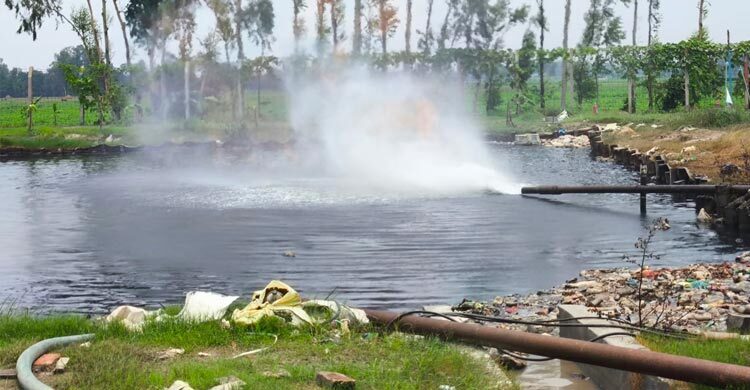
A spark of hope has ignited in Madarganj of Jamalpur, as a gas exploration well has struck a significant find, with gas flowing at an impressive rate of 7.2 million cubic feet per day (mmcfd).
The discovery, confirmed during initial testing, marks a potential turning point for Bangladesh’s energy sector and has locals buzzing with anticipation.
The breakthrough occurred at the Jamalpur-1 exploration well of the Bangladesh Petroleum Exploration and Production Company Limited (Bapex) in Tartapara village, where drilling reached a depth of 2,600 metres.
Gas was first detected on Saturday, May 31, at around 7:30pm, and by Sunday afternoon, it was flowing steadily from a layer between 1,441 and 1,445 metres below the surface.
Project officials revealed that another gas-bearing layer lies above, hinting at even greater potential.
“We’ve hit gas, and it’s flowing at 7.2 mmcfd,” said Md Mozammel Haque, Project Director of the Jamalpur-1 Exploration Well Drilling Project, speaking to Jago News.
“But this is just the beginning. Over the next 72 hours, our tests will reveal the full extent of the gas reserves and whether oil or other minerals are present,” he said.
The project, launched with a budget of approximately Tk 168 crore, began on January 24, 2025, when Mohammad Saiful Islam, Secretary of the Energy and Mineral Resources Division, inaugurated the drilling operations. The discovery has raised hopes of a major energy boost for Bangladesh, a nation striving to meet its growing energy demands.
The gas find has sparked excitement among local communities and energy experts alike. If the reserves prove substantial, the Jamalpur-1 well could transform the region into a key energy hub, creating jobs and driving economic growth.
The possibility of additional minerals, including oil, adds an extra layer of intrigue to the ongoing tests.
Mozammel remained cautious but optimistic: “It’s too early to quantify the total gas reserves or confirm other resources, but the initial flow rate is promising. We’re eager to see what the next round of tests uncovers.”
Over the next three days, the project team will conduct further tests to assess the full scope of the discovery. The data will clarify the volume of gas in both identified layers and determine whether other valuable resources lie beneath Tartapara’s soil.
For now, the steady flow of 7.2 mmcfd has set a hopeful tone for what could be a landmark moment in Bangladesh’s energy journey.
As the nation watches closely, the Jamalpur-1 well stands as a beacon of possibility, potentially fuelling a brighter, more energy-secure future.