
Tariff tightrope: Dhaka seeks ‘reasonable’ US deal amid geopolitical headwinds

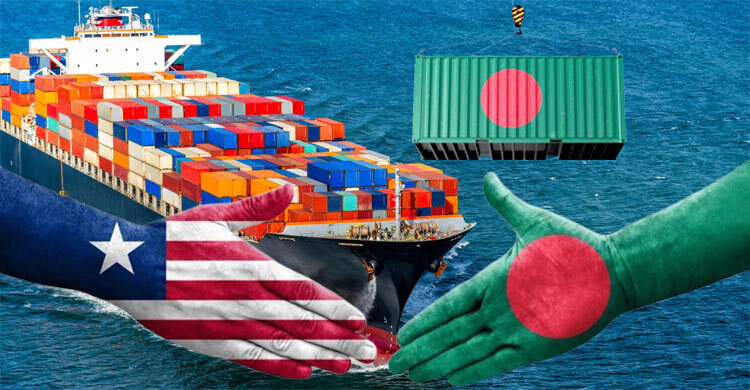
Despite three days of bilateral negotiations in Washington, Bangladesh has not succeeded in securing a rollback of the 35 per cent countervailing duty imposed by the United States on Bangladeshi exports.
In fact, the tariff was reinstated by the US just before the second round of talks began – an unexpected move that caught Bangladeshi negotiators off guard.
Details of the concessions made by Bangladesh during the discussions remain under wraps, with the government citing a non-disclosure agreement with the US.
Commerce Adviser Sk Bashir Uddin, however, remains optimistic, asserting that Bangladeshi exporters will continue to compete in the US market based on their own capabilities and that the US will ultimately set tariffs at a “reasonable level.”
Economists and business leaders, however, are less confident.
They describe the task of lowering the tariff, imposed by the Trump administration, as “difficult” in practice, given the broader geopolitical and economic conditions now shaping the negotiations.
Preparing for a third round
Bangladesh is now seeking a third round of talks with the US to further negotiate the tariff rate and clarify the conditions reportedly tied to the agreement. The trade delegation is expected to return to Washington later this week.
Sources in the Ministry of Commerce have indicated that the recent talks involved several sensitive and non-economic conditions, which now require inter-ministerial consultations.
The government is reportedly working to keep the details confidential.
According to insiders, the US has proposed conditions that would require Bangladesh to align with US sanctions on third countries; avoid offering preferential trade terms to other nations that are not extended to the US; and limit trade and investment with countries under US sanctions.
Additionally, the US has reportedly expressed concerns over Bangladesh’s growing trade ties with China, raising fears that Dhaka may be asked to choose between competing economic partnerships.
No clarity for business community
After returning from Washington, Commerce Adviser Bashir Uddin and Commerce Secretary Md Mahbubur Rahman held a closed-door meeting with economists, researchers, and industry leaders in Dhaka on Monday, followed by a press briefing.
However, the session left many questions unanswered.
Business representatives, including BGMEA President Mahmud Hasan Khan, BKMEA President Mohammad Hatem, Bangladesh Chamber President Anwarul Alam Chowdhury Parvez, Apex Footwear Managing Director Syed Nasim Manzur, SANEM Executive Director and Economist Selim Raihan, Policy Exchange Bangladesh Chairman Masrur Riaz, RAPID Chairman Dr Abdur Razzaque, former Tariff Commission member Mustafa Abid Khan, FBCCI Administrator Md Hafizur Rahman and many others were present at the session. But they were not given a clear picture of the ongoing negotiations or the specific demands made by the US.
“We were asked to give our opinion, but not told what the US wants,” said one economist present at the meeting. “That makes it hard to make informed suggestions.”
A senior businessman, who requested anonymity, expressed concern: “We feel the government is under pressure on this tariff issue. That’s why many things are being hidden from us.”
Beyond trade: Security and geopolitical stakes
Energy Adviser Fouwzul Kabir Khan hinted at the broader scope of the talks, saying that the US has proposed a preliminary framework agreement that includes security-related issues.
However, Commerce Adviser Sk Bashir Uddin denied any discussion on security during the Monday press briefing.
SANEM Executive Director and economist Selim Raihan noted that the tariff issue involves “many complex, non-trade elements,” adding, “This is more than just a trade negotiation – it’s a geopolitical challenge for Bangladesh.”
Dr Abdur Razzaque , Chairman of RAPID, echoed the sentiment: “The government is clearly facing a difficult balancing act. While the US remains our largest export market, the conditions being offered are tough for a developing country like Bangladesh.”
He added, “The government has assured us that it will protect national and business interests – but how that will be done, without compromising sovereignty or economic autonomy, remains to be seen.”