
Ghost buildings, growing debt

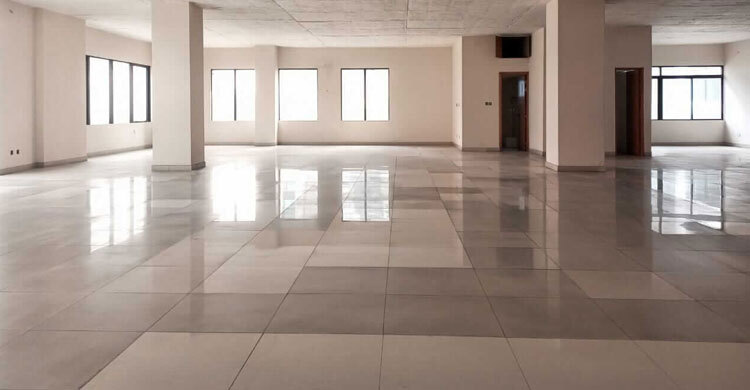
A deepening crisis is gripping Bangladesh’s commercial real estate sector as soaring vacancy rates, stalled investments, and rising loan defaults threaten to destabilise the banking system.
With 20-25 per cent of commercial spaces in Dhaka currently unoccupied, and no signs of recovery, economists and industry leaders warn of a looming financial contagion if urgent policy interventions are not implemented.
Vacancy crisis hits Dhaka’s commercial hubs
Political instability, economic uncertainty, and a sharp decline in investor confidence have brought new commercial development to a near standstill.
Building owners across the capital are struggling to find tenants for newly constructed, and even older, commercial buildings. Many of these properties were financed through bank loans, and with no rental income or sales, owners are increasingly defaulting on repayments.
Dr Md Harun Or Rashid, Managing Director of Mbit Homes Limited, told Jago News: “Business activity in the country is practically frozen. Entrepreneurs are sitting on unsold or unrented commercial floors. Political uncertainty has paralysed decision-making. Young entrepreneurs are not entering the market — many are leaving the country altogether.”
Defaulted loans skyrocket in construction sector
According to Bangladesh Bank data, the construction sector received Tk 1,77,520 crore in loans in 2024 but Tk 26,487 crore of that has already turned into non-performing loans (NPLs), representing a staggering 24.58 per cent default rate. This marks a dramatic surge from 2023, when defaults stood at Tk 7,680 crore (7.53 per cent).
In the housing finance sector, defaults also climbed sharply from Tk 1,537 crore (5.09 per cent) in 2023 to Tk 4,750 crore (11.86 per cent) in 2024.
“This is alarming,” said industry insiders. “If this trend continues, it will severely impact bank balance sheets and restrict future credit flow to the real economy.”
High rents, no demand, incomplete infrastructure
Commercial rents in Dhaka are typically 3-4 times higher than residential rates but with no takers, building owners are stuck in a cash-flow crisis. Compounding the problem, many newly built commercial towers remain unusable due to incomplete infrastructure: no electricity connections, missing elevators, and insufficient parking.
“Even shiny new buildings are lying idle,” said a REHAB source. “Developers can’t afford to finish interiors or install basic utilities due to the liquidity crunch.”
Investor exodus and political risk paralyse market
Business owners cite political uncertainty as the primary deterrent to long-term commitments. Sabbir Ahmed, a chemical trader from Old Dhaka, explained: “To rent a commercial space, you need to pay 6-12 months’ rent upfront. But with no clarity on who will govern next, no one wants to take that risk. I’m holding off, let’s wait and see.”
The departure of business figures linked to the previous administration has further emptied commercial floors with no new entrepreneurs stepping in to fill the void.
Zahid, owner of Alvi Enterprise, consolidated his two offices into one to cut costs.
“The space I vacated? Still unsold, even at a discount. I’ll only expand again when the environment stabilises.”
Global headwinds compound local crisis
Fazle Shamim Ehsan, President of the Bangladesh Employers’ Federation (BEF), highlighted the confluence of global and domestic pressures: “International market instability, restricted access to credit, and last year’s prolonged production disruptions have crippled business sustainability. Without capital, even available spaces remain empty. Political conflict and social insecurity are blocking expansion.”
Housing sector also suffers: 18,000 flats in limbo
The residential market is not immune. REHAB reports that its members currently have 1,800 active projects totaling approximately 18,000 unsold or unrented flats. Regulatory delays, including DAP approvals, have further stifled supply and demand.
Liaqat Ali Bhuiyan, Senior Vice President of REHAB, urged immediate action: “Banks must cooperate offer restructuring, moratoriums, or low-interest refinancing. We also propose a special sectoral stabilization fund to prevent a systemic banking crisis. If entrepreneurs collapse, the entire financial system suffers.”
Call for central bank intervention
Industry leaders are calling on Bangladesh Bank and major financial institutions to design emergency support packages including interest subsidies, loan rescheduling, and public-private risk-sharing mechanisms — to revive investor confidence and prevent a wave of foreclosures.
“Without special support,” warned Dr Harun Or Rashid, “this sector won’t recover on its own. And the banking system will pay the price.”
Bangladesh’s commercial real estate sector is at a tipping point. Vacancies are rising, defaults are exploding, and investor flight is accelerating. Without coordinated policy action, the crisis could spill over into the broader financial system threatening economic stability at a time when the country can least afford it.