
Politicians in pre-poll mad rash for CIB clearance to dodge loan default ban

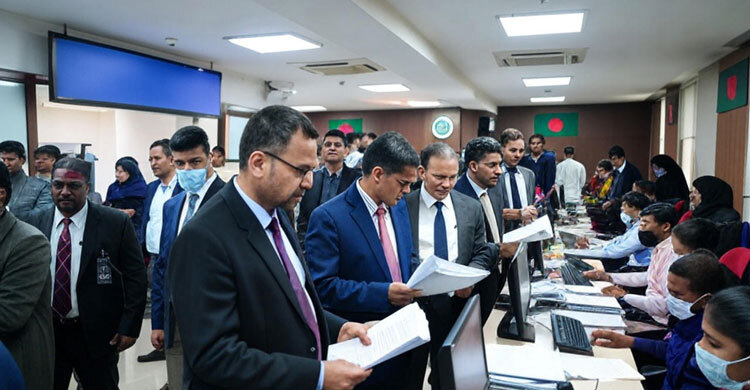
With the national elections approaching, Bangladesh Bank is witnessing an unusual surge of politicians seeking Credit Information Bureau (CIB) clearance – a mandatory requirement for anyone hoping to contest the polls.
Under the law, a candidate with a defaulted loan is disqualified unless the debt is cleared or renewed before nomination, making the CIB report a decisive factor in electoral eligibility.
Central bank officials say the pressure has intensified in recent weeks, with many aspiring candidates turning up at Bangladesh Bank – often identifying themselves as businessmen – to rectify their loan status or present temporary stay orders from the courts aimed at shielding them from default classification.
Central bank tightens scrutiny
Bangladesh Bank has adopted a strict stance this time, warning that the slightest error in loan information submitted by banks will result in action directly against the central bank itself. It has instructed banks to fully update all candidate loan records at least seven days before the election schedule is announced.
“A stay order does not mean getting rid of defaulters… If someone thinks they can get relief without paying money, this is a wrong idea,” said Arif Hossain Khan, Executive Director and spokesperson of Bangladesh Bank. “Even if the court stays the verdict, banks cannot reduce provisions, and in our eyes, they remain defaulters.”
Growing crowd at Bangladesh Bank
As scrutiny tightens, potential candidates are rushing to resolve long-pending defaults. Many are seeking to be shown, at least temporarily, as “regular borrowers” through stay orders – legal shields that prevent banks from marking their loans as defaulted.
However, this relief is fragile. If the stay is lifted, the borrower immediately becomes a defaulter again. Still, in electoral practice, the Election Commission often considers these temporary orders sufficient for allowing candidacies to proceed.
Central bank sources say that in the past three to four months, 250-300 writ petitions and stay orders have been filed, with 10-20 new orders arriving daily – some even directing banks to remove names from the CIB list altogether.
A CIB official, requesting anonymity, said: “If the court orders, banks are obliged to show defaulted loans as standard. The comments section of annual reports must state ‘Standard due to writ’. This hides the real financial condition of major borrowers.”
Past irregularities and fresh vigilance
In the 2024 elections, CIB data for around 1,400 individuals was illegally altered, which led to the removal of the department’s director. This time, Bangladesh Bank says it is determined to prevent any manipulation.
Strict letters have been issued to all bank CEOs, warning that mistakes, negligence, or deliberate distortion of loan data could lead to penalties of up to Tk 5 lakh, suspension, or even dismissal.
Legal loopholes and election realities
Section 12 of the RPO mandates that anyone with a defaulted loan must settle it before filing nomination papers. But in practice, stay orders have become the ultimate loophole, enabling many defaulters to contest without clearing dues.
“We do not know how the Election Commission will consider these issues… They alone decide whether a candidacy will be cancelled,” spokesperson Arif Hossain Khan said.
He added that if banks fail to enforce loan collection and rely only on stay orders, “that is the real failure of the bank.”
Weak enforcement and institutional gaps
Experts say many defaults arise because banks themselves do not pursue timely action due to weak case management or a lack of goodwill.
“If the customer is willing, the bank must maintain communication and support restructuring. If they’re not, banks must go for litigation,” Khan said.
Economic risks and transparency concerns
Economists warn that frequent stay orders shielding defaulters create systemic threats.
If one-third of loans remain in default, interest rates should technically rise above 30 per cent, yet banks operate at 13-14 per cent, creating an unstable equilibrium.
“Hiding updated default information erodes transparency in assessing banking sector health, affecting policy, risk assessment, and investment,” said Helal Ahmed Jony, research director at Change Initiative.
He stressed: “For transparent and accountable elections, only financially responsible individuals should be candidates. The practice of hiding defaulters behind stay orders must stop.”