
Bangladesh pullout hits India’s onion trade

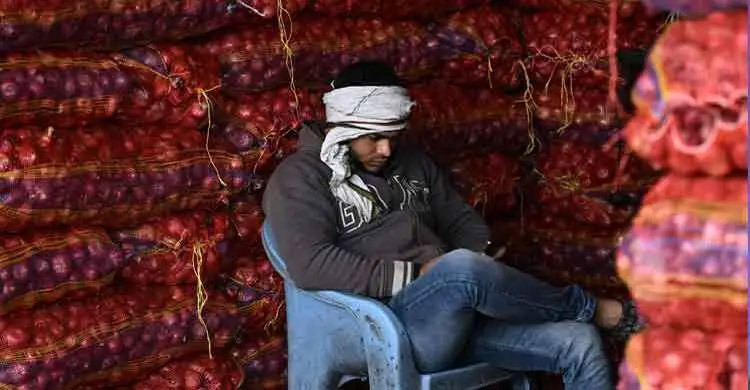
India’s once-dominant onion export industry is facing a sharp downturn, with exporters blaming Bangladesh’s drive for self-reliance, shifting sourcing patterns, and policy unpredictability at home for the slump.
Despite historically low farmgate prices in India, shipments have stagnated for months. Exporters say Bangladesh — previously India’s single largest buyer, taking nearly one-third of total onion exports — has purchased only negligible volumes in the past eight months. Dhaka’s market prices remain three times higher than India’s, yet the country has preferred imports from Pakistan and China, while expanding domestic production.
Saudi Arabia, another major buyer, has also largely stopped importing Indian onions for almost a year.
Policy uncertainty drives buyers away
India’s frequent export restrictions — including bans and minimum export price conditions — between August 2023 and April 2025 have frustrated overseas buyers. Earlier bans in 2019 and 2020 had already shaken market confidence. As prices soared in dependent markets, Bangladesh even issued a diplomatic note to New Delhi in 2020 protesting the sudden policy shifts.
“Customers who relied on us for quality have now found alternatives,” said Ajit Shah, veteran exporter and former head of the Horticulture Produce Exporters’ Association (HPEA). “Now they compare our prices with competitors, not quality.”
During 2023–24, India exported 7.24 lakh tonnes of onions to Bangladesh — 42% of its total export volume. But from April–September 2025–26, exports crashed to just 12,900 tonnes. The Indian government attributes Dhaka’s declining purchases to political decisions in Bangladesh, which is currently prioritising local farmers and production.
Seeds of self-reliance
Exporters warn that India may be enabling its own competitors: onion seeds smuggled or legally exported to neighbouring countries are helping traditional buyers build self-sufficiency.
“Countries like Bangladesh, Sri Lanka, China and Pakistan are producing onions using Indian seeds,” said Vikas Singh, vice president of HPEA. “It’s a serious challenge for Indian farmers.”
Industry representatives have formally urged the Horticulture Commissioner to ban seed exports to competing markets.
Middle East and Asia also move on
Saudi Arabia’s imports from India fell from 57,000 tonnes in 2020–21 to just 223 tonnes in 2025–26. Exporters say Saudi authorities have stopped issuing import permits, citing cheaper availability from Yemen and Iran, along with growing domestic production. The Philippines, meanwhile, imports Indian onions only when Chinese shipments are unavailable.
Pasha Patel, member of the Centre’s Board of Trade and head of Maharashtra’s Onion Policy Committee, warned that India is losing long-held dominance in the trade due to policy volatility.
Bleak outlook for Indian exporters
With Bangladesh building local capacity, Saudi Arabia diversifying its supply base, and China and Pakistan expanding their footprint, Indian exporters fear a long-term erosion of market share.
“Not only have we lost our traditional buyers, they are becoming self-sufficient with our seeds,” Patel said.
Unless New Delhi stabilises its export policy and reins in seed outflows, exporters warn the decline may be difficult to reverse — even if domestic prices remain low.
Source: The Economic Times