
Food price pressure deepens as inflation climbs further

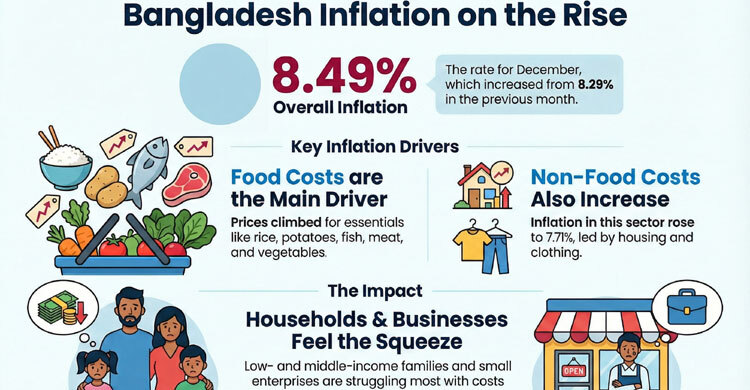
Rising food prices have renewed unease across the country, with inflation edging up again at the end of the year and dampening expectations of early relief for consumers and businesses.
The overall inflation rate rose to 8.49 per cent in December, up from 8.29 per cent in November, according to data released by the Bangladesh Bureau of Statistics (BBS) on Monday, January 5. Both food and non-food inflation registered fresh increases, signalling persistent cost pressures across the economy.
Food inflation remained the main driver, as prices of key essentials continued to climb even during the winter season, when supplies are typically more stable.
BBS data show higher prices for staples such as rice and potatoes, along with pulses, edible oil, salt, fish, meat, vegetables and spices.
The sustained rise in food costs has increased anxiety in the food supply chain, from producers and traders to consumers.
Non-food inflation also moved higher, rising to 7.71 per cent in December from 7.36 per cent a month earlier.
Analysts say higher costs related to housing, clothing and tobacco have added to the overall inflationary burden, squeezing household budgets and raising operating expenses for businesses.
Economists note that the continued rise in both food and non-food inflation at the start of the year sends a discouraging signal, particularly for low- and middle-income households and small enterprises that are already struggling with elevated input costs.
With inflation remaining well above comfort levels, market participants are closely watching policy measures aimed at stabilising prices, improving supply chains and easing pressure on essential commodities.