
Govt withdraws bonded facility for 10–30 count yarn in RMG sector

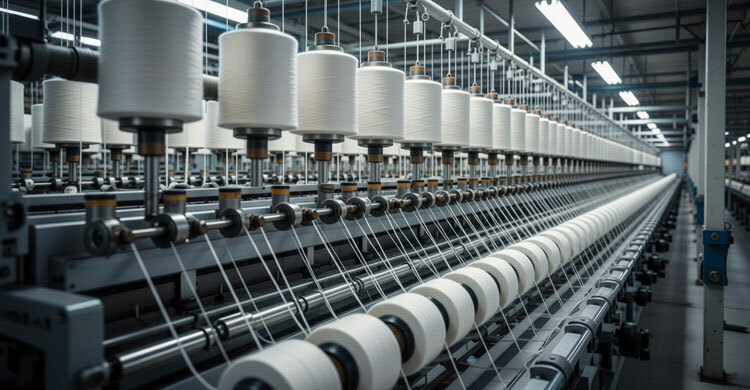
The government has directed the withdrawal of bonded warehouse facilities for the import of 10 to 30-count yarn used in the export-oriented ready-made garment (RMG) sector. The move aims to protect the domestic spinning industry, increase value addition in the export sector, and address challenges arising from Bangladesh’s post-LDC graduation.
The Ministry of Commerce has instructed the customs authority to ensure that the count of cotton yarn is clearly stated in the bill of entry and to strictly monitor any misuse of HS codes. Officials believe that implementing this measure will strengthen the domestic textile industry and enhance Bangladesh’s preparedness for the global trade regime after LDC graduation.
On January 12, the Ministry of Commerce, through a letter from its WTO Cell-2, formally requested the National Board of Revenue (NBR) to take the necessary steps. The decision followed recommendations from the Bangladesh Tariff Commission and appeals from the Bangladesh Textile Mills Association (BTMA), which highlighted the need to protect the industry, encourage investment, create employment, and expand domestic production capacity.
According to the ministry, under customs tariff HS headings 52.05, 52.06, and 52.07, the bonded facility for 10 and 30-count yarn has led to a significant rise in imports in recent years. Statistics show that in FY 2022-23, imports under these headings reached nearly 36,000 metric tons, valued at approximately Tk 1,480 crore. In FY 2023-24, imports rose to around 41,000 metric tons, exceeding Tk 2,200 crore. Early trends for FY 2024-25 indicate continued growth in both volume and value.
The letter explained that low-count yarn imported under the bonded facility is being sold at comparatively lower prices in the domestic market, making it difficult for local spinning mills to compete. Although domestic mills have sufficient production capacity, they are operating at only 60% capacity, weakening the financial sustainability of the industry.
The surge in imported yarn has also significantly reduced sales of domestically produced yarn. Industry sources report that around 50 spinning mills have already closed, while many others are operating at a loss. If this trend continues, more mills may shut down, negatively affecting employment and investment.
Moreover, over-reliance on imported yarn is gradually making the garment sector dependent on imports, weakening backward linkages in the textile value chain and posing long-term risks to the industry’s structure.
The Ministry of Commerce stressed that with Bangladesh’s graduation from LDC status in 2026, the country will lose many existing duty-free facilities in key export markets such as the European Union, the United States, and Japan. To benefit from free trade agreements, SEPA, and GSP Plus, export products will require 40–80% local value addition and double-stage transformation. Dependence on imported yarn could make meeting these requirements challenging.
The ministry warned that maintaining the bonded facility would discourage new investment in domestic mills and reduce the overall competitiveness of the export sector due to higher production costs and longer lead times. In contrast, withdrawing the facility for low-count yarn is expected to restore balance in the domestic spinning industry, boost local production, and safeguard employment.