
US-Israel attacks on Iran spark oil shock fears

The joint US-Israeli military attack on Iran, launched on Saturday under Operation Epic Fury, has plunged the Middle East into heightened conflict and sent global oil markets into a state of alert ahead of Monday's trading resumption.
President Donald Trump described the operation as major combat actions aimed at neutralising security threats from Iran's leadership and nuclear programme while creating an opening for Iranians to overthrow their rulers. In response, Tehran has already launched missiles towards Israel, raising immediate fears of broader escalation that could draw in neighbouring Gulf states and directly threaten energy infrastructure.
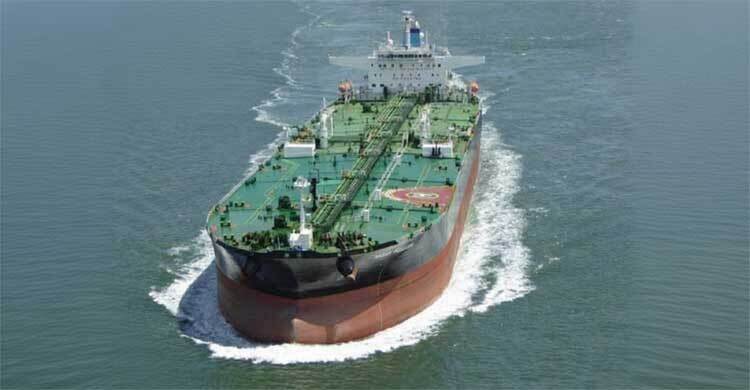
Oil traders and analysts are particularly focused on the potential for supply disruptions, given Iran's status as a top-ten global producer with output around 3.1 million barrels per day according to recent OPEC figures, despite sharp declines from pre-sanctions levels of about six million barrels per day in the 1970s. Iran's crude remains among the cheapest to extract at roughly $10 per barrel, making any loss particularly impactful compared with higher-cost producers elsewhere. More critically, however, is the vulnerability of the Strait of Hormuz, the vital chokepoint through which around 20 million barrels of crude flow daily—nearly a fifth of global liquids consumption per US Energy Information Administration data – with limited practical alternatives for rerouting exports from Saudi Arabia, Iraq, Kuwait, the UAE, and others.
Reports indicate that some major oil companies and trading houses have already paused shipments through the strait in reaction to the strikes, amplifying concerns that even partial interruptions – such as tanker diversions, harassment, or mining – could remove millions of barrels from the market daily. Iran has long warned of closing the strait in retaliation for aggression, and recent live-fire exercises, including a temporary closure, have underscored this persistent threat. While a full, prolonged blockade remains seen as unlikely due to the severe consequences for Iran itself and the probable military response from the US and allies, analysts warn that any meaningful disruption could prove far more severe than past events like the 1970s oil crisis.
Brent crude closed around $72-73 per barrel on Friday, already reflecting some geopolitical tension from prior build-up, but markets anticipate a sharp upward move when Asian trading opens on Sunday evening, and broader sessions follow on Monday. Experts suggest an initial risk premium could push prices towards $80 or higher in a contained scenario, with 10-25 per cent gains possible even without a complete Strait closure. In more extreme cases involving attacks on regional facilities or sustained flow interruptions, prices could surge well over $100 per barrel, potentially retesting triple-digit levels not seen consistently in years and evoking memories of historical supply shocks three times more impactful than those of the 1970s. OPEC+ members, including Saudi Arabia and the UAE, which have spare capacity, may face pressure to accelerate output hikes beyond modest planned increases to help offset losses, though the effectiveness would depend on the conflict's scale and duration.
Safe-haven flows into assets like gold are also expected alongside volatility in equities and currencies, as investors price in the uncertainty of retaliation, regional spillovers, and the broader economic fallout from elevated energy costs. While a swift de-escalation could limit the spike to temporary territory, prolonged hostilities would likely sustain higher prices and test global supply resilience in ways few models have fully anticipated. Markets will watch closely for weekend developments, including any further Iranian actions or diplomatic signals that could either calm or inflame the situation.