
Hormuz shutdown rattles global oil market, defies quick fix

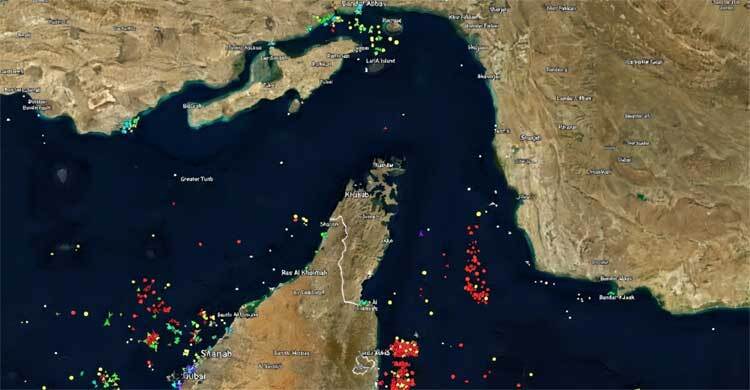
Global energy markets are facing a deepening shock as conflict in the Middle East disrupts oil flows through the Strait of Hormuz, a critical artery for the world’s crude trade, sending prices surging and prompting governments to consider emergency stockpile releases.
However, analysts warn that even large releases from strategic petroleum reserves (SPR) may do little to stabilise the market unless tanker traffic resumes through the narrow waterway that normally carries roughly one-fifth of the world’s oil supply.
Oil prices surge amid shipping disruption
The escalating war involving Iran has effectively halted tanker traffic through the Strait of Hormuz, forcing vessels to anchor outside the Persian Gulf and triggering a rapid spike in crude prices.
Brent crude, the global benchmark, climbed nearly 7 per cent to $98.96 per barrel, its highest closing level since 2022. US crude briefly crossed $100 per barrel, reflecting fears of a prolonged supply disruption.
With around 20 per cent of global oil shipments moving through the strait under normal conditions, the near shutdown of traffic has created one of the most serious supply threats in recent years.
Energy analysts say that the scale of daily global consumption makes it extremely difficult for governments to offset the disruption through emergency stockpiles.
Global oil demand currently stands at about 100 million barrels per day, meaning even tens of millions of barrels released from reserves would cover only a fraction of daily consumption.
Strategic reserves offer only limited relief
Major economies, including the Group of Seven (G7) nations, have indicated they are prepared to release oil from strategic reserves if necessary.
“We stand ready to take necessary measures, including to support global energy supply such as stockpile releases,” the group said following a recent meeting.
But energy experts caution that such moves would have only a modest impact.
Daniel Raimi, a fellow at energy policy think tank Resources for the Future, said that while coordinated releases could slightly ease market pressure, they cannot replace disrupted supply from the Persian Gulf.
“When you consider the volume of global oil trade, even a coordinated SPR release will have a relatively small effect on global oil prices,” he said.
A similar coordinated release took place in 2022 following Russia’s invasion of Ukraine, when the G7 countries collectively released 240 million barrels, including 180 million barrels from the United States.
While fuel prices eventually declined, analysts estimate the move lowered gasoline prices by only 17 to 42 cents per gallon, highlighting the limited influence of reserve releases.
Strait of Hormuz remains the critical factor
Energy market specialists say the decisive factor for stabilising prices will be the reopening of the Strait of Hormuz.
Bob McNally, president of Rapidan Energy Group, said emergency releases may only slow price increases temporarily.
“If tanker traffic through the Strait of Hormuz does not resume soon, any SPR release would only provide a brief pause before prices rise again,” he said.
The challenge becomes even greater if the conflict drags on. Strategic reserves are finite, and drawing them down today could limit governments’ ability to respond to future supply shocks.
The US Strategic Petroleum Reserve, for example, held about 600 million barrels before the Ukraine war but has since fallen to around 415 million barrels.
Energy analysts warn that stockpiles are meant for short-term disruptions rather than prolonged geopolitical conflicts.
Global economic risks rise
The energy shock is already raising concerns about wider economic consequences.
Higher oil prices can quickly feed into inflation through rising fuel costs, transportation expenses and manufacturing inputs. Airlines face higher jet fuel costs, while shipping and logistics costs could increase prices for food and consumer goods.
Economists warn that sustained oil prices above $100 per barrel could significantly slow economic growth.
According to Moody’s Analytics, every $10-per-barrel increase in oil prices could cost an average household roughly $450 per year in additional expenses.
The situation could also complicate monetary policy, as central banks struggle to balance inflation pressures with slowing economic activity.
Saudi Arabia shifts export strategy
Amid the disruption, Saudi Arabia’s state energy giant Saudi Aramco has begun rerouting exports through its Yanbu terminal on the Red Sea, bypassing the Persian Gulf.
The company said it could ship about 5 million barrels per day from the western port using its east-west pipeline, which has a total capacity of 7 million barrels per day.
Under normal circumstances, Saudi Arabia exports around 7 million barrels daily, making it the world’s largest crude exporter.
Aramco’s chief executive Amin Nasser warned that the conflict could have “catastrophic consequences” for global oil markets if it persists.
Duration of conflict will determine impact
Ultimately, analysts say the length of the conflict will determine whether the current price surge becomes a temporary shock or a prolonged energy crisis.
If oil flows resume quickly, prices could retreat within weeks. But if shipping remains restricted for months, markets could face sustained supply shortages, pushing prices higher and increasing the risk of inflation and economic slowdown.
For now, energy markets remain on edge as governments weigh emergency measures that may buy time but cannot replace the massive volumes of oil normally flowing through the Strait of Hormuz.
Source: CNN, FT