
Prices of nuts, dried plums surge ahead of Eid; spices stay high

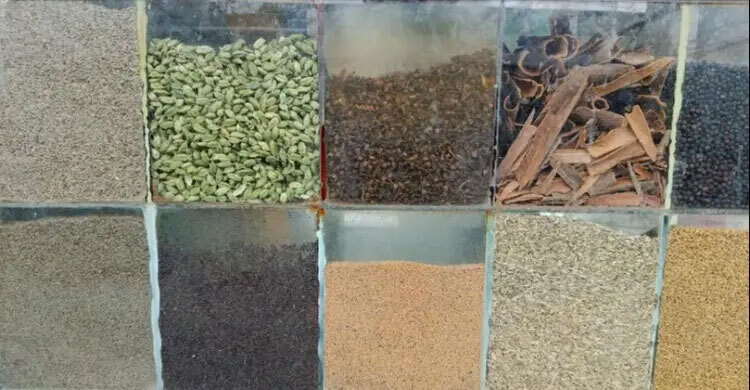
With just four to five days remaining for Eid-ul-Fitr, consumers are busy shopping for essential items. However, rising prices of certain products have caused discomfort among buyers. In particular, three types of nuts and dried plums (alubokhara) are selling at steep rates, while already expensive spices show no sign of relief.
Sellers say that demand for nuts and spices rises during Eid, pushing prices higher. This year, among spice products, the price increase of nuts used in semai (vermicelli) preparation and dried plums used in pilaf is being described as “unusual.”
These observations come from visits to markets and shops in the Rampura and Malibagh areas of Dhaka.
Field visits revealed that cashew nuts, previously sold at Tk 1,200–1,300 per kg, now cost Tk 1,400–1,500 per kg. Similarly, peanuts, which were Tk 180 per kg a month ago, now sell at Tk 220 per kg. Pistachios, previously priced at Tk 1,700–2,400 per kg depending on quality, now cost Tk 2,600–3,800 per kg.
Spice vendor Moni Mia told Jago News, “Nuts are essential for semai during Eid. Demand rises sharply at this time, and wholesale prices also increase. We buy at higher prices and sell at higher rates in retail.” He added that the price increase for the three nuts—cashews, almonds, and pistachios—is higher than that of spices, and their multiple uses contribute to strong demand.
Prunes are widely used in pilaf, biryani, roasted chicken, mutton rezala, pickles, and various other dishes. To add flavor and variety, this dried fruit sees significant demand during Eid and other festive occasions. Market sources report that prunes, previously sold at Tk 600–800 per kg, are now priced at Tk 1,200–1,400 per kg.

Raisins have also risen by around Tk 100 per kg, now selling at Tk 900–1,000. They are widely used in semai and other elaborate festive dishes.
In contrast, the prices of common spices have not seen unusual increases. Some neighbourhood shops have raised retail prices of certain spices by Tk 10–50 per kg, though wholesale rates remain largely unchanged. Spices, however, remain at the high levels seen in recent years.
Traders note that Bangladesh’s annual spice market exceeds Tk 10,000 crore, with a large portion dependent on imports. Since Eid-ul-Fitr in 2024, retail spice prices have been on the rise. At that time, wholesalers attributed price hikes to rising international spice prices and the increase in the US dollar rate. The high prices from that period remain unchanged.
Currently, cardamom is the most expensive spice in the market, with retail prices reaching up to Tk 5,000 per kg. Two years ago, the price was Tk 2,000 per kg, marking an increase of over two-and-a-half times. In some local shops, cardamom prices are slightly higher; one buyer reported being asked Tk 120 for 20 grams, equivalent to Tk 6,000 per kg.
Cinnamon demand also rises during Eid, with prices currently at Tk 560–600 per kg. Among other popular spices, clove costs Tk 1,800–2,000, coriander Tk 300–360, and bay leaf Tk 200–300 per kg. Nutmeg is sold at Tk 1,500 per kg, and mace at Tk 4,000 per kg. Retail prices of these products have seen slight increases over the past month.
However, compared to the previous Eid-ul-Adha, cumin prices have dropped slightly, currently selling at Tk 700–800 per kg, down from Tk 950–1,000 per kg.