
No inflation risk from family-farmer cards as funds stay in local economy: PM

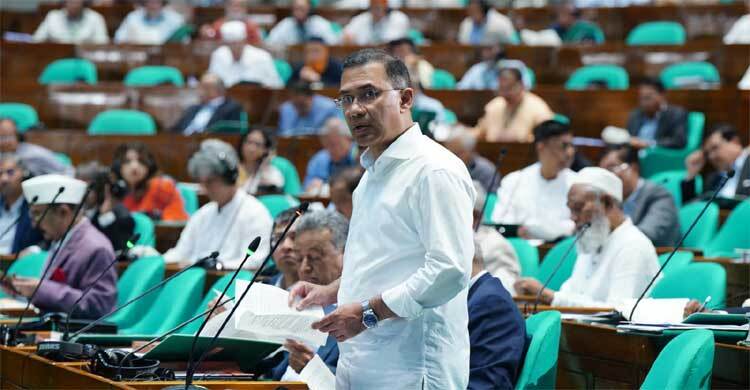
Prime Minister Tarique Rahman on Wednesday said the government’s family and farmer card programmes will not trigger inflation, as the initiative does not involve printing additional money and is designed to stimulate the domestic economy.
He made the remarks in the Jatiya Sangsad while responding to a written question from Akhtar Hossain during the question-and-answer session. The session was presided over by Speaker Hafiz Uddin Ahmed.
In his question, the MP sought details on the scope, budget and potential inflationary impact of various welfare initiatives, including family cards, farmer cards, agriculture cards and health cards.
Replying to the query, the Prime Minister said the programmes would be implemented in phases rather than all at once. He noted that each farmer card currently provides Tk 2,500 annually, while women beneficiaries under the family card scheme receive Tk 2,500 per month.
He emphasised that the gradual expansion of these programmes ensures fiscal discipline and prevents pressure on the economy.
Addressing concerns about inflation, the Prime Minister said, “Since we are not printing money, there will be no inflation. Rather, this money will circulate within the local economy.”
He added that the funds provided to women under the family card scheme are expected to be spent on essential needs such as children’s education, nutrition and small-scale business activities, thereby strengthening grassroots economic activity.
The Prime Minister also highlighted the multiplier effect of such spending, explaining that increased consumption at local shops would boost sales, create employment opportunities and further expand economic activity.
“No credible research suggests that such targeted support will fuel inflation. Instead, we believe it will significantly improve the living standards of marginalised communities within the next three to five years,” he said.