
Yunus orders swift filling of vacant 32,000 primary head teacher posts

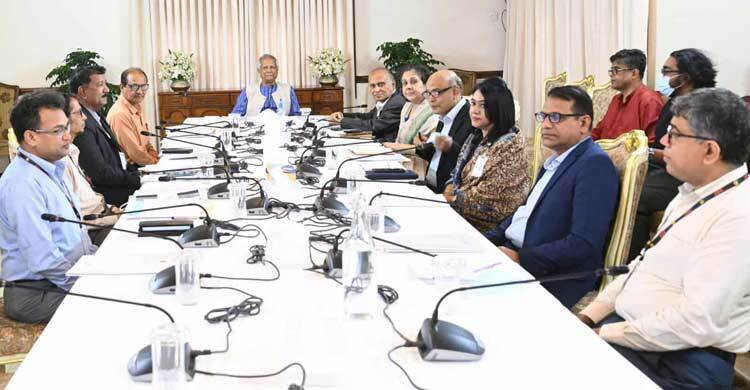
Chief Adviser Professor Dr Muhammad Yunus has directed authorities to immediately fill approximately 32,000 vacant head teacher positions in government primary schools across Bangladesh to bolster the quality of primary education.
The directive was issued during a meeting at the State Guest House Jamuna on Monday afternoon, attended by key officials, including Adviser to the Ministry of Primary and Mass Education Dr Bidhan Ranjan Roy Poddar, Secretary Abu Taher Md. Masud Rana, and Principal Secretary Siraj Uddin Mia, according to the Chief Adviser’s Press Wing.
During the meeting, Professor Yunus emphasised the need for a merit-based appointment process, prioritising experienced teachers while also providing opportunities for qualified younger candidates.
He instructed officials to coordinate with the Public Service Commission (PSC) to issue a notification and expedite the appointment process. “The focus should be on bringing qualified individuals to lead schools effectively,” Yunus said, underscoring the critical role of head teachers in improving educational outcomes.
The Chief Adviser also called for reforms in the teacher transfer policy to address inefficiencies. He noted that teachers often lobby for transfers from rural upazilas to urban schools, disrupting educational continuity. “There must be a clear and transparent policy for transfers, ensuring they happen only through a standardized process,” Yunus directed.
Yunus stressed the importance of creating women-friendly school infrastructure, urging the inclusion of at least one-woman architect in school construction committees to prioritize facilities for girls. He also advocated for consistent internet connectivity and multimedia classrooms in all primary schools to enhance the learning environment. “Girls’ needs must be prioritised in planning and implementation,” he added.
Adviser Bidhan Ranjan Roy highlighted that despite significant investments in infrastructure, the primary education sector has struggled to improve educational quality. He noted that ongoing evaluations rank schools to identify high-performing institutions and support those lagging behind. “Schools with strong head teachers and cohesive teams perform better,” Roy said, adding that the Ministry is actively addressing the vacancy crisis.
This move is seen as a critical step toward addressing long-standing challenges in primary education, with a focus on leadership, equity, and modernised facilities to benefit millions of students, particularly girls, across the country.