
DU prof seeks total ban on party-based student, teacher politics

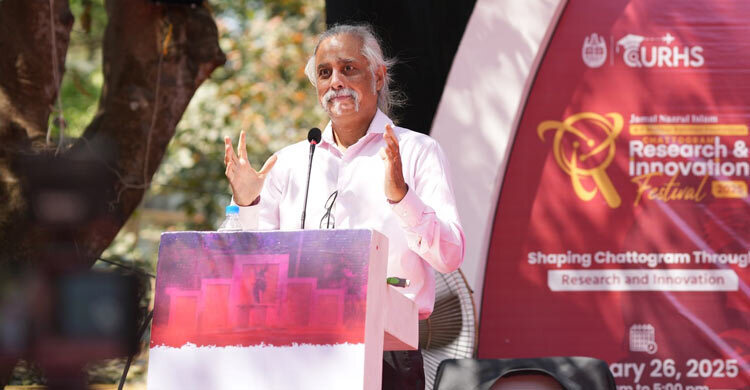
Professor Kamrul Hassan Mamun, a government-nominated academic member of the Dhaka University (DU) Senate and a professor in the Department of Physics, has called for a complete ban on all forms of party-based student and teacher politics across the entire university campus — not just in residential halls.
In a post on his verified Facebook account on Saturday morning (August 9) around 10:30 am, Professor Mamun said that party-based politics — whether covert, dormant, or overt — should be stopped not only in the halls but throughout the whole campus.
“Yet what do we see? Party-based teacher politics is flourishing under the guise of political colour,” he wrote. “We want the campus to be a place for free and independent thought.”
According to him, refraining from party politics would bring many benefits. “There will be no torture cells in the halls. Teachers will no longer need to manage the halls. With the help of a few officials, students can manage them as part-time workers. Students could also work part-time in the Registrar’s Office, library, and other campus facilities. This is how universities operate worldwide. Through such work, students learn responsibility, leadership, and more.”
Questioning why teachers should be tasked with managing halls, he said, “How can a teacher be a hotel manager?” Referring to the infamous phrase at the Registrar’s Office — “come after lunch” — he said the campus could be free from such inefficiency if students were allowed to work part-time there.
He stressed that the student union would remain as the real platform for learning leadership and would take the lead in maintaining a proper educational environment, as well as organising service activities, sports, and cultural programmes.
Mamun warned that party politics in halls creates the risk of clashes between students with opposing ideologies. While political awareness, discussions, and protests against injustice should continue, direct party politics should be banned, he said, noting that this was one of the key demands of the 24 uprising.
He also shared an observation from a Bangladeshi student who had recently gone to the United States. The student noted that in American universities, not only halls but the entire campus is free from party politics, with everyone focused on studies, research, sports, and cultural activities. “The halls there are managed by the students themselves. They work part-time across campus to earn money. Why can’t we do the same? By engaging in party politics, we are poisoning the entire environment — leaving no space for academic and research activities,” he wrote.
Mamun clarified that there is no barrier to political awareness or protesting injustice, but argued that party politics fosters narrow-mindedness. “Even when the government reduces the education budget, ruling party-aligned student groups celebrate with rallies because of party politics. Can one imagine this? Do ordinary students want party politics? Do the general public or parents want party-based student or teacher politics?” he asked.