
Empty classrooms: 378 colleges across Bangladesh enrol no students in Class XI admissions

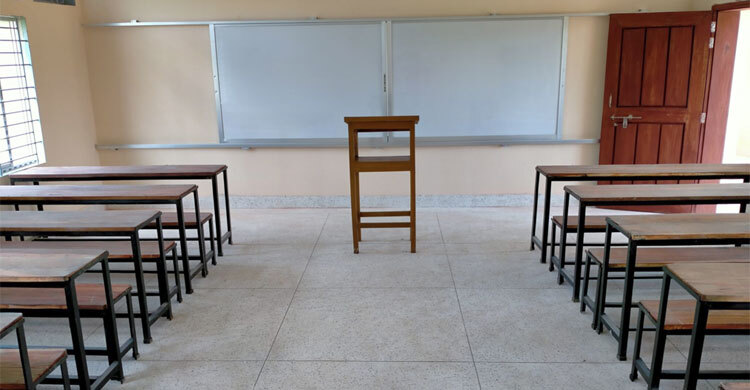
A stark reflection of the shifting landscape in Bangladesh’s education system has emerged, as 378 colleges across the country failed to admit a single student in the first phase of online admissions for Class XI in the 2025-26 academic year.
Even more concerning, 10 of these institutions received not a single application – no student, anywhere in the nation, listed them as a preferred choice.
The figures, released late on Wednesday night by the Dhaka Secondary and Higher Secondary Education Board, highlight growing disparities in access, perception, and quality within the country’s higher secondary education sector.
Professor Md Rizaul Haque, College Inspector at the Dhaka Board, confirmed the data to Jago News, saying: “Out of 8,150 educational institutions – including colleges and Alim madrasas – participating in the centralised admission process, 378 received zero admissions. Another 10 received no choice preferences whatsoever.”
A system under pressure
The first phase of online admission for Class XI ran from July 30 to August 15, during which 10,73,310 students successfully submitted applications and paid the required fees. Collectively, they submitted nearly 6o lakh college choices (59,28,567 to be precise), underscoring the intense competition for places in top-tier institutions.
Yet, despite this high demand, 25,348 students, including 5,765 with a perfect GPA-5, were unable to secure admission to any college.
Meanwhile, hundreds of colleges remained completely empty.
This paradox reveals a deep imbalance in the system: elite urban institutions are overwhelmed with applicants, while rural and under-resourced colleges struggle to attract even one student.
Why are colleges being left behind?
Several factors contribute to this growing divide:
Reputation and academic performance: Students and parents increasingly prioritise institutions with strong track records, experienced teachers, and modern facilities. Many of the zero-admission colleges lack these advantages.
Location: Colleges in remote or poorly connected areas are often overlooked, particularly by students seeking access to coaching centres and urban opportunities.
Infrastructure and facilities: The absence of laboratories, libraries, digital classrooms, and safe transport, especially for female students, deters enrolment.
Perception of madrasas and rural colleges: Despite reforms, many Alim madrasas and rural institutions are still viewed as academically weaker or outdated in curriculum.
The human cost: Over 25,000 left without seats
Among the most troubling outcomes: 25,348 students, over 5,700 of them academic high achievers with a GPA-5, were left without a college place in the first phase.
Many likely applied only to top-ranking colleges, aiming high but ending up with no offer.
What happens next?
Education authorities have announced that second and third phases of admission will begin shortly, offering another opportunity for both students and colleges.