
Engineering on the streets: The fierce battle between Bangladesh’s BSc and diploma engineers

When Abu Sufian walked out of the gates of Rajshahi University of Engineering and Technology (RUET) with a BS. degree in mechanical engineering in 2020, he carried dreams as bright as his academic record. He imagined designing cutting-edge machines, contributing to national projects, and building a stable career.
Four years later, those dreams have collided with a harsh reality. Sufian is now working at a modest automobile firm, dissatisfied with his pay, his ambitions clipped by a lack of opportunities. His eyes remain firmly set on one goal: a government job.
But the path to such a job is narrow and thorny. For Sufian, even a 10th-grade government post, considered lower than what his qualifications warrant, would be acceptable. Yet, those posts are almost exclusively reserved for diploma engineers.
“There is no job security in the private sector,” Sufian says. “Even after sacrificing everything, one can lose a job overnight. Government jobs are stable, but there are very few opportunities for us. The posts of sub-assistant engineer are filled entirely by diploma holders. So many of us, even from BUET, RUET, CUET, KUET, remain unemployed.”
Two worlds, one battlefield
Sufian’s frustration reflects a larger conflict brewing across Bangladesh.
On one side are the BSc engineers, often products of the country’s top engineering universities.
On the other are diploma engineers, trained in polytechnic institutes and known for their hands-on skills. Each group claims the system is stacked against them, and the competition has spilled onto the streets.
Diploma engineers argue that their practical training makes them the backbone of technical work. “After completing the diploma, the sub-assistant engineer post is one of the few respectable government options for us,” says Abdul Ahad, a student of Dhaka Polytechnic Institute and activist in the Bangladesh Technical Students’ Movement. “These should remain reserved for diploma holders. If they open these to BSc engineers, we will be pushed out.”
BSc engineers counter this with equal intensity. They point to the years of rigorous theoretical and analytical training they undergo and the limited number of posts available to them.
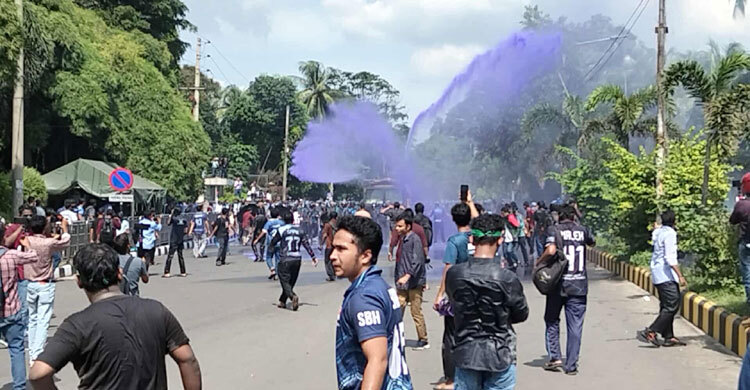
BUET-led student groups have staged sit-ins, blocked roads, and even attempted marches toward the Chief Adviser’s residence to demand reforms and faced baton-charge, teargas, sound grenades, and water cannons. Their grievances include opening 10th-grade posts to BSc engineers and ensuring that only engineering graduates can write “Engineer” before their names.
‘We studied four years. Why are we losing?'
Abu Sufian, earns Tk 40,000 not enough to dream of stability. His real goal? A government job. Even a Grade 10 post would be a win.
But here is the catch: most Sub Assistant Engineer positions under Grade 10 are reserved for diploma engineers. And even in Grade 9 (Assistant Engineer), 30 per cent of posts are allocated to diploma holders, despite BSc engineers spending four years in rigorous academic and project-based training.
“I sacrificed everything for this degree,” Sufian says. “But in the job market, a diploma holder with three years of hands-on training is treated as equal, or even preferred. Where’s the incentive to study harder?”
He is not alone. Every year, over 1,00,000 students graduate with BSc engineering degrees from public and private universities. Yet, in the last decade, only 468 Assistant Engineer posts were advertised through the BCS exams (31st to 45th cycles). That is less than 50 jobs per year for thousands of graduates.
‘We build the nation! Why are we ignored?’
On the other side of the divide are the diploma engineers, the backbone of Bangladesh’s technical workforce.
After three years of practical, workshop-based learning in institutions like Dhaka Polytechnic or Chattogram Polytechnic, they enter the field fixing transformers, maintaining power grids, and constructing roads. They call themselves "real engineers", not because of theory, but because of what they can build with their hands.
Abdul Ahad, a student at Dhaka Polytechnic and activist with the Bangladesh Technical Students' Movement, puts it bluntly: "When a BSc engineer enters a power station, they read the manual. We already know how to fix it. Why should they take our jobs?"
Their demand? Protect the Grade 10 posts (Sub-Assistant Engineer) exclusively for diploma holders, a role they have traditionally filled. They also want a 30 per cent quota for promotion to Grade 9, recognition as "Engineer" in official documents, and better career pathways.
“After all, who maintains the turbines at NESCO? Who repairs the water pumps at WASA?” asks Engineer Md Kabir Hossain, interim convener of the Institute of Diploma Engineers Bangladesh (IDEB). “It’s our 8 lakh skilled workers. Yet BSc graduates want to push us out.”
The protests heat up
In Dhaka’s Shahbagh and Raju Memorial Monument areas, these frustrations have turned into rallies and blockades. BUET students and BSc engineering graduates demand more assistant engineer posts in the 9th grade and eligibility for 10th-grade posts.
Diploma engineers, meanwhile, rally under the banner of the Institution of Diploma Engineers Bangladesh (IDEB), with seven demands, including quotas for promotion to assistant engineer and recognition of their contributions.
The rivalry, however, is not new. For years, both sides have been organising programmes and counter-protests.
But this year, the tension has escalated.
As demonstrations grow louder, the government has stepped in, forming an eight-member committee to hear both sides. “We will find a fair solution,” says Energy Adviser Muhammad Fouzul Kabir Khan. The committee has a month to report its findings.
Numbers tell the story
The disparity becomes clearer when looking at recruitment data. From the 31st to 45th Bangladesh Civil Service (BCS) exams, only 468 assistant engineer posts were advertised, while nearly 1,00,000 graduates emerge annually from BUET, RUET, CUET, KUET, and other universities.
Competition is fierce. Those who do not succeed often turn to private-sector jobs, but concerns about low pay and job insecurity keep government posts highly coveted.
Diploma engineers face their own crisis. Around 1,50,000 students enrol in diploma courses each year. After graduating, many struggle to secure positions as deputy assistant engineers. Their seven-point demand includes maintaining exclusive access to 10th-grade jobs and reserving 30 per cent of assistant engineer posts for diploma holders through promotion.
“We are the real engineers,” says Ahad. “We work with our hands, and without us, the country cannot progress. Yet, when we reach the field, we are looked down upon.”
Ego and identity
The conflict is not purely economic. Ego and identity play a role too. BSc engineers argue that diploma holders should be called “technologists” rather than engineers. Diploma holders retaliate by questioning the practical skills of their university-trained counterparts. The debate has become more than just about jobs, it is about recognition, respect, and belonging.
Experts urge restraint. “Engineering is multidisciplinary,” says a retired BUET professor. “The sector needs both theoretical minds and practical hands. The problem is not the qualifications; it’s the lack of structured opportunities. The post of deputy assistant engineer should not be restricted to diploma holders, nor should assistant engineer posts ignore them.”
Beyond the rivalry
At its heart, the conflict reflects a larger employment crisis. Professor Dr Mustafizur Rahman of the Centre for Policy Dialogue (CPD) points out a bigger issue: “Everyone is focused on government jobs. Instead of building skills and innovation, the attention is on securing a grade – 9th or 10th. This obsession diverts talent away from real industry needs.”
Mustafizur believes that curriculum reform, industry-academia collaboration, and expanding technical opportunities could ease the rivalry. “The goal should be to create respectable, well-paying positions for both diploma and B.Sc. engineers. If the system remains this narrow, the conflict will only deepen.”
The road ahead
As the committee deliberates, engineers on both sides wait impatiently. On campus lawns and in polytechnic corridors, debates rage. Online forums buzz with arguments, petitions circulate, and hashtags trend. The crisis is more than just statistics; it is about aspirations and anxieties of a generation trained to build, but left stranded.
For Sufian, the dream is still alive, though tinged with frustration. “We are ready to serve,” he says. “We studied hard. We want to build the country. Just give us the chance.”
Bangladesh’s engineers, whether trained in lecture halls or workshops, are united by a single truth: talent is wasting away. Unless policymakers move beyond committee rooms and deliver tangible change, the brightest minds will continue to fight for scraps instead of building bridges, roads, and technologies that the country so urgently needs.