
Govt abolishes music, PE teacher positions in primary schools

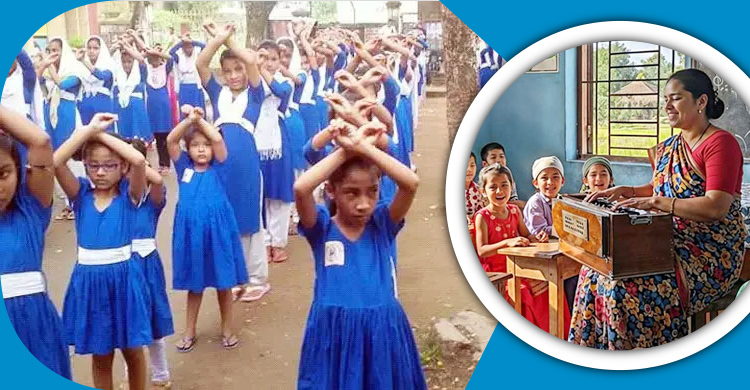
In a move sparking debate over curriculum priorities and job creation in the education sector, Bangladesh's Ministry of Primary and Mass Education has eliminated dedicated positions for music and physical education (PE) teachers in government primary schools.
The decision, announced via an official notification on November 2, reverses recent efforts to integrate arts and sports into early education frameworks.
The amendment targets the Government Primary School Teachers Recruitment Rules, 2025, originally gazetted on August 28. Signed by Ministry Secretary Abu Taher Md. Masud Rana under direct presidential directive, the update invokes powers from Section 59(1) of the Government Services Act, 2018, and aligns with Article 140(2) of the Constitution, following consultations with the Public Service Commission (PSC).
On August 28, the government issued a notification introducing new recruitment rules for government primary schools, which included the creation of two new teaching posts: assistant teachers in music and physical education. Since then, the appointment of music teachers has drawn sharp criticism from various Islamist organisations and individuals.
On September 16, Syed Mohammad Rezaul Karim, Amir of Islami Andolan Bangladesh, publicly opposed the introduction of the music teacher post, denouncing it as inappropriate and calling for the appointment of religious studies teachers in primary schools instead.
That same day, senior leaders from Jamaat-e-Islami, Islami Andolan Bangladesh, Khelafat Majlis, Bangladesh Khelafat Majlis, and Bangladesh Khelafat Andolan jointly condemned the move during a seminar, voicing strong objections to the inclusion of music teachers in the primary school curriculum.
Earlier, on September 6, Hefazat-e-Islam had already labelled the initiative to appoint music teachers at the primary level as an “anti-Islamic agenda” and demanded the immediate withdrawal of the relevant provisions from the new rules.
Key changes to recruitment framework
The revised rules introduce two targeted modifications:
Schedule-1 Revisions (Rule 2(c)):
The original schedule outlined qualifications and appointment criteria for four roles: Principal Teacher, Assistant Teacher (general), Assistant Teacher (Music), and Assistant Teacher (Physical Education). In the updated version, descriptions for the music and PE assistant teacher posts have been entirely removed, leaving only provisions for principals and general assistant teachers.
Ministry officials described these specialized roles as "newly introduced" in the 2025 rules, aimed at bolstering holistic child development. However, their abrupt removal has been attributed to sensitivities around resource allocation and opposition from "one political party," though details remain under wraps.
Rule 7(2)(b) Adjustment:
A subtle but significant tweak addresses subject-based hiring quotas. Previously, the rule allocated 93% of direct recruitment posts on merit, with 20% reserved for science bachelor's degree holders and 80% for "other subjects." The new phrasing mandates that 93% of posts go to merit candidates holding degrees in "science and other subjects at least," broadening eligibility without altering percentages. This aims to streamline recruitment while ensuring a balanced influx of qualified educators.
Broader implications for primary education
The scrapping of these posts comes at a pivotal time for Bangladesh's primary education system, which serves over 18 million students across 65,000 government schools. Proponents of the original rules argued that dedicated music and PE instructors would enhance student well-being, creativity, and physical fitness – key pillars of the National Education Policy 2010, which emphasises extracurricular integration.
Critics, however, have long raised concerns about fiscal sustainability, with the interim government citing budgetary constraints amid economic recovery efforts. Education experts warn that without specialized staff, general teachers may shoulder additional loads, potentially diluting focus on core academics.
Directorate of Primary Education officials refrained from elaborating on the controversy, emphasising that the changes were made "in the national interest." Recruitment under the updated rules is expected to commence soon, with an emphasis on merit and subject diversity.
As Bangladesh pushes toward Sustainable Development Goal 4 (quality education for all), this episode highlights the delicate balance between innovation in teaching roles and political-economic realities. Stakeholders in the education community are calling for transparent dialogue to safeguard non-academic disciplines in future reforms.
This report draws from official ministry notifications and statements. For the full gazette, visit the Ministry of Primary and Mass Education website.