
Only four minority voices in a 300-seat legislature

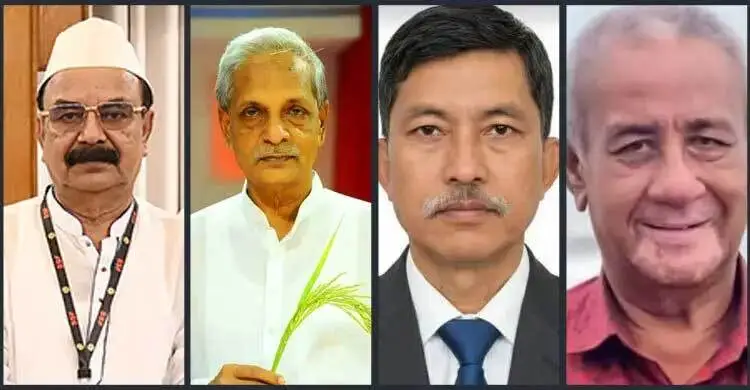
In a parliament shaped by sweeping mandates and shifting alliances, four seats will carry a distinct symbolic weight. In the 13th national parliament elections, four candidates from religious and ethnic minority communities have secured victory – each elected on the ticket of the Bangladesh Nationalist Party (BNP).
According to results announced in 297 constituencies by the Election Commission of Bangladesh, a total of 80 candidates from minority communities contested this year’s polls. Among them were 12 independents and 10 women. Yet, when the dust settled, only four crossed the finish line.
All four represent the BNP, underscoring the party’s strategic outreach in select constituencies.
Dhaka’s veteran face: Gayeshwar Chandra Roy
In Dhaka-3, senior BNP leader Gayeshwar Chandra Roy delivered a decisive victory. A permanent resident of Keraniganj, he secured 98,785 votes in a constituency comprising Jinjira, Aganagar, Tegharia, Konda and Shubhadhya.
His nearest rival, Md Shahinur Islam of Bangladesh Jamaat-e-Islami, garnered 82,232 votes.
A seasoned political figure and BNP Standing Committee member, Gayeshwar’s win signals both continuity and consolidation for the party in the capital’s outskirts.
Magura’s family link: Nitai Roy Chowdhury
In Magura-2 (Shalikha-Mohammadpur), Nitai Roy Chowdhury clinched victory with 1,46,696 votes, defeating his closest rival by more than 30,000 ballots.
Beyond electoral arithmetic, his win also highlights an influential political family network. Nitai Roy Chowdhury is the brother-in-law of Gayeshwar Chandra Roy, creating a notable familial link between two of the four minority MPs-elect.
Hill Tracts mandate: Dipen Dewan
In the Chittagong Hill Tracts, Dipen Dewan emerged victorious in Rangamati with a commanding 2,1,544 votes. His nearest rival, independent candidate Pahel Chakma, secured 31,222 votes.
Dipen was one of six minority candidates nominated by the BNP nationwide. His emphatic win signals the party’s strong foothold in the hill constituency.
Bandarban breakthrough: Saching Pru
From Bandarban, Saching Pru won with 1,41,455 votes, comfortably ahead of Abu Sayeed Md Shuja Uddin of the National Citizen Party, who received 26,162 votes.
His victory ensures that another indigenous voice will sit in the next Parliament.
Representation: Symbolic or substantive?
While the number four in a 300-seat House may appear modest, analysts note that minority representation in Bangladesh’s parliament has historically fluctuated depending on party nominations and electoral dynamics.
This year, despite 80 minority candidates contesting, only four secured seats. Several high-profile contenders, including Jamaat-e-Islami’s Krishna Nandi in Khulna-1, were widely discussed but ultimately unsuccessful.
The outcome raises familiar questions: Is representation determined more by party backing than demographic weight? And will these four MPs be able to shape policy debates on inclusion, land rights, religious freedom and regional development?
For now, the headline is clear – four minority lawmakers are heading to parliament. Whether their presence translates into broader participation and policy impact will be one of the quieter, yet significant, storylines of the new legislative term.